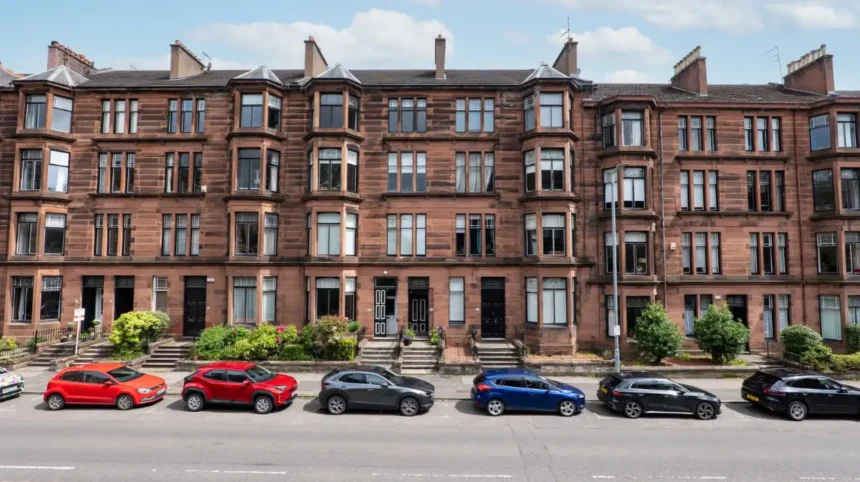
Hyndland and Partick sit close together in Glasgow’s West End, but they represent different property propositions. Hyndland generally commands higher prices, while Partick offers lower entry costs, strong transport connections, extensive amenities and a broader range of housing.
- Why is Hyndland more expensive than Partick?
- What is the current property price difference between Hyndland and Partick?
- What makes Hyndland attractive to home buyers?
- What makes Partick attractive compared with Hyndland?
- How important are transport links when comparing Hyndland and Partick?
- Does Hyndland offer better property quality than Partick?
- Is Partick better value for first-time buyers?
- Does Hyndland have stronger long-term investment potential?
- What are the risks of paying the Hyndland premium?
- How should buyers compare individual Hyndland and Partick properties?
- Is Hyndland worth the premium for families?
- Does Partick have stronger value for renters and landlords?
- What does the wider Glasgow property market mean for Hyndland and Partick?
- Should you buy in Hyndland or Partick in 2026?
The key question for buyers in 2026 is whether Hyndland’s additional cost provides enough value through property quality, location, neighbourhood character, resale demand and long-term ownership benefits.
Why is Hyndland more expensive than Partick?
Hyndland commands a premium because it combines established West End housing, sought-after tenements, residential character, strong local amenities and excellent transport access, while Partick provides a larger and more varied housing market with comparatively lower average sale prices.
Recent sold-price data illustrates the difference. Rightmove records an overall average sold price of £391,406 in Hyndland over the last year, compared with £252,026 in Partick. That represents a difference of approximately £139,380, or about 55% based on these area-level averages.
The comparison requires caution because average prices reflect different property mixes. Hyndland has a concentration of traditional West End tenements and higher-value flats. Partick contains a wider mixture of traditional tenements, modern flats, smaller properties and housing around major transport and commercial corridors.
Hyndland’s average flat sale price was £365,809 in the latest Rightmove data. Partick’s average flat sale price was £234,041. The difference between these figures is approximately £131,768.
The premium is therefore not simply a postcode effect. Property type, size, floor level, architectural features, condition, exact street and proximity to transport all influence the price.
What is the current property price difference between Hyndland and Partick?
The latest sold-price data shows a substantial gap between Hyndland and Partick, with average prices of about £391,406 and £252,026 respectively, while flats average £365,809 in Hyndland and £234,041 in Partick.
The latest figures provide a useful starting point for a 2026 buyer.
The difference is particularly important for buyers targeting traditional flats because flats dominate both local markets.
Hyndland’s overall average was 5% lower than the previous year and 5% below its 2023 peak of £413,131 in Rightmove’s latest dataset. Partick moved differently, with its overall sold-price figure 3% higher than the previous year and 7% above its 2021 peak of £235,941.
These figures demonstrate why buyers should not assume that the most expensive neighbourhood automatically delivers the strongest short-term price growth.
The wider Scottish market was positive in 2026. Registers of Scotland reported an average Scottish property price of £195,000 in June 2026, representing annual growth of 2.3%. The monthly change was -0.5%.
Scotland’s 2025-26 residential market recorded a £198,000 median price, 4% higher than the previous year. Residential sales increased by 5% to 104,408 transactions.
Glasgow has also demonstrated strong long-term performance. Registers of Scotland reported that Glasgow had the largest median-price increase among Scotland’s eight cities over the previous decade, at 57%.
What makes Hyndland attractive to home buyers?
Hyndland attracts buyers through its established tenement architecture, residential streets, West End location, local services, transport links and proximity to major cultural, educational and commercial destinations across western Glasgow.
Hyndland forms part of Glasgow’s established West End residential environment. The surrounding area contains substantial traditional tenement architecture, including sandstone buildings and properties with period features.
Glasgow City Council planning documents identify the Hyndland and Partickhill Character Area within the Glasgow West Conservation Area. The council identifies architectural character, original details, boundary treatments and garden spaces as important elements of the area’s built environment.
This architectural character contributes to the area’s property identity.
Hyndland also provides access to local shops, cafés, restaurants and services. Hyndland Road acts as an important local centre, while Byres Road and the wider West End provide additional retail, hospitality and cultural facilities.
The area’s location is particularly relevant to buyers who value access to the University of Glasgow, Kelvingrove Park, Byres Road, Hillhead and the wider West End.
Hyndland is therefore positioned as a residential neighbourhood rather than simply a transport or commercial district.
What makes Partick attractive compared with Hyndland?
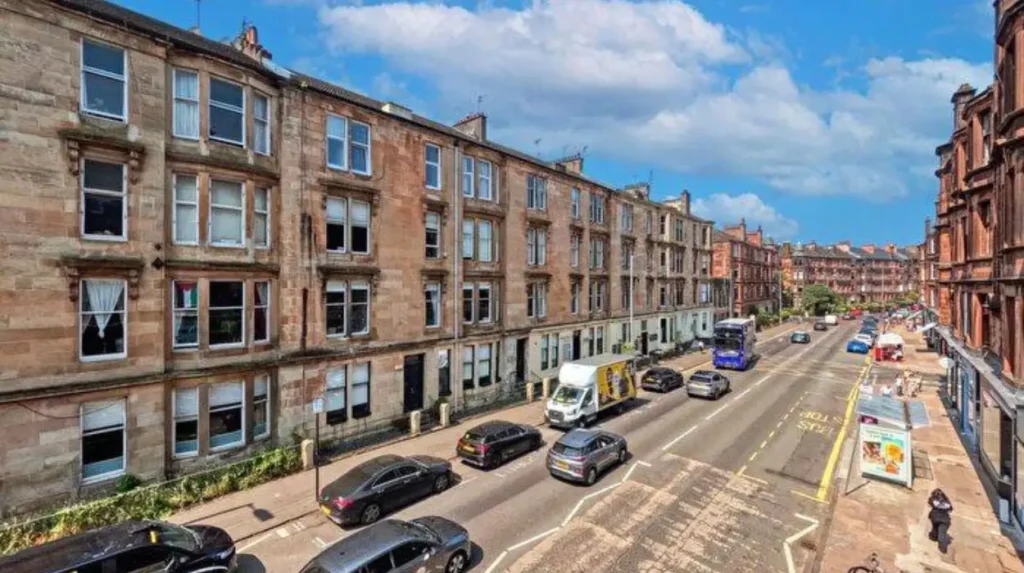
Partick provides a lower-cost entry into Glasgow’s West End while retaining strong transport connections, established housing, shopping facilities, restaurants, local services and direct access to Hyndland, Partick Cross, Byres Road and other West End destinations.
Partick’s biggest advantage is its combination of location and relative affordability.
The neighbourhood sits immediately south of Hyndland and provides access to Partick railway station and Partick Subway station. This makes it one of the most important transport locations in western Glasgow.
Partick also has a substantial commercial centre around Dumbarton Road and Partick Cross. Residents have access to supermarkets, independent businesses, cafés, restaurants and everyday services.
The property stock is broader than the narrow definition of premium West End housing. Buyers can find traditional tenement flats, modern apartments and properties at different price points.
The latest Rightmove figures show an average Partick flat price of £234,041, substantially below Hyndland’s £365,809.
That difference creates a significant financial argument for Partick.
A buyer who does not require a specific Hyndland address can potentially purchase more space or retain more borrowing capacity by choosing Partick.
How important are transport links when comparing Hyndland and Partick?
Transport is strong in both neighbourhoods, but Partick has the more significant interchange because Partick station combines rail and Subway access, while Hyndland provides a dedicated railway station with frequent services into Glasgow and surrounding areas.
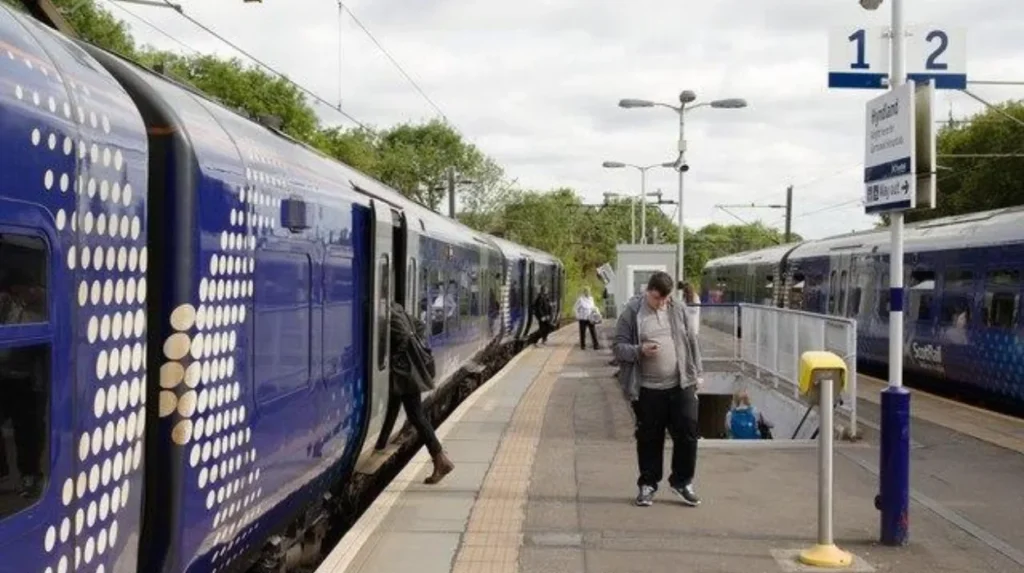
Hyndland station is located on Queensborough Gardens and provides rail services across Glasgow and surrounding areas. ScotRail confirms step-free access, ticket facilities, Wi-Fi, toilets and cycle storage at the station.
ScotRail’s current timetable information shows direct trains between Hyndland and Glasgow Queen Street. The average journey is approximately 13 minutes, with up to 143 trains listed on the relevant timetable.
Partick provides an even broader transport proposition.
The station functions as a major interchange between rail and the Glasgow Subway network. Partick’s location also connects directly with local bus services.
The two neighbourhoods are extremely close. ScotRail lists an average journey time of approximately two minutes between Partick and Hyndland by train, with direct services.
Consequently, paying a substantial property premium purely for transport access requires careful assessment. Partick already provides exceptional connectivity.
Does Hyndland offer better property quality than Partick?
Hyndland contains a high concentration of traditional West End tenements and period properties, but Partick also contains substantial traditional housing stock, so property quality depends more on the individual building, renovation history, maintenance and location than the neighbourhood name alone.
Hyndland’s property appeal is strongly connected to its traditional architecture.
Large sandstone tenements contain features such as high ceilings, spacious rooms, bay windows, decorative detailing and substantial communal entrances. Individual properties differ significantly according to construction period, refurbishment and maintenance.
Partick also contains many traditional tenements. The area is therefore not simply a modern alternative to an exclusively historic Hyndland.
The distinction often concerns street environment, exact building, condition and surrounding properties.
A renovated Partick tenement can provide better practical value than an outdated Hyndland flat requiring extensive work.
Buyers should therefore assess the building rather than relying on the postcode.
Important factors include the condition of the roof, communal stair, stonework, windows, gutters, factoring arrangements and common insurance.
In Scotland, the Home Report is central to the purchasing process. Buyers should examine the valuation, survey information, property questionnaire and energy report before making an offer.
Is Partick better value for first-time buyers?
Partick generally offers stronger affordability for first-time buyers because its average sold prices are substantially below Hyndland, while the neighbourhood retains West End transport, employment, retail, education and leisure connections.
Affordability is the clearest argument for Partick.
Using the latest average flat figures, the difference between Hyndland and Partick is approximately £131,768.
That difference affects more than the purchase price.
A larger mortgage requires higher monthly repayments, greater affordability under lender stress testing and potentially a larger deposit. Buyers also need to account for Land and Buildings Transaction Tax where applicable, legal costs, mortgage fees, survey-related expenses and property maintenance.
Partick can therefore allow buyers to enter Glasgow’s West End market without paying the full Hyndland premium.
This is particularly relevant to buyers prioritising location over prestige.
A first-time buyer who wants access to the University of Glasgow, West End amenities and central Glasgow transport can obtain many of those advantages from Partick.
The financial difference can instead be allocated to renovation, savings, mortgage reduction or a larger property.
Does Hyndland have stronger long-term investment potential?
Hyndland has strong long-term investment characteristics because of its established West End position, limited supply of traditional housing and sustained demand, but its higher acquisition price means investors must assess rental yield and capital growth against the initial premium.
Hyndland’s investment case depends on demand and scarcity.
The area has an established residential identity and a limited supply of traditional properties. Period tenements cannot be reproduced easily, particularly within conservation areas where architectural character receives planning protection.
Glasgow West’s established neighbourhoods also benefit from proximity to major institutions and employment centres.
However, capital growth should not be assumed from neighbourhood reputation alone.
Recent data demonstrates different short-term movements. Hyndland’s overall sold-price figure was down 5% year-on-year in Rightmove’s latest dataset, while Partick’s figure increased 3%.
Partick therefore has a credible investment argument based on lower acquisition costs and its strong location.
An investor comparing the areas should calculate gross rental yield, expected maintenance, factoring costs, mortgage costs, vacancy assumptions and purchase price.
The highest sale price does not automatically produce the highest investment return.
What are the risks of paying the Hyndland premium?
The principal risk is paying a large upfront premium for neighbourhood status without receiving equivalent additional value in property size, condition, rental income, transport access or long-term resale performance.
The first risk is valuation.
Two nearby properties can have significantly different asking prices despite similar floor areas. Buyers must compare recent sold transactions for properties with similar size, condition, bedroom count and architectural characteristics.
The second risk is maintenance.
Traditional tenements require ongoing management. Roofs, stonework, communal staircases, windows and drainage systems can generate substantial shared costs.
The third risk is market movement.
Recent data shows Hyndland’s average sold-price performance weakening from its previous peak, while Partick recorded annual growth in the latest Rightmove dataset.
The fourth risk is overpaying for features that do not improve practical use.
A period façade, prestigious address or desirable street can increase market value, but buyers still need adequate internal space, energy performance and building condition.
The fifth risk concerns resale.
A high purchase price reduces the number of potential buyers who can afford the property. This matters particularly for larger and expensive flats.
How should buyers compare individual Hyndland and Partick properties?
Buyers should compare properties by sold price, floor area, condition, Home Report value, building costs, transport access, energy performance, tenure arrangements and resale demand rather than comparing neighbourhood averages alone.
The correct comparison is property-to-property.
Start with recent sold prices for similar properties. Registers of Scotland is the authoritative source for Scottish property transaction information, while commercial property portals provide useful market summaries.
Next, compare the Home Report valuation with the asking price.
A property offered significantly above its Home Report valuation requires stronger evidence of demand and competitive bidding.
Buyers should then examine the building’s condition.
For tenements, communal maintenance is particularly important. A low purchase price becomes less attractive if major common repairs are expected.
Energy performance also affects ongoing ownership costs. EPC ratings provide information about the property’s energy efficiency and recommended improvements.
Finally, consider the location at street level.
Distance to a station, noise, parking availability, traffic, local shops, green space and building outlook can create significant differences between properties only a short distance apart.
Is Hyndland worth the premium for families?
Hyndland can justify its premium for households prioritising established residential streets, larger traditional flats, West End amenities and proximity to schools and green spaces, while Partick provides stronger affordability and excellent transport for families managing a tighter budget.
Family buyers should focus on usable space and daily logistics.
Hyndland contains larger traditional flats that can provide generous living rooms and bedrooms. The neighbourhood’s residential streets also provide a different environment from the busier commercial areas around central Partick.
Partick remains practical for families because of its transport access and proximity to West End amenities.
Kelvingrove Park, the River Kelvin corridor and other nearby recreational spaces provide access to outdoor areas from both neighbourhoods.
The most important distinction is therefore not simply family suitability.
It is the relationship between property size, purchase price and daily travel.
A family paying substantially more for Hyndland should identify specific benefits that justify the additional borrowing or deposit.
Explore More Area Guide
Average House Prices in Glasgow Southside in 2026
Glasgow Flats: Is Now a Good Time to Buy in 2026?
Does Partick have stronger value for renters and landlords?
Partick offers a strong rental proposition because its lower purchase prices combine with major transport links, West End employment and education access, while Hyndland provides premium positioning and established tenant demand at a higher acquisition cost.
Rental investors should compare yield rather than rent alone.
Suppose two similar properties generate comparable rental income. The property with the lower purchase price produces the higher gross yield.
Partick’s lower average flat price therefore creates an important investment advantage. Its transport interchange also supports demand from students, professionals and other tenants requiring access to Glasgow’s wider network.
Hyndland has its own rental strengths.
Its proximity to the University of Glasgow, West End commercial areas and established residential amenities supports tenant demand.
However, landlords must account for the acquisition premium.
The latest Scottish property market data shows flats had a £138,017 median sale price nationally in 2025-26, and flats recorded the slowest ten-year price growth among the major property types at 25%.
Local performance can differ substantially from national figures, but the statistic demonstrates why investors should examine the specific flat market rather than assuming that premium neighbourhoods always outperform.
What does the wider Glasgow property market mean for Hyndland and Partick?
Glasgow remains one of Scotland’s largest residential markets, with strong long-term price growth and high transaction volumes, creating a supportive backdrop for both Hyndland and Partick while local property selection remains critical.
Glasgow City recorded 11,305 residential sales in 2025-26, the highest sales volume among Scotland’s local authority areas alongside Edinburgh, which recorded 11,169. Together, the two areas represented 22% of Scottish residential sales.
The city’s long-term performance is significant.
Registers of Scotland reported that Glasgow had the largest median residential price increase among Scotland’s eight cities over the ten-year period covered by its 2025-26 analysis, at 57%.
This provides important context for buyers considering a long ownership period.
Nevertheless, city-level statistics do not determine the future performance of an individual property.
Hyndland, Partick, Partickhill, Dowanhill and surrounding West End neighbourhoods contain different property types and price points.
The micro-location remains decisive.
Should you buy in Hyndland or Partick in 2026?
Hyndland is worth its premium when its specific property quality, location, space and long-term ownership benefits justify the additional cost; Partick is stronger value when affordability, transport and West End access are the primary priorities.
The choice depends on what the additional money buys.
Hyndland makes the stronger case for buyers who specifically want its established residential environment, traditional architecture, premium West End positioning and particular streets or properties.
Partick makes the stronger financial case for buyers who want West End access without paying the full Hyndland premium.
The latest average prices demonstrate the scale of the difference: £391,406 in Hyndland versus £252,026 in Partick, while average flats stood at £365,809 versus £234,041 respectively.
That is a significant premium.
A buyer should therefore identify measurable benefits before paying it.
If the Hyndland property offers substantially better space, condition, architecture, street position or resale appeal, the premium has a clearer justification.
If two properties provide similar accommodation and access, Partick’s lower purchase price becomes the stronger proposition.
The most defensible conclusion for 2026 is that Hyndland is a premium lifestyle and property-quality purchase, while Partick is a value-focused West End purchase.
Neither neighbourhood is universally superior.
For buyers focused on affordability and connectivity, Partick provides compelling value. For buyers who place greater financial value on Hyndland’s established housing stock, residential character and premium location, the higher price can be justified.
The decision should ultimately be based on the individual property’s Home Report, recent comparable sales, building condition, running costs, mortgage affordability and intended length of ownership.
Is Hyndland more expensive than Partick?
Yes. Recent sold-price data shows Hyndland has a substantially higher average property price than Partick. The latest figures cited in the article show average prices of about £391,406 in Hyndland compared with £252,026 in Partick.