Merchant Street is a central urban thoroughfare located in the historic Merchant City district of Glasgow, Scotland. This street serves as a vital link within the city’s grid system, connecting North Frederick Street and John Street while sitting adjacent to George Square and the Glasgow City Chambers. It represents a transition point between the civic heart of the city and its commercial history.
- What Is the History of Merchant Street and the Merchant City?
- Where Is Merchant Street Located Within Glasgow?
- What Architectural Features Define Merchant Street?
- What Are the Property Trends in the Merchant Street Area?
- How Does Glasgow City Council Manage the Merchant Street District?
- What Commercial Amenities Are Available Near Merchant Street?
- What Is the Future Outlook for Merchant Street?
- What Should Visitors and Residents Know About Safety and Accessibility?
Merchant Street serves as a physical reminder of Glasgow’s 18th-century expansion. The Merchant City district, where the street is situated, was the residential and commercial hub for the “Tobacco Lords,” the wealthy merchants who dominated the city’s economy during the colonial era. Today, the street is characterized by its proximity to neoclassical architecture and its role in the modern cultural and administrative functions of the city. Understanding Merchant Street requires an analysis of its geographical position, its historical evolution from an industrial hub to a cultural center, and its current status within Glasgow’s conservation frameworks.
What Is the History of Merchant Street and the Merchant City?
Merchant Street is located within the Merchant City, an area developed in the 1750s to accommodate Glasgow’s wealthy merchant class. This district shifted from a residential enclave of “Tobacco Lords” to a wholesale market hub before its 20th-century urban regeneration.
The development of Merchant Street is inextricably linked to the rise of the Merchant City. Prior to the mid-18th century, Glasgow’s center was located further east around the High Street and the Glasgow Cross. As the city’s wealth grew through international trade—specifically tobacco, sugar, and cotton—the elite sought to move westward, away from the crowded medieval center. This led to the creation of a planned grid system, one of the earliest examples of formal urban planning in Scotland.
During the late 1700s and early 1800s, the area was the most affluent part of Glasgow. Large mansions were built to house the merchant elite. However, as the Industrial Revolution progressed, these families moved further west to the newly developed West End. By the mid-19th century, the Merchant City transformed into a district dominated by warehouses and wholesale markets. Specifically, the area became the center for the city’s fruit, vegetable, and cheese markets.
Merchant Street itself sits on the edge of this historical shift. Its proximity to the Glasgow City Chambers, which opened in 1888, cemented the street’s importance as a transition zone between the commercial warehouses to the south and the civic administration to the north. In the late 20th century, the area faced decline as wholesale markets moved to more accessible suburban locations. In the 1980s, Glasgow City Council initiated a regeneration project to convert the Victorian warehouses into luxury apartments, shops, and restaurants, turning Merchant Street into a key component of a modern cultural quarter.
Where Is Merchant Street Located Within Glasgow?
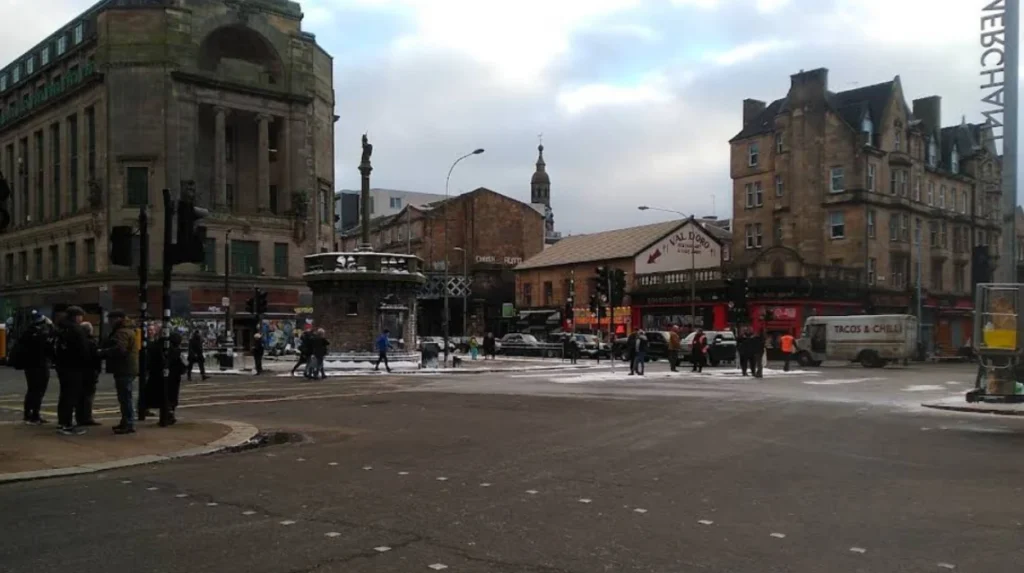
Merchant Street is situated in the G1 postcode area of Glasgow City Centre. It runs horizontally between North Frederick Street and John Street, positioned directly east of George Square and immediately behind the historic Glasgow City Chambers administrative building.
The geography of Merchant Street is central to its utility. It resides within the Glasgow City Centre Conservation Area, a designation by Glasgow City Council to protect the architectural integrity of the district. The street is bordered by high-density urban structures that exemplify the “Glasgow Style” of red and blond sandstone architecture. To its immediate west lies George Square, the city’s primary civic space, which hosts the Cenotaph and statues of prominent figures such as James Watt and Sir Walter Scott.
To the south of Merchant Street is the core of the Merchant City, characterized by streets such as Ingram Street and Wilson Street. These areas are known for high-end retail and the Old Sheriff Court. The street is accessible via several public transport nodes. Queen Street Station, one of Glasgow’s two main railway hubs, is located approximately 300 meters to the west. This station provides rail links to Edinburgh and the North of Scotland. Buchanan Street Subway Station is also within a five-minute walking distance, offering access to the city’s circular underground system.
The street’s placement allows it to function as a quiet bypass for pedestrians moving between the administrative offices of the City Chambers and the commercial districts of the Merchant City. Because it is a relatively short street, it lacks the heavy vehicular traffic found on nearby arteries like Trongate or George Street, making it a distinct micro-environment within the city’s dense urban fabric.
What Architectural Features Define Merchant Street?
Architectural features on Merchant Street include Victorian-era sandstone facades, neoclassical decorative elements, and proximity to the Italian Renaissance-style City Chambers. The buildings reflect the transition from 19th-century commercial warehouse utility to modern mixed-use administrative and residential spaces.
The dominant building material on Merchant Street is Scottish sandstone. Most structures utilize either the local “Blond” sandstone from the Carboniferous period or the “Red” sandstone imported from Dumfriesshire in the late 19th century. These materials define the visual identity of Glasgow. The northern side of the street is dominated by the rear elevations of the City Chambers, designed by architect William Young. This building is a prime example of Beaux-Arts architecture, featuring elaborate carvings and granite columns.
Opposite the City Chambers, the architecture reflects the commercial heritage of the Merchant City. These buildings typically feature large windows, which were originally designed to allow maximum natural light into warehouses for the inspection of goods. Many of these structures have since been renovated under the “Merchant City Strategy,” which focuses on preserving external facades while modernizing interiors for residential or office use. The heights of the buildings are consistent with Glasgow’s traditional four-to-five-story tenement and warehouse scale.
Key architectural details include rusticated stonework on the ground floors, which provided a sense of strength and durability for commercial buildings, and ornate cornices at the rooflines. The street also provides views of the domed towers of the City Chambers, which rise 73 meters above the city. These features collectively contribute to the Merchant City’s status as a candidate for UNESCO World Heritage status, highlighting the area’s importance as a preserved 18th and 19th-century commercial district.
What Are the Property Trends in the Merchant Street Area?
Property trends in the Merchant Street area are characterized by high demand for luxury loft-style apartments and premium office spaces. As of 2024, the Merchant City remains one of Glasgow’s most expensive residential districts for both sales and rentals.
The residential market surrounding Merchant Street consists primarily of converted Victorian warehouses. These properties often feature high ceilings, exposed brickwork, and open-plan layouts. Data from the Registers of Scotland indicates that property prices in the G1 postcode consistently track above the Glasgow average. In the last decade, the area has seen a 25% increase in property values as the Merchant City became a preferred location for young professionals and urban dwellers.
The rental market is equally robust. Because of its proximity to the University of Strathclyde and the City of Glasgow College, there is a constant demand for high-quality accommodation. Average monthly rents for a two-bedroom apartment in this district frequently exceed £1,500. Investors are drawn to the area because of the high occupancy rates and the historical prestige associated with a Merchant City address.
Commercial property on and around Merchant Street is dominated by professional services, creative agencies, and high-end hospitality. The “City Center Strategy 2024-2030” published by Glasgow City Council outlines plans to further increase the residential population of the city center, aiming to double it by 2035. This policy directly impacts Merchant Street by encouraging the conversion of any remaining underutilized commercial space into residential units. Consequently, the area is experiencing a trend toward “densification,” where urban space is used more efficiently to support a growing downtown population.
How Does Glasgow City Council Manage the Merchant Street District?
Glasgow City Council manages the Merchant Street district through strict conservation area policies, urban greening initiatives, and the City Center District Regeneration Frameworks. These regulations ensure that all developments preserve the historical character of the Merchant City’s unique architecture.
Merchant Street falls under the Central Conservation Area management plan. This means that any external alterations to buildings, including window replacements or signage, require Conservation Area Consent. This legal framework prevents the demolition of historic structures and mandates the use of traditional materials like lime mortar and sandstone in repairs. The council’s goal is to maintain the “Special Character” of the area, which is defined by its grid iron street pattern and its high density of listed buildings.
In addition to heritage preservation, the council is implementing the “Avenues Project.” This is a £115 million investment funded by the Glasgow City Region City Deal. The project aims to transform the streetscapes of the city center by introducing more trees, sustainable drainage systems, and segregated cycle lanes. While Merchant Street is a secondary road, the improvements to nearby George Street and Ingram Street have a direct impact on its environment, reducing noise pollution and improving air quality.
The council also manages the district through the Merchant City Festival, an annual event that utilizes the streets and squares for cultural performances. This management strategy aims to balance the needs of residents with the area’s role as a primary tourist destination. By controlling noise, litter, and traffic flow during these events, the council maintains the Merchant City as a livable urban environment. Public safety is managed through extensive CCTV coverage and coordinated efforts with Police Scotland, particularly given the street’s location behind the city’s administrative headquarters.
What Commercial Amenities Are Available Near Merchant Street?
Commercial amenities near Merchant Street include luxury retail boutiques, independent art galleries, diverse culinary establishments, and major administrative centers. The area serves as a premier destination for high-end shopping and dining within the Glasgow City Centre.
Merchant Street is positioned near some of Glasgow’s most prestigious commercial assets. To the south lies Ingram Street, often referred to as Glasgow’s “Style Mile” extension. This street hosts international luxury brands such as Cruise, Mulberry, and Emporio Armani. These retailers occupy the ground floors of historic merchant buildings, blending modern commerce with 19th-century aesthetics. The presence of these brands establishes the area as a high-income commercial zone.
The culinary scene in the vicinity of Merchant Street is diverse, featuring three main types of establishments: fine dining restaurants, independent cafes, and traditional pubs. Examples of these include The Corinthian Club, which offers multi-level dining in a former bank, and Gandolfi Fish, a staple of the Merchant City’s seafood scene. These businesses benefit from the footfall generated by both the local residential population and tourists visiting George Square.
Cultural amenities are also prevalent. The Merchant City is home to several institutions, such as the Glasgow Print Studio and the Tron Theatre. These venues provide a cultural anchor for the district, ensuring that the area remains active outside of standard retail hours. Furthermore, the street is within walking distance of the St. Enoch Centre and the Buchanan Galleries, two of Scotland’s largest indoor shopping malls. This concentration of commercial and cultural amenities makes the area around Merchant Street one of the most vibrant functional zones in the United Kingdom.
What Is the Future Outlook for Merchant Street?
The future of Merchant Street is defined by the “Glasgow City Centre Strategy 2024-2030,” which focuses on sustainability, residential growth, and climate resilience. The area will likely see increased pedestrianization and the integration of smart city technologies.
The primary driver for the future of Merchant Street is the transition toward a “Net Zero” city. Glasgow City Council has committed to becoming carbon neutral by 2030. For Merchant Street, this implies a reduction in vehicular access and an increase in green infrastructure. The “Low Emission Zone” (LEZ), which was fully implemented in 2023, already restricts older, more polluting vehicles from entering the city center. Future phases of urban planning suggest that many streets in the Merchant City could become entirely pedestrian-priority zones.
Residential expansion is another key factor. With the shift away from traditional office-based work, more commercial buildings in the G1 postcode are being earmarked for residential conversion. This will lead to a more permanent, 24-hour population on Merchant Street, requiring different types of local services, such as small-scale grocery stores and community spaces. This “re-population” of the city center is a central pillar of Glasgow’s long-term economic strategy to ensure the city remains competitive against suburban developments.
Technological integration will also play a role. Glasgow was a pioneer in “Smart City” initiatives, utilizing data to manage street lighting, waste collection, and traffic flow. Merchant Street is part of the network where sensors monitor environmental conditions and footfall patterns. This data allows the city to respond more effectively to the needs of the urban environment. As Glasgow continues to evolve, Merchant Street will remain a critical junction where the city’s rich merchant history meets its sustainable, tech-driven future.
What Should Visitors and Residents Know About Safety and Accessibility?
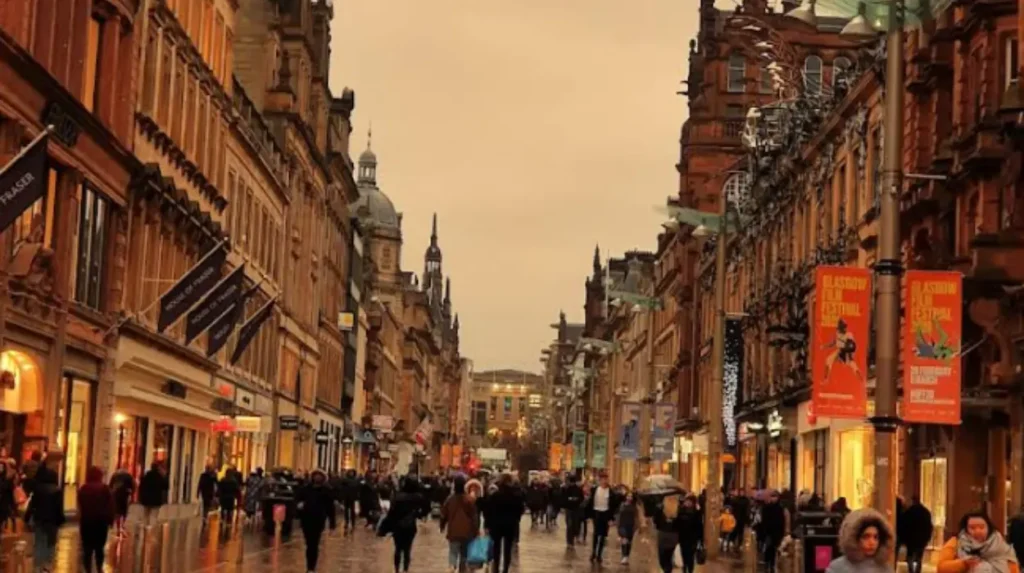
Merchant Street is a highly accessible urban environment with a low crime rate compared to other major city centers. It features level paving suitable for mobility aids and is well-lit due to its proximity to the City Chambers.
Accessibility in the Merchant City has been a focus of recent council improvements. Merchant Street itself is relatively flat, making it accessible for wheelchair users and those with limited mobility. The surrounding streets have been upgraded with tactile paving and dropped curbs. Public transport accessibility is excellent, with low-floor buses serving the nearby Glassford Street and Trongate. The proximity to Queen Street Station ensures that those traveling from outside the city can reach the street with ease.
Safety in the area is supported by a high density of municipal activity. Because the Glasgow City Chambers is staffed 24 hours a day, there is a consistent security presence on Merchant Street. The area is also part of the “City Safe” initiative, a partnership between the council and local businesses to ensure a safe night-time economy. Standard urban safety precautions apply, but the Merchant City is generally regarded as one of the safest districts in Glasgow due to high footfall and active street frontages.
For residents, the street offers a balance of central convenience and relative quiet. While the nearby George Square can be loud during festivals or demonstrations, Merchant Street remains insulated from the largest crowds. Emergency services, including the Scottish Fire and Rescue Service and the Scottish Ambulance Service, have rapid access to the area due to its central location and the grid layout of the streets. Overall, the street is a functional, safe, and highly integrated part of Glasgow’s urban landscape.
What Is Merchant Street in Glasgow?
Merchant Street is a street in Glasgow’s historic Merchant City district, located in the G1 postcode area near George Square and the Glasgow City Chambers. It connects North Frederick Street and John Street in the city centre.