Glasgow locals choose the best Glasgow shooting today option by matching the location to the shoot type, checking access and lighting, confirming permissions, and prioritizing safety, transport, and weather. The strongest choices are places that fit the visual brief, work legally, and remain practical for the crew.
- What does “Glasgow shooting today” mean?
- How do locals decide on a shoot location?
- Which Glasgow locations work best today?
- Why do weather and light matter so much?
- What permissions do locals check first?
- How do crews balance speed and quality?
- What role does Glasgow’s filming history play?
- What mistakes do locals avoid?
- How can a same-day Glasgow shoot stay effective?
- Why does this process matter for Glasgow search visibility?
- What is the clearest local decision rule?
What does “Glasgow shooting today” mean?
In Glasgow, “shooting today” usually means a same-day photo, video, or film shoot plan, not a firearm incident. Locals choose locations that work immediately for production, such as streets, civic landmarks, parks, studios, and riverfront areas. The decision depends on purpose, access, and the need for fast setup.
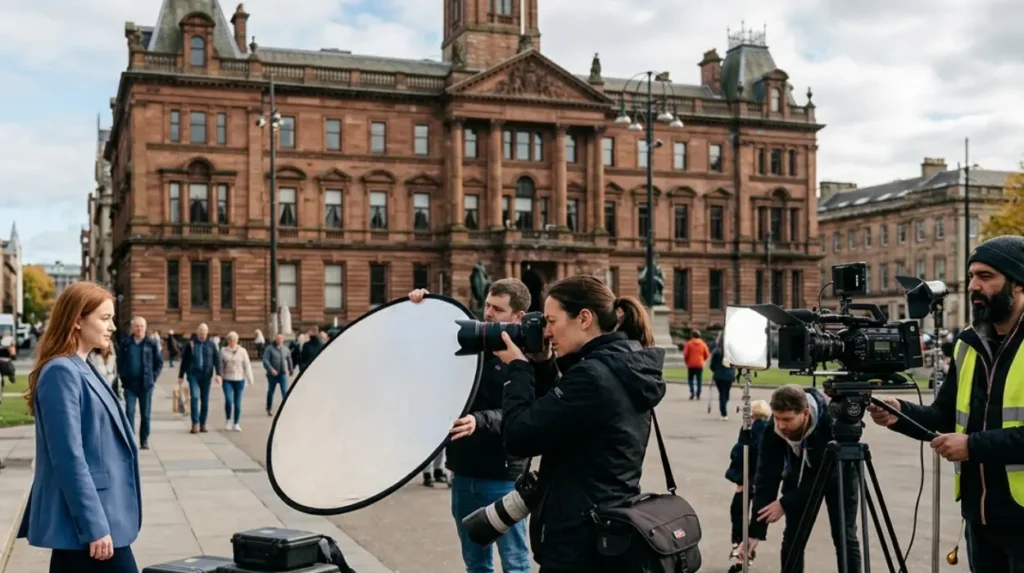
Glasgow has long served as a filming city because its streets, squares, heritage buildings, and open spaces can stand in for other places. George Square, Glasgow City Chambers, the Necropolis, Queen’s Park, and the River Clyde appear in production discussions because they offer distinct looks and practical access for crews. For a same-day shoot, that variety matters more than prestige.
The phrase also needs careful context because “shooting” can mean different things in different settings. For local production searches, the practical meaning is a photo shoot, film shoot, or video shoot. That interpretation matches how Glasgow location guides present the city’s creative spaces and hireable shoot venues.
How do locals decide on a shoot location?
Locals decide by comparing the visual style, travel time, permits, crowd levels, and weather exposure of each location. A good Glasgow shoot location gives the right background, fast access, safe working space, and enough flexibility for the planned shot list.
The first filter is visual fit. A civic landmark suits formal portraits, commercial branding, and period-style footage, while a park suits lifestyle content, interviews, and softer natural scenes. George Square gives a central urban frame, the Necropolis gives elevated historic texture, and Queen’s Park gives green space and wider composition options.
The second filter is logistics. Glasgow’s city centre location matters because crews often need quick movement between transport, equipment drop-off, and the set. George Square is noted for its proximity to Queen Street Station, which reduces setup friction for smaller teams. That kind of access often decides the final choice on the day.
The third filter is legal and operational readiness. Public areas, private venues, and commercial spaces do not operate under the same rules. Professional crews confirm permission requirements before arrival, especially when tripods, lighting stands, barriers, branded vehicles, or multiple people are involved.
Which Glasgow locations work best today?
The best Glasgow choices today are the ones with strong visuals and manageable logistics. Common local favourites include George Square, Glasgow City Chambers, the Necropolis, Queen’s Park, the River Clyde, and booked photo-shoot venues or studios.
George Square works for city-centre scenes, wide establishing shots, and public-facing campaign imagery. The square is central, recognizable, and close to transport, which makes it efficient for teams working under time pressure. Glasgow City Chambers adds a formal civic look and is widely used in film and television production.
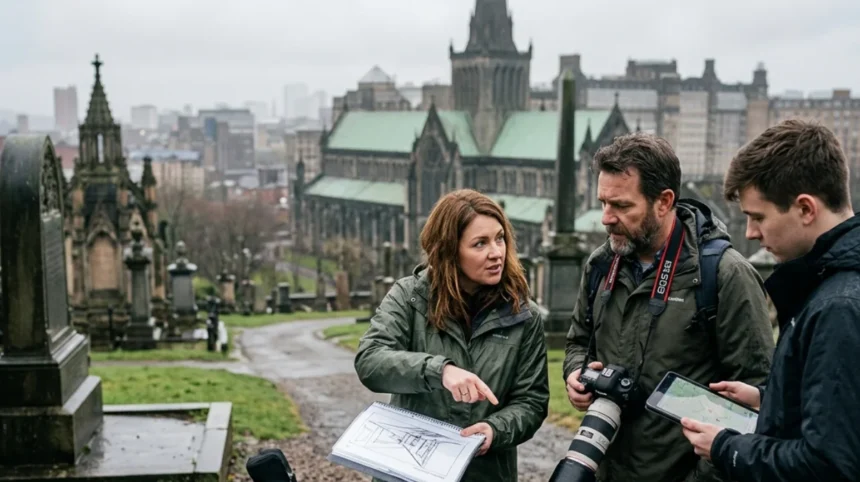
The Necropolis suits heritage-driven visuals, high contrast architecture, and dramatic skyline views. It is a cemetery with more than 50,000 burials, so shoots there require sensitivity, controlled behavior, and a respectful approach. Queen’s Park suits outdoor lifestyle work, family photography, and flexible natural-light shooting because it offers multiple scenery types in one area.
The River Clyde works for modern city and industrial backdrops, especially when a production needs water, bridges, or regenerated waterfront scenes. Production history around the Clyde, including use of former dock areas, shows why the river corridor remains attractive for location work. For indoor work, Glasgow studio and hire listings provide controlled spaces that remove weather risk.
Why do weather and light matter so much?
Weather and light determine whether a Glasgow shoot stays usable, efficient, and visually consistent. Glasgow’s outdoor locations change quickly with cloud, rain, wind, and winter daylight, so locals favor places that still work when conditions shift.
Natural light is a major factor in choosing an outdoor shoot location. Open spaces like Queen’s Park or the riverfront give broad daylight options, while tall civic streets and enclosed squares create more shadow variation. That affects portrait work, product photography, and video consistency.
Weather also affects crew speed and equipment safety. Rain changes surfaces, reflections, and subject comfort, while wind affects microphones, hair, reflectors, and light stands. That is why studios and hire venues remain practical alternatives when same-day weather turns poor.
Season and time of day also matter. In winter, usable daylight is shorter, which pushes many locals toward central areas with quick access and predictable setup. In summer, longer daylight extends location flexibility and increases the value of parks, riverside paths, and open civic spaces.
What permissions do locals check first?
Locals check ownership, public access, filming rules, and commercial use rights before shooting. A location that looks ideal still fails if the crew cannot legally use it or cannot manage the required paperwork and consent.
Public space does not automatically mean unrestricted use. A small handheld shoot can sometimes move quickly, but larger setups often need coordination with venue staff, local authorities, or private property managers. Commercial shoots usually require more formal approval than personal content.
Historic and high-traffic sites need extra care. Locations such as Glasgow City Chambers, the Necropolis, and central squares attract visitors, events, and regular foot traffic, so a crew must plan around pedestrians and operational rules. That reduces disruption and avoids delays.
Private photo-shoot spaces are easier for controlled production because booking terms are usually clear. Location listings in Glasgow exist for exactly this reason: they let photographers and videographers reserve a space that matches the brief without improvising on arrival. For same-day decisions, that clarity is often the deciding factor.
Explore More Area Guide
Margarita Mile Glasgow: Best Ways To Join The Southside Trail
What Should You Know Before Getting To Merchant Street In Glasgow Today?
How do crews balance speed and quality?
Crews balance speed and quality by picking a location with the strongest usable background closest to transport and by limiting setup complexity. The best same-day Glasgow choice delivers more than good scenery; it reduces lost time, reshoots, and permit risk.
A simple shoot often wins over a visually perfect but operationally difficult site. If a crew needs a quick portrait series, a location near transport and shelter saves time and protects the schedule. That is why central Glasgow remains popular for fast-turnaround content.
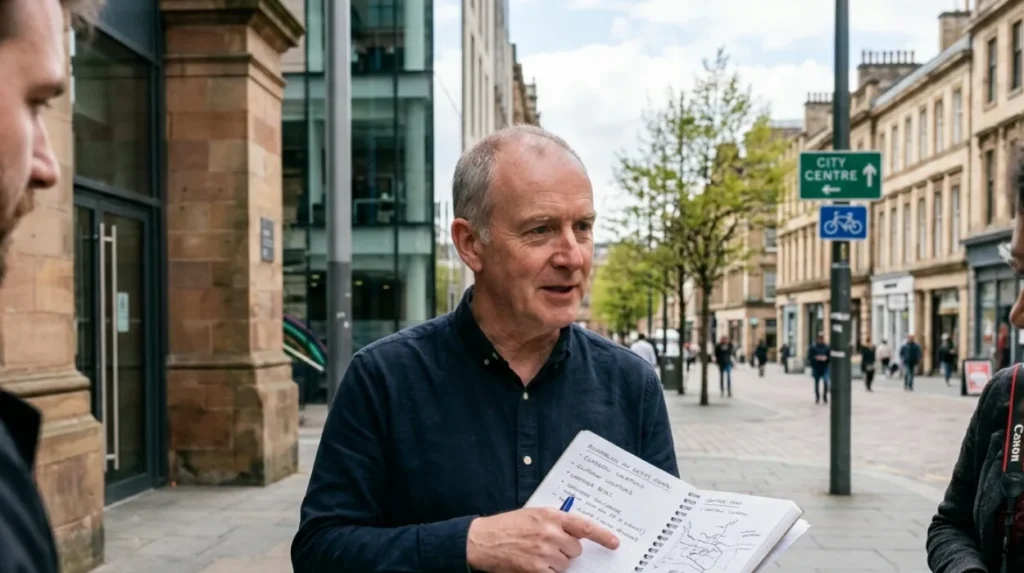
Quality depends on matching the location to the shot list. A brand portrait needs clean lines and low visual noise. A lifestyle campaign needs movement and contextual depth. A documentary interview needs calm sound conditions and controlled interruptions. Each category points to a different Glasgow setting.
The most efficient local crews think in terms of constraints. They check distance, parking, power access, public traffic, and the amount of gear required. They also prefer spaces that allow a backup plan if the first angle fails. That approach lowers risk and increases the chance of getting all required shots in one visit.
What role does Glasgow’s filming history play?
Glasgow’s filming history shapes local choices because it proves the city can support a wide range of visual styles. Productions have used Glasgow as itself and as a stand-in for other cities, which gives the city strong credibility as a shoot location.
George Square has appeared in production work because its grid layout and central position make it adaptable. Glasgow City Chambers is one of the city’s most filmed civic buildings, which shows how the architecture supports polished exterior visuals. The Necropolis adds Victorian atmosphere and height, which gives productions a different emotional tone.
That history matters because local photographers and directors trust locations that have already supported production needs. A place used repeatedly by crews tends to have predictable access patterns, strong image value, and practical working conditions. Glasgow’s broad visual range is one reason it remains attractive for film, photography, and branded content.
The city also supports shorter commercial work through dedicated hire platforms. Those platforms exist because production teams need searchable, bookable spaces rather than guesswork. That is a sign of a mature local shoot market, not just a tourist-friendly skyline.
What mistakes do locals avoid?
Locals avoid choosing a site only for appearance. They also avoid locations with weak access, unclear permission rules, poor light, heavy pedestrian traffic, and no backup option for weather or delays.
A common mistake is selecting a famous place without checking how it functions on the day. A landmark can look excellent but still be awkward for equipment, parking, or crowd control. In central Glasgow, that mistake wastes time because the city centre stays active throughout the day.
Another mistake is ignoring the subject of the shoot. A corporate portrait, music video, wedding editorial, and product shoot all need different levels of control. One location rarely suits every format. The best local choice fits the job instead of forcing the job to fit the place.
A third mistake is failing to plan for sound and movement. Busy streets, tourist areas, and event-heavy zones create noise and interruptions. For video work, that can make a location unusable even when it looks perfect in still photography. Strong local planners always check the physical environment, not just the view.
How can a same-day Glasgow shoot stay effective?
A same-day Glasgow shoot stays effective when the crew narrows the brief, picks one primary location, and keeps a backup indoor option. Fast decisions work best when the team already knows the city’s practical shoot zones and booking rules.
The simplest method is to choose a primary visual theme first. Urban, heritage, park, waterfront, or studio are the main categories. Once the theme is clear, the city offers obvious matches such as George Square for urban formality, the Necropolis for historic character, and Queen’s Park for natural scenery.
Next, the crew checks access and timing. If the shoot depends on daylight, transport, or a short booking window, the location needs minimal setup complexity. If the weather is unstable, a hired indoor space gives certainty and protects the schedule.
Finally, the team keeps the shot list realistic. Same-day success comes from covering the essential angles first and treating extra shots as optional. That approach suits Glasgow well because the city offers enough visual diversity to support both quick content capture and more structured production.
Why does this process matter for Glasgow search visibility?
This process matters because search engines favor pages that define the topic clearly, answer the main user question directly, and cover related entities with logical structure. A Glasgow shoot article ranks better when it explains locations, permissions, weather, history, and practical decision-making in one connected guide.
Search systems extract meaning from entity relationships. In this topic, the important entities include Glasgow, location choice, photo shoots, film shoots, civic landmarks, parks, studios, and permission rules. A strong article connects those entities without drifting into unrelated content.
Clear structure also helps AI search tools quote the right section. Direct answers at the start of each section improve extractability. Specific place names, location types, and operational factors give the page enough factual density to match intent.
For evergreen performance, the strongest article stays useful beyond a single date. It explains how locals choose locations in Glasgow in general, not just what is popular on one day. That makes it more durable for search than a news-style post tied to a single event or temporary trend.
What is the clearest local decision rule?
The clearest rule is simple: choose the Glasgow location that gives the best mix of visual fit, legal access, transport convenience, and weather resilience. If one factor fails, the location stops being the best choice, even when it looks attractive.
For formal city imagery, Glasgow City Chambers and George Square are strong first options. For historic atmosphere, the Necropolis stands out. For green space, Queen’s Park performs well. For water and urban regeneration, the River Clyde offers a distinct backdrop. For control and certainty, booked photo-shoot venues and studios remain the safest same-day solution.
What does “Glasgow shooting today” usually mean?
In most local search contexts, “Glasgow shooting today” refers to a same-day photo shoot, video shoot, or film production in Glasgow, not a firearm incident. People usually search for locations, permits, lighting conditions, and practical filming advice.