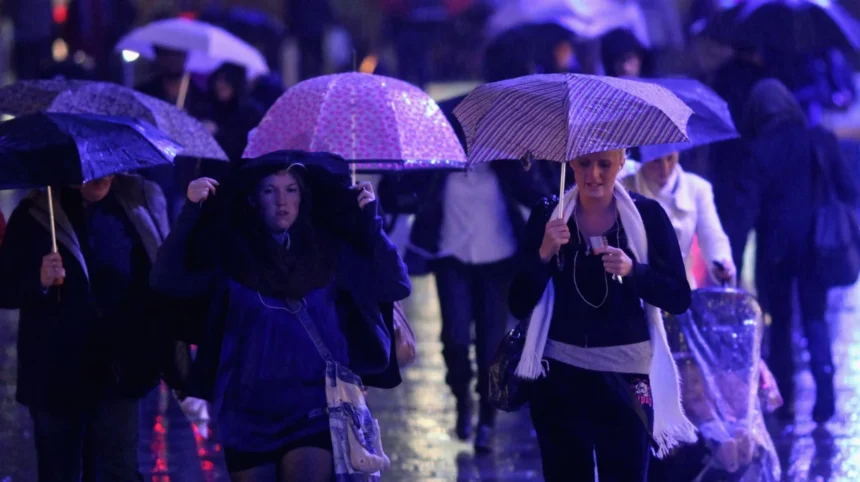
Glasgow is one of Scotland’s wettest major cities, and rainfall forms a normal part of everyday life. Glaswegians do not treat every shower as a reason to cancel plans. Daily routines instead account for changing weather through clothing, transport choices, footwear, home preparation, work routines and flexible outdoor planning.
- Why Does Glasgow Get So Much Rain?
- Is It Really Raining Every Day in Glasgow?
- How Do Glaswegians Dress for Frequent Rain?
- What Do Glaswegians Carry When the Weather Is Unpredictable?
- How Does Rain Affect Commuting Around Glasgow?
- How Do Glaswegians Handle Rain During Work and Study?
- Do Glaswegians Still Go Outdoors When It Rains?
- How Does Rain Affect Glasgow Homes?
- Does Glasgow Rain Cause Flooding?
- How Is Glasgow Changing Its Approach to Rain?
- Is Glasgow Getting Wetter Because of Climate Change?
- How Does Glasgow Rain Affect Outdoor Travel and Cycling?
- How Do Glaswegians Deal With Rain Without Letting It Control Daily Life?
- Does Rain Affect Mental Wellbeing in Glasgow?
- What Should Someone Moving to Glasgow Expect From the Rain?
- What Does “Living With Rain” Actually Mean for Glasgow?
The city’s reputation for rain has a strong climatic basis. Met Office 1991–2020 climate averages for Glasgow Bishopton record annual rainfall of about 1,300 millimetres, while Glasgow Springburn records about 1,153 millimetres. Rainfall occurs throughout the year rather than being restricted to one short wet season.
Glasgow’s wet conditions also involve more than total rainfall. The number of rainy days, wind, temperature and the intensity of individual downpours all affect how residents experience the weather. A light shower during a commute requires a different response from prolonged heavy rainfall that affects roads, drainage and public transport.
The practical response is therefore simple: rain becomes another part of planning. Residents check forecasts, carry suitable outerwear, protect shoes and bags, allow additional travel time and use indoor alternatives when conditions become severe. This approach makes everyday life functional despite frequent wet weather.
Why Does Glasgow Get So Much Rain?
Glasgow receives frequent rainfall because western Scotland is exposed to Atlantic weather systems, with moist air, prevailing winds and upland terrain contributing to persistent precipitation across the region throughout the year.
Glasgow sits in western Scotland, where Atlantic weather systems regularly influence conditions. Moist air arriving from the Atlantic produces precipitation when it encounters cooler air and rises over terrain.
The city also sits within a wider west-of-Scotland climate pattern. Met Office climate data demonstrates substantial rainfall in every month. At Bishopton, the 1991–2020 monthly average ranges from about 72 millimetres in May to more than 157 millimetres in January.
This distribution explains why Glaswegians experience rain in summer as well as winter. July averages around 92 millimetres at Bishopton, while August averages around 107 millimetres. Winter rainfall is higher, with January averaging about 157 millimetres.
Rain therefore forms part of Glasgow’s baseline climate rather than representing an unusual weather event.
The city’s location also influences wind and temperature. Rain accompanied by strong wind feels substantially different from calm drizzle. Residents therefore respond to the combination of weather conditions rather than rainfall totals alone.

Is It Really Raining Every Day in Glasgow?
Glasgow does not receive measurable rainfall every day, but rain occurs frequently throughout the year. The Met Office records more than 150 days with at least 1 millimetre of rainfall annually at the Glasgow Bishopton station.
The phrase “raining every day” describes the experience of frequent wet weather rather than a literal climate statistic.
At Glasgow Bishopton, the Met Office 1991–2020 climate record contains approximately 1,299 millimetres of annual rainfall. The same dataset records rainfall of at least 1 millimetre on roughly 159 days each year.
That distinction matters for people moving to Glasgow. A rainy climate does not mean continuous rainfall from morning until night. Many wet days contain periods of rain separated by dry intervals.
Glasgow also experiences considerable variation between individual years and seasons. Autumn and winter generally bring more rainfall than late spring, while summer remains capable of producing substantial showers.
The practical consequence is that residents plan around changeable weather. A morning forecast showing rain does not automatically mean that every hour of the day will be wet.
How Do Glaswegians Dress for Frequent Rain?
Glaswegians generally prioritise practical waterproof outerwear, comfortable footwear and adaptable layers rather than dressing exclusively for rain. The most useful approach combines water resistance, wind protection, warmth and easy layering for changing conditions throughout the day.
A waterproof or highly water-resistant jacket is one of the most useful items for Glasgow life. A hood provides additional protection when rain combines with wind.
Layering is equally important. Glasgow temperatures change throughout the year, while indoor environments such as offices, shops, cafés and public transport can feel considerably warmer than outdoor conditions.
Water-resistant trousers are useful for longer walks, cycling and extended outdoor work. They are less necessary for short journeys where a good waterproof jacket and suitable trousers provide sufficient protection.
Footwear also matters. Shoes with effective water resistance reduce discomfort during wet pavements and puddles. Waterproof boots provide stronger protection for longer outdoor journeys.
An umbrella remains useful, particularly during lighter rainfall. Strong wind reduces its usefulness, however, because exposed streets can make umbrellas difficult to handle.
The Glasgow approach is therefore based on adaptable clothing rather than one universal rain outfit.
What Do Glaswegians Carry When the Weather Is Unpredictable?
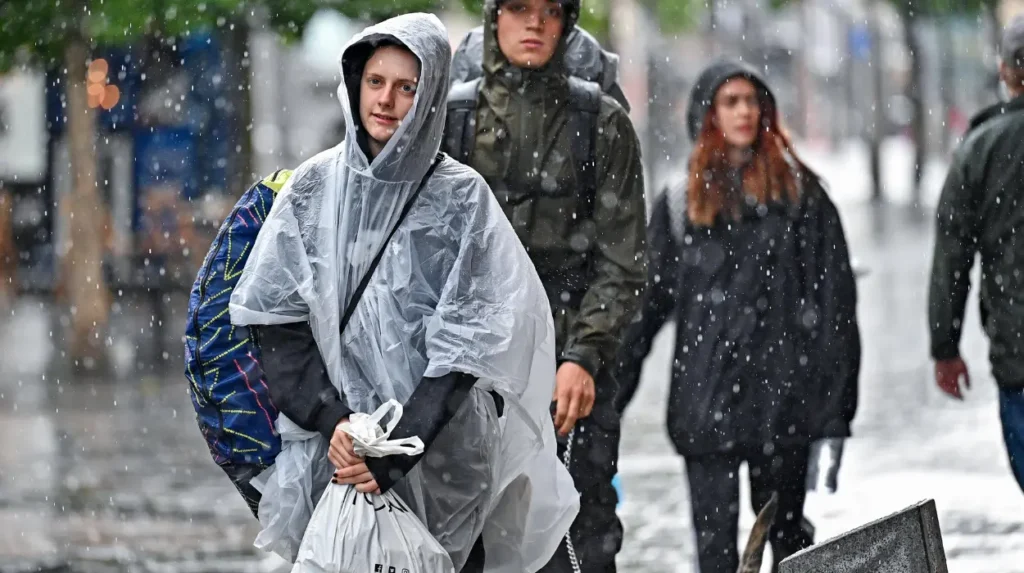
Everyday Glasgow weather encourages residents to carry compact rain protection, including a waterproof jacket, umbrella, water-resistant bag and suitable footwear. Small preparation reduces disruption when showers appear during commuting, shopping, work or leisure activities.
A compact waterproof jacket is easier to keep available than a heavy winter coat during warmer months.
Many commuters also use bags with water-resistant materials or protective covers. This helps protect laptops, documents, books and other belongings during sudden showers.
An umbrella works well as supplementary protection during calmer conditions. A hooded waterproof jacket provides greater reliability when wind accompanies rain.
People who cycle regularly require additional protection. Waterproof trousers, gloves, overshoes and reflective equipment become more relevant during prolonged wet journeys.
Parents and carers also account for rain when travelling with children. Waterproof outer layers and spare clothing reduce disruption after outdoor journeys.
The important principle is preparation without overpacking. Glasgow’s weather changes frequently, so practical items that remain useful across several conditions have greater value than highly specialised equipment.
How Does Rain Affect Commuting Around Glasgow?
Rain changes commuting behaviour by increasing the importance of weather forecasts, covered routes, reliable public transport, suitable footwear and extra journey time. Residents organise around conditions instead of treating ordinary rainfall as a reason to abandon normal travel.
Glasgow has an extensive public transport network that includes buses, rail services and the Glasgow Subway. These options provide alternatives when walking or cycling becomes uncomfortable.
Walking remains practical for many short journeys. Waterproof clothing makes the difference between an ordinary walk and an uncomfortable one.
Rain also affects road conditions. Wet surfaces reduce grip and increase stopping distances, so drivers need greater caution during heavy showers.
Cyclists face additional considerations. Wet surfaces, reduced visibility and standing water require careful riding. Lights and reflective clothing remain important during dark or poor-weather conditions.
Public transport can become more valuable during severe weather, but heavy rainfall can also affect roads and drainage. Glasgow City Council has documented the relationship between intense rainfall, blocked drainage gullies and surface-water flooding.
The practical response is to check conditions before leaving and select the most appropriate transport mode.
How Do Glaswegians Handle Rain During Work and Study?
Workers and students in Glasgow usually manage rain by separating outdoor travel from indoor activity, protecting work equipment, allowing time for wet-weather commuting and keeping suitable clothing available at workplaces, universities, colleges and other indoor destinations.
Rain does not prevent normal work or education because most daily activities take place indoors.
The main challenge is the journey between locations. Commuters often protect electronics and documents inside water-resistant bags or internal sleeves.
Employers and educational institutions also provide indoor environments where wet outerwear can dry. Coat storage, changing facilities and access to indoor spaces reduce the inconvenience of arriving in wet conditions.
Remote and hybrid work has also changed how some people experience poor weather. A person working from home removes the daily outdoor commute, although local errands still require weather planning.
For students, Glasgow’s compact central areas provide many indoor destinations. Libraries, cafés, study areas, shops and university buildings allow activities to continue during rain.
The key adjustment is separating the weather outside from the activity itself. Rain affects movement between places more directly than it affects most indoor tasks.
Do Glaswegians Still Go Outdoors When It Rains?
Glaswegians continue outdoor activities during ordinary rain because rainfall is a routine climatic condition rather than an exceptional event. Walking, commuting, visiting parks and exercising remain practical when clothing, timing and route choices match the weather.
Outdoor life in Glasgow does not depend on consistently dry weather.
Glasgow contains parks, riverside routes, urban green spaces and recreational areas. Residents use these spaces in different conditions throughout the year.
The important distinction is between ordinary rain and severe weather. Light rain is manageable with waterproof clothing. Heavy rainfall, strong winds, flooding and weather warnings require more careful decisions.
Walking routes can also be adapted. Sheltered streets, covered entrances, public transport connections and indoor destinations provide practical alternatives during prolonged showers.
Rain can change the duration of an outdoor activity without eliminating it. A short walk can replace a longer outing, while indoor facilities can become the preferred option during persistent heavy rain.
This flexibility forms an important part of living comfortably in a wet city.
How Does Rain Affect Glasgow Homes?
Rain makes moisture management important in Glasgow homes. Residents benefit from ventilation, controlled heating, drying areas, maintained gutters, sound windows, effective roof drainage and careful management of wet clothing, shoes and outdoor equipment.
Wet clothing introduces additional moisture into indoor spaces. Drying clothes efficiently therefore matters, particularly during colder months when opening windows for long periods becomes less comfortable.
Ventilation helps control indoor moisture. Bathrooms and kitchens generate additional humidity, so effective extraction and regular ventilation are important.
Building condition also matters. Roofs, gutters, downpipes, windows and external walls need appropriate maintenance to prevent water ingress.
Older Glasgow housing includes many traditional tenement buildings. Tenements are multi-storey residential buildings commonly found across the city, particularly in neighbourhoods developed during Glasgow’s nineteenth- and early twentieth-century expansion.
For tenants, visible damp, leaks or persistent condensation require prompt attention. Landlords and property managers have responsibilities concerning housing condition, while residents should report defects through the appropriate channels.
Rain therefore influences home maintenance as well as clothing and travel.
Does Glasgow Rain Cause Flooding?
Normal rainfall does not automatically cause flooding, but intense rainfall can overwhelm drainage systems, producing surface-water flooding and affecting roads, buildings and transport. Glasgow therefore combines everyday rain adaptation with formal flood-risk management and drainage investment.
Flooding is different from ordinary rainfall. Surface-water flooding occurs when rainfall exceeds the capacity of drainage systems or when water cannot enter drainage infrastructure efficiently.
Glasgow City Council identifies surface-water, river and other flood risks as important climate adaptation issues. The city has a long history of flooding, while future changes in rainfall intensity increase the importance of drainage resilience.
Glasgow City Council reported that August 2020 produced an exceptional rainfall event and 608 blocked-gully reports, compared with 489 in August 2019 and 160 in August 2018.
The city uses sustainable drainage systems, commonly called SuDS. These systems manage surface water through features such as rain gardens, swales, basins, ponds and tree pits.
This infrastructure reduces pressure on conventional drainage by slowing, storing or redirecting rainfall.
Residents therefore experience two levels of rain management: everyday personal preparation and larger-scale infrastructure designed to manage extreme rainfall.
How Is Glasgow Changing Its Approach to Rain?
Glasgow is increasingly treating rainfall as a permanent urban-design consideration rather than only a drainage problem. Planning approaches include sustainable drainage, rain gardens, permeable surfaces, green infrastructure, shelter and public-realm designs that accommodate wet conditions.
Glasgow City Council has explicitly developed a “living with rain” approach. Council documents recognise Glasgow as a wet city and connect rainfall with public transport, active travel, public spaces and urban design.
Rain gardens provide one example. They are landscaped areas designed to collect and manage surface water.
Permeable surfaces provide another approach. These materials allow water to infiltrate rather than forcing all rainfall immediately into conventional drainage systems.
Green infrastructure also contributes to climate resilience. Trees, planted areas and natural drainage features can help manage rainfall while improving urban environments.
The approach changes the question from “How does Glasgow stop rain?” to “How does Glasgow function effectively with rain?”
That distinction has long-term importance because climate projections show continued changes in rainfall patterns.
Is Glasgow Getting Wetter Because of Climate Change?
Scotland’s climate is changing, with warmer temperatures, shifting rainfall patterns and more heavy rainfall. Official Scottish environmental data reports that the 2010–2019 period was about 9% wetter than 1961–1990, increasing the importance of rainfall resilience.
Scotland’s climate has experienced measurable changes over recent decades.
Scotland’s Environment Web reports that the average temperature during 2010–2019 was approximately 0.7°C higher than the 1961–1990 average. It also reports that the average year during 2010–2019 was 9% wetter than the 1961–1990 period, with a greater proportion of rainfall arriving through heavy events.
Transport Scotland reports a similar national pattern. Its climate adaptation guidance identifies increased rainfall and a greater proportion of heavy rainfall events, with winters during 2010–2019 approximately 19% wetter than the 1961–1990 baseline.
Future projections also identify wetter winters and more intense rainfall events as important Scottish climate trends.
For Glasgow residents, this makes practical rain resilience increasingly relevant. Drainage, buildings, transport systems, public spaces and emergency planning all need to account for intense rainfall.
How Does Glasgow Rain Affect Outdoor Travel and Cycling?
Rain does not prevent walking or cycling across Glasgow, but wet conditions require stronger attention to visibility, road grip, braking, clothing, footwear and route selection. Severe rainfall requires additional caution around standing water and flooded routes.
Walking remains one of the simplest ways to travel during ordinary rain.
Cyclists require more technical preparation. Wet roads can reduce grip, while spray from vehicles reduces visibility. Braking distances also increase when surfaces are wet.
Good-quality lights are particularly important during dark winter conditions. Reflective clothing improves visibility to other road users.
Route selection also matters. A route with heavy traffic, poor drainage or exposed surfaces becomes less attractive during intense rain.
Cyclists should also protect electronic devices and clothing. Waterproof panniers, bags or covers provide protection during longer journeys.
The same principle applies to pedestrians. Footwear with sufficient grip reduces the risk of slipping on wet surfaces.
Weather does not eliminate active travel. It changes the equipment and attention required to complete journeys safely.
How Do Glaswegians Deal With Rain Without Letting It Control Daily Life?
Glaswegians manage frequent rain by treating weather as a planning factor rather than a constant disruption. Forecast checking, waterproof clothing, flexible travel, indoor alternatives and sensible outdoor timing allow ordinary routines to continue throughout the year.
The most important adjustment is psychological and practical rather than technical: rain becomes expected.
Residents check forecasts before leaving home. They select clothing according to temperature, wind and rainfall. They protect important belongings and choose transport based on journey length and conditions.
This approach reduces unnecessary disruption because preparation happens before the rain arrives.
The distinction between ordinary and severe weather is also important. Normal showers require routine preparation. Heavy rainfall, flooding, strong winds and official weather warnings require more cautious decisions.
Glasgow’s urban infrastructure increasingly reflects the same principle. The city is incorporating sustainable drainage, green infrastructure and rain-friendly public-realm measures into its climate adaptation approach.
Rain therefore becomes one component of everyday decision-making rather than the defining feature of daily life.
Does Rain Affect Mental Wellbeing in Glasgow?
Rain itself does not automatically cause poor mental health, but limited daylight during winter can affect some people. NHS inform identifies seasonal affective disorder as a depression pattern associated with seasonal changes and reduced exposure to sunlight.
Weather and mental wellbeing require a careful distinction.
Frequent rain can reduce opportunities for comfortable outdoor activity, but rain is not itself a diagnosis or direct explanation for depression.
Seasonal affective disorder, or SAD, is a type of depression with a seasonal pattern. NHS inform states that symptoms often begin during autumn as daylight decreases and are typically most severe during December, January and February.
NHS inform also states that reduced exposure to sunlight is one theory associated with SAD. Symptoms can include low mood, loss of interest, tiredness, difficulty concentrating and changes in sleep.
The appropriate response to persistent mental-health symptoms is professional support rather than assuming that weather is responsible.
For everyday wellbeing, maintaining routines, staying active, using indoor social spaces and accessing daylight when conditions permit remain practical parts of a balanced routine.
Explore More Area Guide
Glasgow vs Edinburgh: Moving to Scotland Guide 2026
Glasgow Tenement Flats: What Buyers Should Check in 2026
What Should Someone Moving to Glasgow Expect From the Rain?
Someone moving to Glasgow should expect frequent rainfall, changeable conditions and wet periods throughout the year. A waterproof jacket, practical footwear, flexible travel plans and effective home ventilation are useful from the beginning.
New residents often focus on annual rainfall totals, but the day-to-day pattern matters more.
Glasgow receives rain across every season. The Met Office’s Glasgow climate records show significant monthly rainfall from winter through summer.
New residents should therefore prepare for wet weather rather than purchasing equipment only after experiencing it.
A reliable waterproof jacket is a practical first purchase. Water-resistant footwear is also useful. A compact umbrella provides additional protection during suitable conditions.
Home preparation matters too. Drying wet clothing, ventilating rooms and monitoring condensation help maintain comfortable indoor conditions.
Transport planning should account for weather-related delays during severe rainfall. Public transport provides alternatives to walking and cycling, while shorter walking routes remain practical during ordinary showers.
The adjustment is straightforward: Glasgow life continues during rain because daily systems, clothing and routines accommodate it.
What Does “Living With Rain” Actually Mean for Glasgow?
Living with rain in Glasgow means designing everyday routines, buildings, transport choices and public spaces around a wet climate. It combines personal preparation with infrastructure, drainage management, climate adaptation and flexible behaviour across ordinary and extreme weather.
Glasgow’s relationship with rain is based on geography, climate and urban development.
The city receives substantial rainfall throughout the year. Its western Scottish location exposes it to Atlantic weather systems, while changing climate patterns are increasing the importance of intense rainfall resilience.
At an individual level, residents respond with practical clothing, suitable footwear, forecast checking and flexible transport.
At the city level, Glasgow uses drainage improvements, sustainable drainage systems, rain gardens, green infrastructure and climate adaptation policies.
The concept therefore extends beyond carrying an umbrella.
“Living with rain” describes a complete urban response. It includes how people move through the city, how buildings manage moisture, how public spaces handle water and how infrastructure responds to heavy rainfall.
For anyone considering living in Glasgow, the central fact is simple: rain is a normal part of the city’s climate, but it does not stop normal life. Preparation, infrastructure and adaptable routines allow Glasgow residents to work, study, travel and enjoy the city throughout the year.
Glasgow’s future approach will become increasingly important as Scotland experiences further climatic changes. Official projections identify wetter winters and more intense rainfall events, making resilient drainage, buildings, transport and public spaces increasingly relevant to urban life.
The practical lesson is equally straightforward. Glasgow residents do not need dry weather every day to maintain ordinary routines. They need appropriate clothing, reliable infrastructure, sensible planning and an understanding of how weather affects each activity.
Rain is therefore not an interruption to Glasgow life. It is one of the environmental conditions around which Glasgow’s residents and urban systems operate.
Does it really rain every day in Glasgow?
No. Glasgow does not receive measurable rainfall every day, but rain is frequent throughout the year. Met Office climate data for Glasgow Bishopton records around 159 days annually with at least 1 millimetre of rainfall.