Glasgow is one of Scotland’s leading cultural cities, recognised for its internationally important museums, historic architecture, public art collections, and creative institutions. The city offers a wide range of free art galleries and museums that preserve Scottish heritage, showcase global collections, and provide accessible cultural experiences for residents and visitors.
- What Are the Best Free Art Galleries and Museums in Glasgow?
- Why Is Kelvingrove Art Gallery and Museum One of Glasgow’s Most Important Cultural Attractions?
- What Can Visitors See at the Gallery of Modern Art in Glasgow?
- Why Is The Burrell Collection a Must-Visit Free Museum in Glasgow?
- How Does Riverside Museum Explain Glasgow’s Transport and Industrial History?
- What Is the Importance of St Mungo Museum of Religious Life and Art?
- How Did Glasgow Become a Major Centre for Art and Museums?
- How Do Free Museums and Galleries Benefit Glasgow Visitors?
- What Is the Future of Glasgow’s Free Cultural Attractions?
Free museums and galleries in Glasgow operate as public cultural institutions that allow people to explore art, history, science, design, and social heritage without admission charges. These venues support education, tourism, research, and community engagement while protecting collections that represent centuries of human creativity.
The city’s cultural landscape developed through industrial growth, maritime trade, civic investment, and artistic movements. Glasgow became a major European centre for architecture, design, and visual arts during the 19th and 20th centuries. Today, its museums and galleries continue this tradition by presenting historic collections alongside contemporary exhibitions.
What Are the Best Free Art Galleries and Museums in Glasgow?
Glasgow has several world-class free museums and galleries, including Kelvingrove Art Gallery and Museum, Gallery of Modern Art, The Burrell Collection, and Riverside Museum. These institutions provide free access to internationally significant artworks, historical objects, and educational exhibitions.
Glasgow’s free cultural venues represent different areas of knowledge and creativity. Some focus on fine art, while others preserve transport history, social development, archaeology, and natural sciences. Together, these institutions create a complete cultural network that reflects Glasgow’s identity.
The city’s museum system is managed by public cultural organisations that maintain permanent collections, temporary exhibitions, conservation programmes, and educational activities. Glasgow Life, the charity responsible for operating many of the city’s cultural facilities, manages several major museums and galleries across the city.
The availability of free entry supports wider public access to culture. Visitors can experience European paintings, Scottish history, ancient artefacts, modern design, and scientific displays without purchasing admission tickets.
The main free museums and galleries in Glasgow include:
- Kelvingrove Art Gallery and Museum, one of Scotland’s most visited museums, containing fine art, historical collections, and natural history displays.
- Gallery of Modern Art, located in the city centre, featuring modern and contemporary artworks.
- The Burrell Collection, a museum housing a major international collection of art and antiquities.
- Riverside Museum, dedicated to transport and Glasgow’s industrial history.
- St Mungo Museum of Religious Life and Art, exploring global religious traditions through art and objects.
These institutions collectively demonstrate Glasgow’s commitment to preserving cultural resources and making them available to diverse audiences.
Why Is Kelvingrove Art Gallery and Museum One of Glasgow’s Most Important Cultural Attractions?
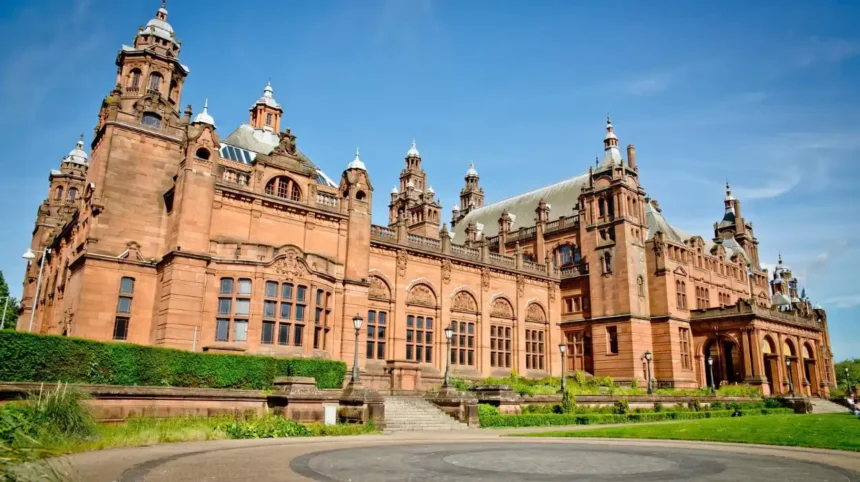
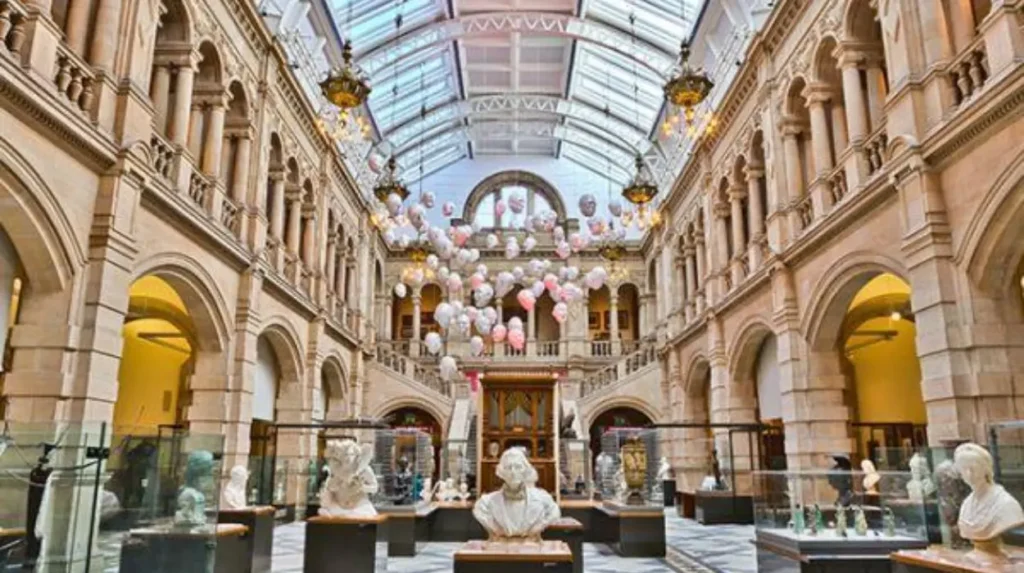
Kelvingrove Art Gallery and Museum is one of Glasgow’s most significant cultural institutions because it combines fine art, natural history, archaeology, and social history collections inside a historic building opened in 1901. It attracts millions of visitors through free exhibitions and educational programmes.
Kelvingrove Art Gallery and Museum stands in Kelvingrove Park in Glasgow’s West End. The building was designed by architects John William Simpson and Edmund Ratcliffe and opened in 1901 as part of the city’s international exhibition period.
The museum contains more than 8,000 objects displayed across multiple galleries. Its collections cover European paintings, Scottish history, military artefacts, ancient cultures, wildlife, and decorative arts.
The art collection includes important works by European artists such as Rembrandt, Titian, and Salvador Dalí. One of the museum’s most recognised artworks is Dalí’s painting “Christ of Saint John of the Cross,” acquired by Glasgow Museums in 1952.
Kelvingrove also presents Scottish artistic heritage through works connected to the Glasgow Boys and the Scottish Colourists. The Glasgow Boys were a group of late 19th-century Scottish painters known for modern approaches to landscape and rural subjects. The Scottish Colourists developed innovative painting techniques influenced by European modernism.
The museum’s architecture contributes to its cultural importance. The building combines Baroque and Renaissance influences with Scottish design features. Its grand interior reflects Glasgow’s economic confidence during the industrial era.
Kelvingrove provides educational resources for schools, families, researchers, and international visitors. Its galleries explain historical developments through objects, artworks, and interactive displays.
What Can Visitors See at the Gallery of Modern Art in Glasgow?
The Gallery of Modern Art in Glasgow presents contemporary artworks, visual culture, and creative exhibitions in a historic city-centre building. It provides free access to modern art collections, temporary displays, and public programmes focused on current artistic practices.
The Gallery of Modern Art, commonly known as GoMA, opened in 1996 and operates from the former Royal Exchange building on Queen Street. The building dates from the 18th century and reflects Glasgow’s history as a major trading city.
GoMA focuses on modern and contemporary art. Its exhibitions explore themes such as identity, politics, social change, technology, and cultural expression.
The gallery displays works by Scottish and international artists. Its programme changes regularly, allowing visitors to experience different artistic movements and creative approaches.
The institution also supports public engagement through workshops, discussions, and community projects. These activities help visitors understand contemporary art through education and participation.
GoMA’s location in Glasgow city centre makes it one of the most accessible cultural attractions in the city. It sits near major transport connections, shopping areas, and historic streets.
The gallery represents Glasgow’s transition from an industrial economy toward a creative and cultural economy. Contemporary art institutions contribute to urban regeneration by attracting visitors, supporting artists, and creating educational opportunities.
Why Is The Burrell Collection a Must-Visit Free Museum in Glasgow?
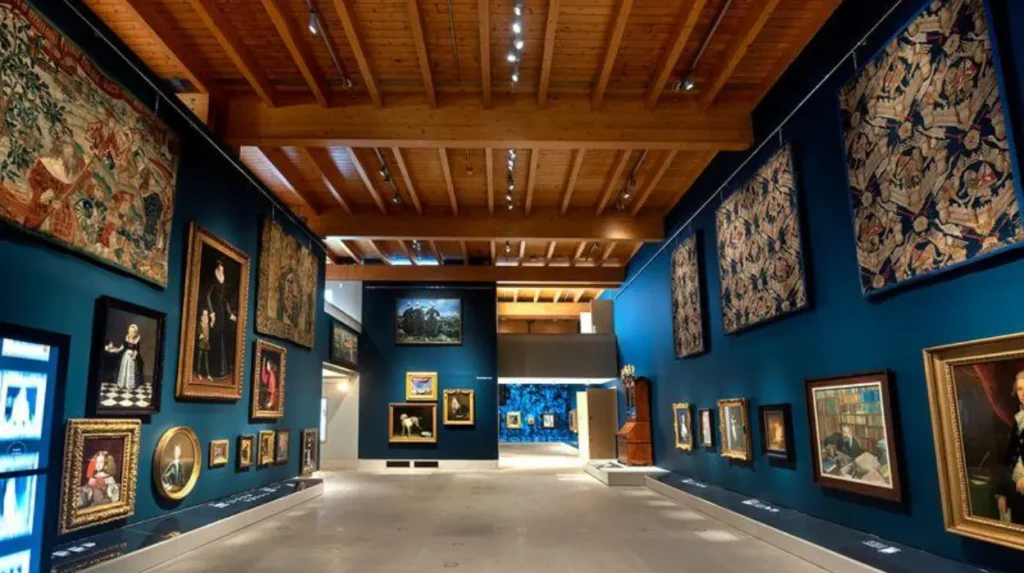
The Burrell Collection is a major free museum in Glasgow containing more than 9,000 artworks and historical objects collected by businessman Sir William Burrell. The museum presents ancient, medieval, and international art within Pollok Country Park.
The Burrell Collection opened in 1983 and was created from the personal collection of Sir William Burrell and his wife Lady Constance Burrell. Sir William Burrell was a Scottish shipping businessman and art collector who donated his collection to Glasgow in 1944.
The collection represents cultures from Europe, Asia, Africa, and the Middle East. It includes medieval sculptures, Chinese ceramics, Islamic art, stained glass, paintings, furniture, and archaeological objects.
The museum building underwent a major redevelopment and reopened in 2022 after an extensive restoration project. The redesigned galleries improved accessibility, conservation standards, and visitor facilities.
The Burrell Collection demonstrates how private collections become public cultural resources. Museums preserve objects while providing historical interpretation for future generations.
Located within Pollok Country Park, the museum combines cultural heritage with natural surroundings. Pollok Country Park covers approximately 360 acres and is one of Glasgow’s largest green spaces.
The collection’s importance comes from its global range. Visitors can explore different civilisations and artistic traditions within a single institution.
How Does Riverside Museum Explain Glasgow’s Transport and Industrial History?
Riverside Museum preserves Glasgow’s transport heritage through thousands of vehicles, objects, and displays connected to shipbuilding, railways, roads, and urban development. The museum opened in 2011 and provides free access to industrial history exhibitions.
Riverside Museum stands beside the River Clyde at the former Glasgow Harbour site. Designed by architect Zaha Hadid, the building represents Glasgow’s connection with innovation and engineering.
The museum houses over 3,000 transport-related objects, including cars, bicycles, trams, locomotives, and ship models. These exhibits explain how transport systems shaped Glasgow’s economic growth.
The River Clyde played a central role in Glasgow’s industrial development. During the 19th and early 20th centuries, Clyde shipyards produced vessels exported around the world. Shipbuilding became one of the city’s defining industries.
Riverside Museum presents this industrial history through recreated streets, historic vehicles, and interactive displays. Visitors learn how transportation influenced work, migration, trade, and urban expansion.
The museum also highlights everyday experiences by showing how ordinary people travelled through different historical periods.
Its design received international recognition because of its distinctive structure and architectural approach. Riverside Museum demonstrates the connection between modern architecture and industrial heritage.
What Is the Importance of St Mungo Museum of Religious Life and Art?
St Mungo Museum of Religious Life and Art explores global religious traditions through paintings, sculptures, objects, and historical displays. The museum promotes understanding between cultures by presenting religious beliefs and artistic expressions from around the world.
St Mungo Museum opened in 1993 beside Glasgow Cathedral and the historic Provand’s Lordship area. It was created to encourage awareness of different religions and cultural traditions.
The museum contains objects connected to Christianity, Islam, Hinduism, Buddhism, Judaism, Sikhism, and other belief systems. These collections demonstrate how religion influences art, architecture, festivals, and daily life.
The museum’s purpose focuses on education and cultural understanding. Exhibitions explain similarities and differences between religious traditions without promoting a particular belief system.
The building itself was designed in a traditional Scottish architectural style to complement the surrounding historic area.
St Mungo Museum contributes to Glasgow’s reputation as a multicultural city. It provides a space where visitors can learn about global communities through carefully preserved objects.
The museum also connects with Glasgow’s history as a city shaped by migration, trade, and cultural exchange.
How Did Glasgow Become a Major Centre for Art and Museums?
Glasgow became a major cultural centre through industrial wealth, civic investment, architectural innovation, and artistic movements during the 19th and 20th centuries. The city developed museums and galleries to support education, public access, and cultural preservation.
Glasgow’s transformation into a cultural city is closely linked to its industrial expansion. During the Victorian period, the city became one of Britain’s leading centres for manufacturing, engineering, and international trade.
Economic growth allowed investment in public institutions. Libraries, museums, universities, and galleries were established to improve education and provide cultural resources.
The creation of institutions such as Kelvingrove reflected the Victorian belief that museums served public learning. These spaces collected objects from science, art, history, and industry.
Glasgow also developed important artistic movements. The Glasgow School of Art, founded in 1845, became internationally recognised for design education and architectural innovation. The work of architect Charles Rennie Mackintosh influenced modern design worldwide.
The city’s cultural development continued after industrial decline. Museums and galleries became important parts of Glasgow’s regeneration strategy by attracting tourism and supporting creative industries.
Today, Glasgow’s free cultural institutions preserve this history while adapting to modern audiences.
Explore More Area Guide
What Are the Best Student Bars and Clubs in Glasgow Right Now?
Is Glasgow Caledonian University a Good Choice Over Strathclyde University Today?
How Do Free Museums and Galleries Benefit Glasgow Visitors?
Free museums and galleries improve cultural access by allowing visitors of different ages, backgrounds, and financial circumstances to experience art, history, and education without admission barriers. They support tourism, learning, community engagement, and cultural participation.
Free entry encourages repeat visits because people can explore exhibitions at their own pace. Visitors can return for new exhibitions, educational events, and seasonal programmes.
Museums contribute significantly to Glasgow’s tourism economy. Cultural attractions encourage longer stays and increase visitor activity in surrounding areas.
Educational benefits are also significant. Schools use museums as learning environments where students connect classroom subjects with real historical objects and artworks.
Public museums also support research and conservation. Specialists study collections to improve understanding of artistic techniques, historical events, and cultural development.
Digital technology has expanded museum access further. Online collections, virtual resources, and digital exhibitions allow global audiences to explore Glasgow’s cultural assets.
The continued development of free museums ensures that cultural heritage remains accessible for future generations.
What Is the Future of Glasgow’s Free Cultural Attractions?
Glasgow’s free museums and galleries continue developing through conservation projects, digital innovation, inclusive programming, and improved visitor experiences. These institutions remain central to preserving heritage while responding to changing cultural and educational needs.
Future museum development focuses on accessibility, sustainability, and broader representation of communities. Cultural institutions increasingly include diverse histories and perspectives within their collections and exhibitions.
Technology plays an expanding role in museum operations. Digital archives, interactive displays, and online learning platforms help museums reach wider audiences.
Conservation remains a major priority because historical objects require careful protection. Museums invest in specialist research, climate-controlled storage, and restoration techniques.
Glasgow’s free cultural venues also support the city’s creative economy. Artists, designers, educators, and researchers benefit from the presence of strong cultural institutions.
The continued success of Glasgow’s museums depends on maintaining public access while preserving internationally important collections.
Glasgow’s free art galleries and museums represent centuries of creativity, innovation, and cultural exchange. From historic paintings at Kelvingrove to global collections at The Burrell Collection and industrial stories at Riverside Museum, these institutions provide accessible knowledge and meaningful connections with the past, present, and future.
What are the best free art galleries and museums in Glasgow?
The best free art galleries and museums in Glasgow include Kelvingrove Art Gallery and Museum, Gallery of Modern Art Glasgow, The Burrell Collection, Riverside Museum, and St Mungo Museum of Religious Life and Art. These attractions provide access to art, history, transport, and cultural collections without admission fees.