Key Points
- Industrial action threat: Hundreds of Unite union members at Thales’ Govan factory in Glasgow, plus dozens at the company’s Reading site, have backed strike action after rejecting a below‑inflation pay offer.
- Final talks expected: The move comes ahead of “showdown” final negotiations between workers and the French defence firm.
- Strategic Royal Navy role: Thales is the sole UK supplier of periscopes and optronics masts for Royal Navy submarines and surface vessels.
- Major export deals: The Ministry of Defence recently announced new export contracts for Thales’ vessels and optronics systems worth around £1.1bn.
- Palestine protests context: The Govan plant has been repeatedly targeted by pro‑Palestine activists because of its partnership with Israeli firm Elbit Systems.
- Elbit systems share: Elbit Systems is reported to supply up to 85% of the Israel Defence Forces’ drones and land‑based military equipment.
- Watchkeeper link: Protesters claim Thales’ UK work with Elbit contributes to the Watchkeeper drone, which is modelled on Elbit’s Hermes 450 and believed to have been used in Gaza.
- Thales denial: Thales has stated it does not supply the Israeli military or Israeli Ministry of Defence and only deals with the UK Ministry of Defence.
- Earlier disruptions: The Glasgow site has previously seen activists storming the roof, blockading gates, and evacuating workers, with multiple arrests.
- Union stance: Unite members have described the pay rise as insufficient given current inflation and cost‑of‑living pressures, fuelling the strike vote.
- National impact: A strike at both Govan and Reading could disrupt Royal Navy maintenance, export deliveries, and UK defence supply chains.
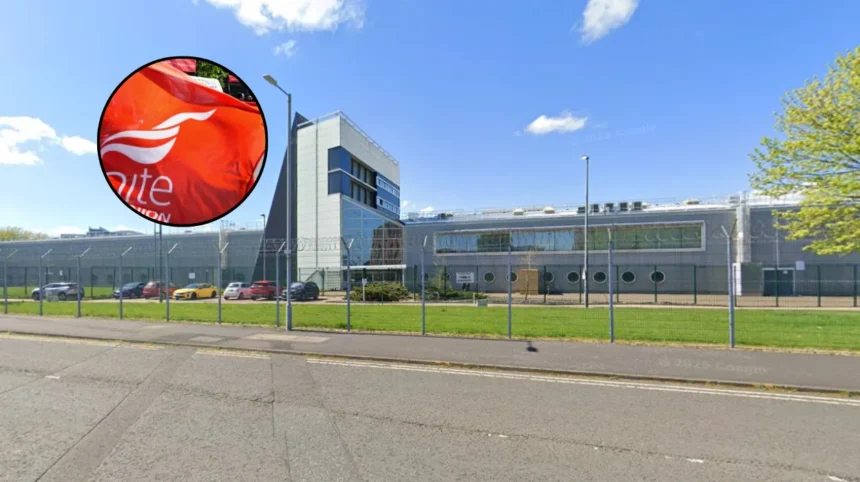
Govan (Glasgow Express) July 3, 2026 – Workers at Thales’ arms factory in Govan could be set to strike, as final showdown talks with the employer approach. Hundreds of Unite members at the Thales factory in Govan, along with dozens at the company’s Reading site, have backed industrial action after rejecting a below‑inflation pay rise, according to the initial report [source: original news brief]. The French defence firm is the sole supplier of periscopes and optronics masts to the Royal Navy, and the Ministry of Defence has recently announced new export deals for these systems worth £1.1bn [source: original news brief].
- Key Points
- Why Are Thales Govan Workers Balking at the Pay Offer?
- How Central Is Thales Govan to Royal Navy Capability and Defence Exports?
- What Role Do Pro‑Palestine Protests Play in the Current Dispute?
- How Could a Strike at Thales Govan and Reading Affect Defence Output and Jobs?
- What Negotiation Steps Are Expected Before a Full Strike Begins?
- What Has Thales Said About the Pay Dispute and Protest Concerns?
- Background: Thales Govan Factory, Elbit Systems Partnership and Previous Protests
- Prediction: How a Thales Govan Strike Could Affect Workers, Royal Navy Users and the Glasgow Community
- Impact on Royal Navy and Defence Users
- Impact on the Glasgow Community and Local Economy
The development raises immediate questions about production continuity, UK defence capability, and the broader social and political tensions already surrounding the site. Strike ballots, union statements and company responses will now be critical in determining whether the threatened action becomes a full‑scale dispute.
Why Are Thales Govan Workers Balking at the Pay Offer?
As reported by the initial news summary, Unite members at the Govan plant and Reading site have rejected a pay offer they consider below inflation.
Workers in the UK defence sector have faced prolonged cost‑of‑living pressures, and many have argued that wage increases must at least match current inflation rates to maintain living standards.
The union’s position, as outlined in the report, suggests that the proposed increase falls short of this threshold, prompting a vote for industrial action.
Unite, which represents thousands of workers across the UK manufacturing and engineering sectors, has previously supported strikes in defence and aerospace when pay, job security or working conditions are deemed inadequate.
The threat of coordinated action across two major sites—Govan and Reading—indicates a structured approach rather than isolated unrest.
How Central Is Thales Govan to Royal Navy Capability and Defence Exports?
The Govan factory plays a strategically vital role in UK defence. According to the original report, Thales is the sole supplier of periscopes and optronics masts to the Royal Navy.
Periscopes and optronics masts are critical for submarine navigation, surveillance, and targeting, as well as for surface vessel systems.
A disruption at this site could therefore impact maintenance, upgrades, and potentially new builds across the Royal Navy’s fleet.
In addition, the Ministry of Defence recently announced export deals for Thales’ optronics and related systems worth £1.1bn.
These contracts likely involve international buyers relying on UK‑made components. A strike that delays production or Quality Assurance processes could jeopardise delivery timelines, affect export revenues, and potentially strain diplomatic and commercial relationships with partner nations.
What Role Do Pro‑Palestine Protests Play in the Current Dispute?
The Govan factory has been repeatedly targeted by pro‑Palestine activists due to its connection with Israeli firm Elbit Systems.
As reported by the BBC, protesters claim Thales, through its contract with Elbit, is responsible for supplying parts for Watchkeeper drones used by the Israel Defence Forces in Gaza.
Elbit Systems is widely reported to supply up to 85% of Israel’s drones and land‑based military equipment.
Thales has denied supplying the Israeli military or Israeli Ministry of Defence, stating it only deals with the UK Ministry of Defence.
However, activists argue that the partnership with Elbit effectively links the Glasgow plant to weapons systems used in the conflict.
Past incidents have included activists storming the roof of the factory, blockading gates, and causing worker evacuations, with numerous arrests recorded.
The recent strike vote comes in this context of heightened activism and political pressure. While the union’s stated reason for backing strikes is pay, the broader public debate around arms exports and the factory’s role in defence supply chains may influence union messaging, worker morale, and public support for the dispute.
How Could a Strike at Thales Govan and Reading Affect Defence Output and Jobs?
A strike at both Govan and Reading would likely disrupt several aspects of Thales’ operations:
- Royal Navy maintenance and upgrades: Periscopes and optronics masts are essential for submarine and surface vessel readiness. Delays could extend maintenance schedules and reduce operational availability.
- Export deliveries: The £1.1bn export deals depend on timely production and quality control. A prolonged dispute could delay shipments, triggering contractual penalties or reputational damage.
- Supply chain effects: Thales works with a network of subcontractors and component suppliers. Disruption at key sites could ripple through the wider UK defence manufacturing sector.
- Job security and morale: While strikes are intended to improve pay and conditions, prolonged industrial action can create uncertainty about future contracts, investment, and workforce stability.
Union leaders will need to balance the immediate demand for better pay with the longer‑term implications for the company’s financial health and the UK’s defence capabilities.
What Negotiation Steps Are Expected Before a Full Strike Begins?
The original report describes the upcoming talks as “showdown final talks,” suggesting that both sides are aware that a break‑could lead to immediate industrial action. Typically, such talks involve:
- Union representatives: Presenting the workers’ demands, including revised pay figures, inflation coverage, and other conditions.
- Thales management: Offering revised terms, potentially including performance‑linked pay, bonuses, or phased increases.
- Mediation or third‑party involvement: In some cases, the government or an independent body may be invited to facilitate negotiations, particularly where national defence interests are involved.
If these talks fail, Unite may move to implement the strike, potentially with a start date and notice period as required by law and union procedures.
The exact timing and scope will depend on the outcome of these negotiations and any further legal or procedural steps.
What Has Thales Said About the Pay Dispute and Protest Concerns?
Thales has not issued a detailed public statement specifically about the current pay dispute in the initial report, but the company has previously responded to protest-related concerns.
According to the BBC, Thales has stated that it does not supply the Israeli military or Israeli Ministry of Defence and only deals with the UK Ministry of Defence.
The company emphasised that it adheres to “rigorous and transparent” controls on weapons exports and pledged to work with authorities to prosecute anyone who threatens employees, property, or its work for the UK armed forces.
In the context of the pay dispute, Thales will likely argue that it must balance competitive labour costs with the need to maintain investment in technology, infrastructure, and export commitments.
The company may also point to the broader economic environment and the importance of maintaining stable production for national and international defence contracts.
Background: Thales Govan Factory, Elbit Systems Partnership and Previous Protests
Thales UK’s Govan factory, located on Linthouse Road in Glasgow, has long been a key part of the UK defence manufacturing landscape.
The site produces periscopes, optronics masts and related systems for the Royal Navy, making it a critical node in the UK’s submarine and surface fleet capability.
The factory’s partnership with Elbit Systems, Israel’s largest military company, has been a focal point for activists. Elbit is reported to supply up to 85% of the Israel Defence Forces’ drones and land‑based equipment, and its Hermes 450 drone is considered the backbone of Israel’s drone fleet.
The Watchkeeper drone, used by the UK military, is modelled on the Hermes 450, leading protesters to argue that Thales’ work with Elbit contributes to systems used in Gaza.
Over the past years, the site has seen multiple high‑profile actions: activists storming the roof, blockading gates, and causing worker evacuations, with dozens of arrests recorded.
These incidents have drawn national attention to the UK’s arms export policy and the role of Scottish defence sites in global conflicts. The current pay dispute and strike warning now add a labour dimension to these existing political tensions.
Explore More Govan News
Glasgow Begins 20mph Zones Rollout in Govan 2026
Glasgow 20mph Zones: Govan Rollout Begins in 2026
Prediction: How a Thales Govan Strike Could Affect Workers, Royal Navy Users and the Glasgow Community
If a strike occurs, Thales workers in Govan and Reading could face:
- Loss of earnings: Strike days typically mean no pay for the duration of the action, affecting household finances, especially for those already struggling with inflation.
- Job security concerns: Prolonged disputes may lead to re‑negotiation of contracts, potential restructuring, or even loss of future contracts if delivery timelines are missed.
- Union solidarity and morale: A successful outcome could strengthen union influence and worker morale, while a failed or prolonged strike might lead to disillusionment.
Unite’s ability to negotiate a pay deal that listeners to inflation and cost pressures will be crucial in determining the long‑term stability of the workforce.
Impact on Royal Navy and Defence Users
The Royal Navy and other defence users relying on Thales’ periscopes and optronics masts could experience:
- Delayed maintenance and upgrades: Submarines and surface vessels may remain in port longer than planned, affecting operational readiness.
- Reduced export performance: Delayed deliveries to international customers could impact the UK’s reputation as a defence supplier and affect future contracts.
- Increased costs: Emergency procurement or alternative sourcing options could be more expensive, potentially increasing the overall cost of defence programmes.
These effects would be most pronounced if the strike is prolonged or if it coincides with other disruptions in the defence supply chain.
Impact on the Glasgow Community and Local Economy
The broader Glasgow community could be affected in several ways:
- Local employment: Thales is a significant employer in Govan. A prolonged strike could lead to uncertainty about future investment, recruitment, and job security in the area.
- Public debate and activism: The existing tensions around arms exports and the Elbit partnership may intensify, leading to further protests, media coverage, and political discussion.
- Economic ripple effects: Subcontractors, logistics firms, and local businesses that depend on Thales’ operations could face reduced orders or delays, impacting local income and employment.
The outcome of the current negotiations will therefore not only shape the future of Thales workers but also influence the wider economic and social landscape of Glasgow’s defence sector and the city’s relationship with global arms trade debates.