Key Points
- The ongoing George Square redevelopment in Glasgow has forced multiple changes to the city’s historic taxi rank arrangements.
- Taxi drivers say the temporary relocations and reroutes have reduced access to central Glasgow, increased delays, and cut their income.
- Some drivers have been told to use narrow back alleys such as Anchor Lane instead of normal city-centre routes, which they describe as “unfair” and “unsafe”.
- Glasgow City Council says the changes are necessary to allow footway and utility work to continue and that the rank will revert to its original layout once the next phase is completed by mid-November 2025.
- Drivers’ organisations and individual cabbies have complained that the council has not provided enough consultation or clear information about how long the disruptions will last.
- Wider city centre traffic measures, including new bus gates near Ingram Street and Queen Street, have compounded frustrations among taxi drivers already struggling with roadworks and potholes.
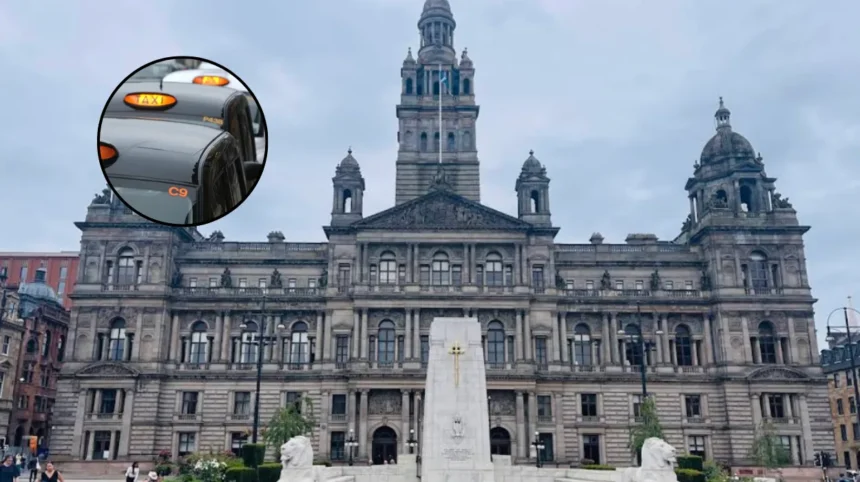
Glasgow (Glasgow Express) July 3, 2026 – Taxi drivers across Glasgow have voiced strong anger over the latest changes to the George Square taxi rank as part of the city’s major square redevelopment, describing the new arrangements as “unfair”, “disruptive” and damaging to their livelihoods.
- Key Points
- What Exactly Has Changed to the George Square Taxi Rank?
- Why Are Drivers Saying This Is Hurting Their Trade?
- How Has Glasgow City Council Responded to the Complaints?
- What Do Other Road Users and Campaigners Say?
- Are There Any Planned Further Changes to Access Around George Square?
- What Background Explains the George Square Redevelopment and Taxi Rank History?
- How Could These Developments Affect Glasgow Taxi Drivers and the City Centre?
What Exactly Has Changed to the George Square Taxi Rank?
The George Square redevelopment, led by Glasgow City Council, has required several temporary adjustments to taxi operations in the city centre.
As reported by the Glasgow Times, the council previously moved the taxi rank from the south side of West George Street to Dundas Street to allow work on the north footway and surrounding infrastructure to proceed.
According to the council’s August 2025 update, from Monday 25 August 2025 the temporary relocation of the rank to Dundas Street was set to “revert to its original arrangement” so that the contractor could begin work on the footway extending from Dundas Street to the entrance of Queen Street Station, adjacent to the Millennium Hotel.
At the same time, the bus stop at Waxy O’Connors was reopened and a bus shelter between Dundas Street and Queen Street Station was temporarily closed.
More recently, however, additional diversions have been introduced. As reported in January 2026, taxis and service vehicles were being redirected via Anchor Lane, a narrow back alley in the city centre, for a period of three months because the northern link between Queen Street and North Street was closed to allow the next phase of the George Square redevelopment to continue.
Why Are Drivers Saying This Is Hurting Their Trade?
Taxi drivers interviewed in local reporting say the changes have made it harder to pick up passengers in the city centre and have increased waiting times. On Facebook, drivers associated with Glasgow Times coverage described the situation as “our living” and said they are “scraping for every penny right now”, linking the rank changes and roadworks to reduced income.
According to these accounts, drivers who previously could access the square and surrounding streets more directly are now being forced into longer, less efficient routes or through narrow alleys such as Anchor Lane, which they say are not designed for regular taxi traffic. Some drivers have also raised concerns about safety and the risk of vehicle damage when using back lanes and roadwork-heavy areas, echoing broader complaints about potholes and poor road conditions in Glasgow.
As reported by the Glasgow Times, drivers have accused Glasgow City Council of not consulting sufficiently with the taxi community before implementing the changes, saying they feel the council has not taken adequate account of the impact on cabbies’ daily work.
How Has Glasgow City Council Responded to the Complaints?
Glasgow City Council has stated that the adjustments to the taxi rank and associated traffic measures are necessary to allow the George Square redevelopment to proceed safely and efficiently.
In its August 2025 update, the council explained that the temporary relocation of the rank to Dundas Street, and its subsequent return to the original arrangement, were timed to match the progress of footway construction along West George Street and the area leading to Queen Street Station.
The council also indicated that the current phase of work on the footway from Dundas Street to Queen Street Station is anticipated to be completed by 16 November 2025, after which further changes to access and traffic patterns may be reviewed.
While the council has not issued a detailed public response specifically addressing the latest anger over back-alley diversions, its previous communications have framed the changes as temporary and part of a wider plan to improve the square and surrounding streets.
In parallel, the council has introduced new bus gate measures near George Square, including a westbound bus gate at the junction of Ingram Street and Queen Street, which allows buses, taxis, bicycles and commercial vehicles but has drawn criticism from some drivers and residents who fear it will deter access to the city centre.
What Do Other Road Users and Campaigners Say?
The George Square redevelopment and related traffic changes have attracted attention beyond the taxi community. Local residents and campaigners have expressed concerns about increased congestion, poorer access, and the impact on people who rely on public transport or drive into the city centre for work or shopping.
Campaign groups such as Potholes Make Glasgow and taxi associations including the SPHA Scotland have previously staged protests in and around George Square highlighting the broader condition of Glasgow’s roads, including potholes and roadwork-related delays, which drivers say are raising vehicle maintenance costs and reducing income.
While these protests were not specifically about the George Square rank alone, they reflect a wider sense of frustration among drivers about how roadworks and traffic management are being handled in the city.
Are There Any Planned Further Changes to Access Around George Square?
The council’s update indicates that the current phase of footway work is expected to finish by mid-November 2025, at which point further arrangements for the taxi rank and surrounding traffic may be reconsidered. However, given that the George Square redevelopment is a multi-year project, additional temporary changes to access, bus gates and taxi routes are likely as different sections of the square are worked on.
The introduction of new bus gates and the continued closure of certain links between Queen Street, North Street and Cochrane Street suggest that drivers will need to remain flexible and plan routes carefully for the foreseeable future.
Taxi organisations have called for clearer, more consistent information about upcoming changes and for earlier consultation with drivers before significant alterations are made.
What Background Explains the George Square Redevelopment and Taxi Rank History?
George Square is Glasgow’s main civic square and has long hosted a permanent taxi rank on its southern and western edges, serving passengers visiting the city centre,-green, hotels, theatres and transport hubs such as Queen Street Station.
For decades, the rank has been a key part of the square’s daily life, with drivers able to access central pick-up and drop-off points in close proximity to major businesses, cultural venues and public transport links.
The current redevelopment aims to improve the square’s public space, update utilities and enhance pedestrian access, with work being carried out in several phases over multiple years.
As each phase progresses, the council has implemented temporary changes to traffic flow, footway access and taxi rank locations to keep the site safe and allow construction to continue.
The shift from the original West George Street location to Dundas Street, and the more recent use of back alleys such as Anchor Lane, are part of this staged approach.
Critics argue that the cumulative effect of these changes has gradually eroded the convenience and accessibility of the taxi rank, transforming what was once a straightforward city-centre operation into a more complex and time-consuming process. Drivers say they were not adequately consulted on the timing and scale of the disruptions and that the council has prioritised construction logistics over the needs of the taxi trade.
How Could These Developments Affect Glasgow Taxi Drivers and the City Centre?
If the current pattern of disruptions continues, Glasgow taxi drivers may face sustained pressure on their income and working conditions. Longer routes, forced use of narrow back alleys and repeated rank relocations can increase fuel costs, wear on vehicles and time spent out of service, all of which reduce profitability, as drivers have already highlighted in local reporting.
For the wider city centre, continued resistance from taxi drivers and negative perceptions about access could discourage some visitors from using taxis to reach George Square and surrounding areas, potentially affecting footfall for shops, hotels and cultural venues that depend on city-centre traffic.
If tensions do not ease, the situation could lead to more formal protests, complaints to the council or even challenges to traffic management plans, which might further complicate the redevelopment timeline.
At the same time, if the council improves consultation, provides clearer timelines for each phase, and ensures that rank changes are as temporary and predictable as possible, the impact on drivers could be reduced and the redevelopment could proceed with less opposition.
The balance between necessary construction work and the needs of the taxi trade will remain a key issue for Glasgow City Council and taxi organisations as the George Square project moves forward.