Key points
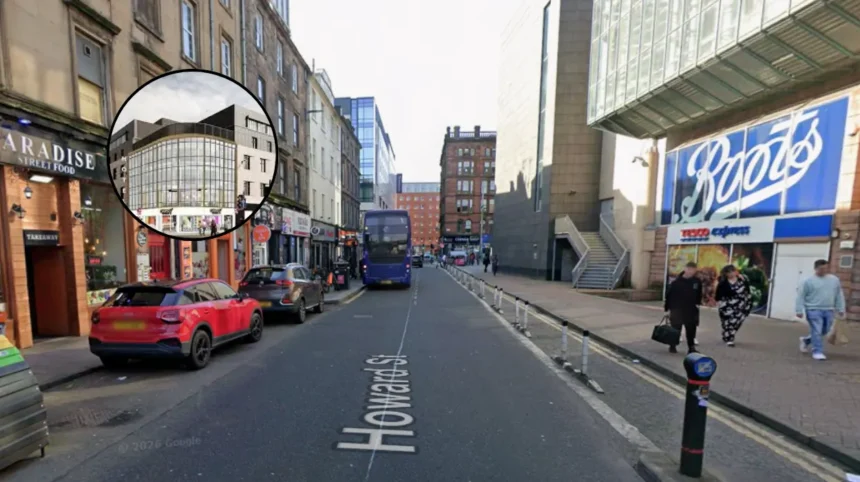
- QSR brand Chopstix has signed a 15‑year lease to open a new restaurant at 203 Argyle Street in Glasgow, a site known as “Four Corners”.
- The lease covers the basement, ground and three upper floors, amounting to 5,985 sq ft, making this Chopstix’s fifth restaurant in Glasgow.
- The landlord, Clydebuilt II Limited Partnership (CLP II), a joint venture between Ediston and Strathclyde Pension Fund, is investing in the building by replacing the 1960s cladding and carrying out other upgrades.
- The redevelopment is designed to create a building “more befitting” of its prominent city‑centre location and to revitalise the corner block.
- Research by Savills shows that 38 new food‑and‑beverage outlets opened in Glasgow city centre in 2025, occupying 87,000 sq ft of space, the highest volume since 2018.
- A quarter of those 2025 transactions involved national or international brands, up from 10% in 2024.
- Stuart Moncur, head of national retail at Savills, describes the new Chopstix as the third in Glasgow city centre and highlights Argyle Street’s growth as a leisure destination.
- Julie Edwin, director of asset management at Ediston, calls the letting an “important milestone” and stresses that the re‑cladding will enhance the building’s appearance and long‑term appeal.
Glasgow (Glasgow Express) May 15, 2026 Glasgow’s Argyle Street food‑and‑drink scene is set to expand as QSR brand Chopstix prepares to open a new restaurant at 203 Argyle Street, a prominent corner block known locally as “Four Corners”, under a 15‑year lease agreement, according to property and retail reports. The deal, brokered with landlord Clydebuilt II Limited Partnership (CLP II), will see the chain occupy the basement, ground and three upper floors, providing 5,985 sq ft of space and marking Chopstix’s fifth Glasgow outlet after existing sites on Sauchiehall Street, at St Enoch Square, and at Braehead and Silverburn shopping centres.
- Key points
- How much space will the new Chopstix take?
- Which landlord is involved and what work is planned?
- Why is this lease being seen as a milestone?
- How many Chopstix restaurants will Glasgow have?
- What does Savills’ research show about Glasgow city centre?
- How are industry sources interpreting the trend?
- What have the landlord’s representatives said?
- What style of development is this?
- How might this affect local footfall?
- Background of the development
- Prediction: How this development could affect different audiences
How much space will the new Chopstix take?
The new Glasgow Chopstix will span four levels, from basement to third floor, totalling 5,985 sq ft. Industry sources note that this is one of the larger commitments by the brand in the city, reflecting both its confidence in the site and the increasing appetite for food‑focused units in Glasgow’s core.
The format is consistent with Chopstix’s existing city‑centre outlets, which typically blend high‑street visibility with vertical use of floors to maximise seating and kitchen capacity.
Which landlord is involved and what work is planned?
Clydebuilt II Limited Partnership (CLP II), a joint venture between Ediston and the Strathclyde Pension Fund, is undertaking a refurbishment of the Argyle Street building ahead of the opening. The works include replacing the original 1960s cladding and implementing other upgrades intended to create a building “more befitting” of its location at one of the busiest corners in the city centre.
Described by asset‑management sources as a “comprehensive re‑cladding”, the project is expected to modernise the exterior, improve energy‑related performance, and enhance the corner’s presence within the wider Argyle Street retail and leisure corridor.
Why is this lease being seen as a milestone?
Property advisers have described the deal as an important milestone for the Clydebuilt II portfolio and for the wider Argyle Street regeneration story.
As reported by a commercial‑property correspondent for a leading UK real‑estate title, securing Chopstix adds a “strong new occupier” to a site that has in recent years attracted mixed‑use interest but has not always carried consistent or high‑profile branding.
Landlord representatives emphasise that the letting reflects continued demand for well‑located city‑centre space, particularly where transport links, footfall and catchment demographics are strong.
How many Chopstix restaurants will Glasgow have?
With the new Argyle Street outlet, Chopstix will operate five restaurants in Glasgow. Existing locations include Sauchiehall Street, St Enoch Square, Braehead Shopping Centre and Silverburn Shopping Centre, each of which serves a slightly different catchment – from city‑centre shoppers and office workers to suburban families and leisure visitors.
Regional analysts note that the concentration of Chopstix sites in the city underlines both the brand’s expansion strategy and the city’s attractiveness as a test‑market hub for affordable, fast‑casual dining concepts.
What does Savills’ research show about Glasgow city centre?
Savills’ more recent research into Glasgow city‑centre activity indicates that 38 new food‑and‑beverage outlets opened in the core in 2025, taking 87,000 sq ft of accommodation.
According to a national‑retail‑team briefing shared by Savills, this is the highest volume of F&B openings in the city since 2018, signalling renewed landlord and operator confidence after pandemic‑related disruption and later footfall challenges.
The same analysis notes that around a quarter of the 2025 transactions involved national or international brands, compared with only 10% a year earlier, suggesting a shift towards larger, more established chains in the city‑centre mix.
How are industry sources interpreting the trend?
Stuart Moncur, head of national retail at Savills, has commented on the significance of the Chopstix deal within this broader trend. As quoted in a Savills‑produced market update, he stated that this is Chopstix’s third city‑centre restaurant in Glasgow and that it
“adds to the growth of Argyle Street as a leisure destination”.
He went on to highlight Glasgow’s “large catchment population and a diverse demographic, including a strong student population”, which he described as “ideal” for food‑and‑beverage operators seeking busy, repeat‑visit trade.
What have the landlord’s representatives said?
Julie Edwin, director of asset management at Ediston, has also reflected on the letting in a statement released alongside the deal announcement. She noted that
“securing this letting is another important milestone for our asset and reflects the continued demand for well‑located city centre space”.
Edwin added that, alongside welcoming a strong new occupier, the comprehensive re‑cladding works will
“significantly enhance the appearance and presence of the property, delivering a more contemporary finish that will rejuvenate this prominent corner block and reinforce its long‑term appeal within the city centre”.
What style of development is this?
Industry commentators describe the project as part of a quiet but steady wave of selective refurbishment across Glasgow’s older retail‑fronted buildings, rather than comprehensive demolition‑and‑rebuild schemes. The approach focuses on modernising facades, improving building services, and upgrading interior layouts to suit modern operators, while preserving the block’s structural footprint and street presence.
Analysts suggest this “refurbishment‑first” model is increasingly common in mid‑tier UK cities, where capital‑intensive redevelopments are harder to justify but demand for refreshed, branded units remains high.
How might this affect local footfall?
Retail‑destination analysts point to the way single‑brand additions such as Chopstix can reinforce wider footfall patterns along key streets. By clustering alongside other food, drink and leisure operators, the new restaurant can help sustain evening and weekend trade, particularly around the Sauchiehall–Argyle–Union Street axis, which has long served as one of Glasgow’s main evening‑out corridors.
Local‑business representatives have previously noted that well‑known brands often act as “anchor” attractions that draw visitors who then spend in adjacent shops and services, although this effect is not always quantifiable in isolation.
Background of the development
The Argyle Street building at 203 Argyle Street has historically been a mixed‑use, corner‑block site with a strong street‑level presence facing both Argyle Street and a secondary adjacent road. Over the decades it has hosted a succession of retail, leisure and office tenants, subject to periodic internal refurbishments and facade updates, but the original 1960s cladding had remained largely untouched until the current works.
The creation of Clydebuilt II Limited Partnership, a joint venture between Ediston and the Strathclyde Pension Fund, marked a strategic decision to consolidate and upgrade a portfolio of Glasgow‑based assets, with the Argyle Street site identified early as a prime candidate for façade and internal modernisation. Parallel to this, the national Chopstix brand has gradually expanded within Scotland, using Glasgow as a springboard for further regional growth, which has helped landlords in the city attract tenants that can commit to longer‑term leases.
Prediction: How this development could affect different audiences
For local residents and students, the arrival of a fifth Chopstix in Glasgow, particularly in the city‑centre “Four Corners” location, may increase the availability of budget‑friendly, quick‑service dining options within walking distance of universities, colleges and residential areas.
The presence of a familiar national brand could also reinforce perceptions of Argyle Street as a safe and active leisure destination, which may influence choices around where to meet, socialise or eat after work or study.
For small independent operators and nearby traders, the new outlet could create both competitive pressure and ancillary demand. On one hand, a well‑funded chain may draw customers who might otherwise visit smaller, independent eateries; on the other, heightened footfall around the corner block may lead to more pass‑by trade for adjacent shops, bars and services, especially during evenings and weekends.