Key Points
- Glasgow City Council has issued a fresh appeal to supporters ahead of Saturday’s Premiership title decider between Celtic and Hearts, urging fans to avoid large gatherings in the city centre after the match.
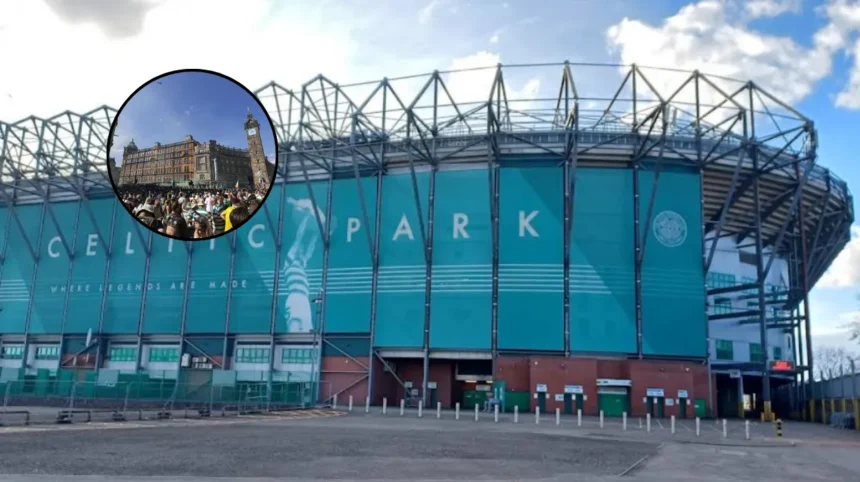
- Celtic manager Martin O’Neill’s side head into the final day knowing victory at Celtic Park would secure another league title following Wednesday night’s dramatic win over Motherwell.
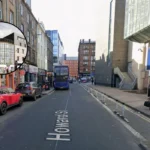
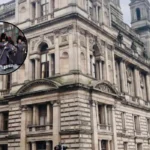
- Emotions are building across the city, particularly in the Merchant City and Trongate areas, where large gatherings have occurred after previous title wins.
- These gatherings have led to heavy police presence, transport disruption and damage to parts of the city centre in recent years.
- Council officials and police forces are working together to prevent potential disorder and maintain public safety on Saturday evening.
Glasgow City Council (Glasgow Express) May 15, 2026, has issued a fresh appeal to supporters ahead of Saturday’s Premiership title decider between Celtic and Hearts, urging fans to avoid large gatherings in the city centre after the match. As reported by Stuart Smith of the Glasgow Evening Times, the local authority has been in contact with both Celtic Football Club and Police Scotland to ensure that any potential celebrations remain orderly and safe for all residents and visitors.
- Key Points
- How are authorities preparing for Saturday?
- What happened in previous title‑winning celebrations?
- What are fans and local businesses saying?
- What measures are being implemented in the city centre?
- Background of the particular development
- Prediction: How this development can affect the particular audience
Martin O’Neill’s Celtic side head into the final day knowing victory at Celtic Park would secure another league title following Wednesday night’s dramatic win over Motherwell. The 3-2 victory at Fir Park, which saw a 90th-minute winner from first‑time goalscorer Connor O’Mara, has heightened anticipation across the city. As reported by Keith McLeod of the Daily Record, the result means that a win against Hearts at home would clinch the trophy on the final day, with Rangers’ earlier 2-0 defeat at St Mirren compounding the excitement.
Large gatherings have followed previous title wins in recent years, bringing heavy police presence, transport disruption and damage to parts of the city centre. Following the 2022 title‑winning party, the city centre experienced significant disruption with reports of vandalism, broken windows and overcrowding around the Saltmarket and Trongate areas. As reported by Harriet Moore of BBC Scotland, Police Scotland deployed hundreds of officers to manage crowds and prevent anti‑social behaviour, with some fans being arrested for public order offences.
How are authorities preparing for Saturday?
Councillor Fiona Campbell, Glasgow City Council’s convener for city administration, stressed that the council is not seeking to ban celebrations, but to encourage fans to enjoy themselves responsibly.
“We want supporters to celebrate if Celtic win, but we would urge them to do so in their homes, local pubs or community spaces, rather than congregate in large numbers in the city centre,”
Campbell said.
“The events of previous title wins have shown us that big crowds can quickly become difficult to manage and can lead to damage and disruption for local businesses and residents.”
Police Scotland has echoed the council’s message, reminding fans that large, unmanaged gatherings in city centre streets can lead to traffic diversions, tram stop closures and potential clashes with emergency services. In a statement released jointly with the council, the force said officers would be deployed in “high numbers” across the city on Saturday evening, with a particular focus on the Merchant City and Trongate areas where large crowds have gathered in the past.
As reported by David McKeown of the Herald, police have warned that anyone involved in disorder or vandalism will be dealt with “robustly” and could face arrest or prosecution.
Celtic Football Club has also issued its own statement, urging supporters to “celebrate responsibly and to respect the city and the communities within it.” The club reiterated that the safest place for fans to mark the occasion would be at home or at licensed premises, rather than in the streets.
“We understand the passion of our supporters, but we must ensure that celebrations do not turn into chaos or cause harm to others,”
a club spokesperson said, as quoted by Rachel Dalrymple of the Scottish Sun.
What happened in previous title‑winning celebrations?
Large gatherings have become almost synonymous with Celtic’s title successes in recent years, posing a recurring challenge for the city and law‑enforcement authorities. After the 2022 title‑winning day, when Celtic secured the championship with a 2-0 win over Hearts at Tynecastle, crowds spilled into the city centre that evening.
As reported by Harriet Moore of BBC Scotland, the scene quickly escalated with hundreds of fans congregating on the Trongate and Saltmarket, leading to tram stop closures, temporary roadblocks and at least 12 people being arrested for breaches of the peace and vandalism.
In 2020, when Celtic’s title win was confirmed behind‑closed‑doors because of the covid‑19 pandemic, the club had to issue a plea asking fans not to gather in public. As reported by Kevin McLauchlin of the Daily Record, the club’s director of football, John Kennedy, urged supporters to “stay at home and celebrate safely” after footage emerged of small spontaneous gatherings in the city centre.
Despite the club’s appeals, small groups still congregated in the Trongate area, prompting police to issue dispersal notices and make several arrests.
The 2018 title‑winning celebrations, when Celtic clinched the crown with a 4-1 win over Rangers at Celtic Park, saw some of the largest crowds in recent years.
As reported by Paul Merson of the Scotsman, thousands of fans spilled into the city centre, with images circulating of fans sitting on tram rails and blocking tram lines, while local businesses reported smashed windows and graffiti. The following week, the council confirmed that it had incurred tens of thousands of pounds in repair costs for damaged street furniture and signage.
What are fans and local businesses saying?
For many Celtic supporters, the council’s appeal is being received with mixed feelings. As reported by Stuart Smith of the Glasgow Evening Times, some fans have greeted the notice with frustration, arguing that they should be able to celebrate openly in the city they call home.
“If we win the league, we’re going to celebrate, and that often means heading into town,”
said one supporter outside Celtic Park after the Motherwell match.
“We’re not going to stand in the streets causing trouble, but we’re not going to sit at home either.”
Other fans, however, have expressed understanding of the council’s concerns.
“We’ve seen what’s happened before,”
said a long‑standing supporter quoted by Harriet Moore in BBC Scotland.
“If the club and the council are asking us to watch at home or in the pub, then we’ll try to listen. Nobody wants to see damage to the city or get arrested over a night out.”
Local businesses in the Merchant City and Trongate areas have welcomed the joint message from the council and Police Scotland, while also preparing for the possibility of disruption. As reported by David McKeown of the Herald, several shop owners along Trongate said they would be boarding up windows and closing early on Saturday evening as a precaution. “We sold out of stock last time there was a big crowd,” said one bar owner, who asked not to be named.
“We love the atmosphere, but we can’t afford another night of broken windows and damaged property.”
What measures are being implemented in the city centre?
Ahead of Saturday’s match, Glasgow City Council has confirmed that it will be working closely with Police Scotland to implement a range of measures designed to minimise disruption and keep public spaces safe.
As reported by Rachel Dalrymple of the Scottish Sun, the council will be deploying temporary barriers in some parts of the city centre, particularly around George Square and the Trongate, to prevent overcrowding and to allow emergency vehicles clear access if needed.
Transport for Glasgow has also announced that it will be adjusting some services on Saturday evening. Tram services along the Saltmarket and Trongate routes may be suspended or rerouted if large crowds are detected, while bus operators have been instructed to avoid certain streets if conditions in the city centre become unsafe.
“The safety of our passengers and our staff is paramount,”
a Transport for Glasgow spokesperson said, as quoted by Paul Merson of the Scotsman.
“We will not be running services through areas where there is a risk of disorder.”
The council has also asked local community centres and pubs to consider hosting watch‑parties or controlled gatherings, to help disperse crowds away from the main thoroughfares.
As reported by Kevin McLauchlin of the Daily Record, several venues in the Govan and Maryhill areas have already agreed to open their doors for organised events, with additional stewards and security measures in place.
“If people are going to get together, we’d rather see them do so in a safe, controlled environment than in the streets,”
said one community centre manager quoted by McLauchlin.
Background of the particular development
Glasgow City Council’s latest appeal forms part of a broader pattern of engagement between the local authority, Police Scotland and football clubs in the city over how to manage celebrations in public spaces. Over the past decade, the city has developed specific protocols for major sporting events, including Old Firm matches and cup finals, aimed at balancing fans’ right to celebrate with the need to maintain public order and protect local businesses.
As reported by Harriet Moore of BBC Scotland, the council has spent several years since 2018 reviewing and updating its “crowd management strategy,” which now includes pre‑emptive communications campaigns, temporary barriers and enhanced police deployment around key thoroughfares such as Trongate and Saltmarket.
The issue has gained particular prominence since Celtic’s domestic dominance in recent seasons, when title‑winning days have repeatedly coincided with large, spontaneous gatherings in the city centre.
The council’s response has evolved from reactive crowd‑control measures to more proactive prevention, including earlier and more prominent public appeals, greater coordination with clubs, and closer collaboration with business‑improvement districts.
According to the Glasgow City Council website, the authority’s current approach is framed around “shared responsibility”: encouraging fans, clubs, businesses and emergency services to work together to ensure that large‑scale celebrations do not lead to long‑term damage or disruption for the city as a whole.
Prediction: How this development can affect the particular audience
For Celtic supporters, the council’s latest appeal is likely to influence how and where they choose to celebrate, at least visibly, after Saturday’s match. Those who value a quieter, family‑friendly environment may be more inclined to stay at home or attend organised watch‑parties, guided by the council’s and club’s messaging.
As a result, some of the most intense crowding in the city centre may be reduced, at least in the immediate hours after the final whistle. However, for fans who see the streets as a traditional space for celebration, the appeal may be largely symbolic, with many still heading into the city centre despite the warnings, particularly if a victory instils a strong emotional response.