Key Points
- Work on the Argyle Street East Avenue is due to begin on 16 June as part of Glasgow’s city centre transformation programme.
- The route will stretch from Central Station to beyond Glasgow Cross and will be delivered in four phased sections over about one kilometre.
- The scheme includes wider pavements, new public and green spaces, resurfaced roads and upgraded cycle lanes.
- The project comes as other major city centre works, including Cowcaddens Road, Dobbie’s Loan Avenue, Buchanan Street Bus Station and George Square, move towards completion.
- Argyle West Avenue is now largely back on schedule after delays linked to the Union Street fire and Scottish Water repairs.
- Glasgow City Council says the wider Avenues programme is intended to revitalise historic streets that have seen long-term decline.
- A public engagement event on Argyle East and Stockwell Street Avenues is due to take place at St Enoch Centre on 20 May.
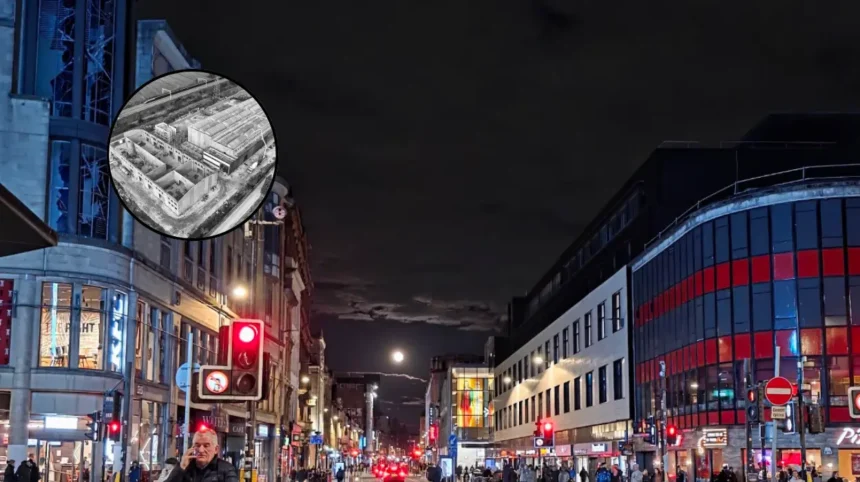
Glasgow City Council (Glasgow Express) May 15, 2026 – A major new phase of the city centre transformation is set to begin next month, with work on the Argyle Street East Avenue due to start on 16 June. The project forms part of a £140 million-plus overhaul of key streets in the city centre, with the latest stage focused on the stretch between Central Station and beyond Glasgow Cross. The council says the scheme will be delivered in four phased sections along the one-kilometre route.
The works will include redesigned and expanded pavement areas, new public and green spaces, resurfacing of roads and cycle lanes, and changes intended to improve the overall appearance and use of the area. The programme is part of what Glasgow City Council describes as the biggest transformation of the city centre since the 1970s, with several linked projects either nearing completion or already finished.
As reported by Glasgow City Council, Councillor Angus Millar, Convener for City Centre Recovery, said Argyle Street, Trongate and Glasgow Cross are “such historic parts of town” that have
“undeniably endured decades of decline.”
He said the investment is intended to revitalise those streets, support wider development, and build confidence in the area.
How will the Argyle East Avenue be delivered?
The route will be split into four individual phases, allowing the work to progress in sections rather than across the full length at once.
The first phase will run from the junction with Queen Street to Stockwell Street, before moving on to the Four Corners area to Queen Street, then Trongate to Glasgow Cross, and finally Moir Street on the Gallowgate.
This phased approach is being used to reduce disruption where possible, although the council says some impact is unavoidable during a project of this scale.
The delivery schedule currently runs through to June 2029, reflecting the size and complexity of the works along the route.
The council also says the plan includes a new west-to-east bus route through the current pedestrian precinct. That move is intended to cut journey times and improve public transport links through the city centre.
What other city centre projects are finishing?
The start of Argyle Street East Avenue comes as several other parts of the wider city centre programme are reaching key milestones. Cowcaddens Road and Dobbie’s Loan Avenue at Glasgow Caledonian University, together with the area near Buchanan Street Bus Station, are due to open next week.
Elsewhere, the redevelopment of George Square is also advancing, with the road on the north side of the square expected to reopen in early June.
These works sit alongside the broader Avenues programme, which has seen multiple streets altered, resurfaced or redesigned as part of the city centre recovery effort.
Argyle West Avenue, running from the Kingston Bridge to Central Station, has also progressed in recent weeks.
The council says that project suffered delays because of the Union Street fire and Scottish Water repairs, but is now on course to be largely completed by early June.
Why is the council backing the scheme?
As reported by Glasgow City Council, the argument for the project is that several central streets have suffered from long-term decline despite their historic importance.
The council says the investment is designed to improve how the streets look and function, while also supporting nearby development and making the city centre more attractive to people who live, work and visit there.
Councillor Millar said the Avenues programme is creating
“more attractive places for everyone who lives, works and visits the city centre.”
He added that the council wants Argyle Street, Trongate and Glasgow Cross to be “absolutely part of that” wider change.
The council also says the phased construction plan should help limit disruption and keep the public and partners updated on any effects.
A public engagement event on the Argyle East and Stockwell Street Avenues will be held at St Enoch Centre between 11am and 3pm on 20 May.
What disruption should people expect?
Some disruption is likely because of the scale of the works and the fact that the route passes through heavily used parts of the city centre.
The council has acknowledged that major infrastructure projects inevitably affect travel, access and local movement during construction.
At the same time, the phased delivery means not every part of the route will be under construction at once. That should make it easier for residents, shoppers, commuters and businesses to adjust as the project moves along the route over time.
The planned bus route through the pedestrian precinct could also change how some people move through the area once the works are complete. For now, the immediate focus is on the first phase beginning in June and the public engagement session later this month.
Background to the development
The Argyle Street East Avenue project is one part of Glasgow’s wider city centre regeneration drive, which the council says is the biggest transformation in decades.
The programme has already affected streets and public spaces across the city centre, with the aim of improving walking routes, cycling links, public transport access and the look of the urban core.
The Avenues programme is meant to combine practical road and pavement upgrades with changes that make streets more open, greener and easier to use.
In Glasgow’s case, that includes major work around historic routes such as Argyle Street, Trongate and Glasgow Cross, areas that have long been important for trade, travel and city life.
The current phase follows earlier or parallel work at George Square, Cowcaddens Road, Dobbie’s Loan Avenue and Argyle West Avenue.
Together, these schemes show how the council is trying to reshape the city centre in stages rather than through a single large shutdown.
What could this mean for people?
For commuters, the changes could eventually mean better bus connections, improved walking routes and upgraded cycling infrastructure through the city centre. For businesses, the longer-term hope is that a cleaner, more attractive streetscape will increase footfall and make the area easier for customers to navigate.