Key Points
- A traffic light glitch struck Glasgow shortly before 8am, affecting thousands of motorists heading to work.
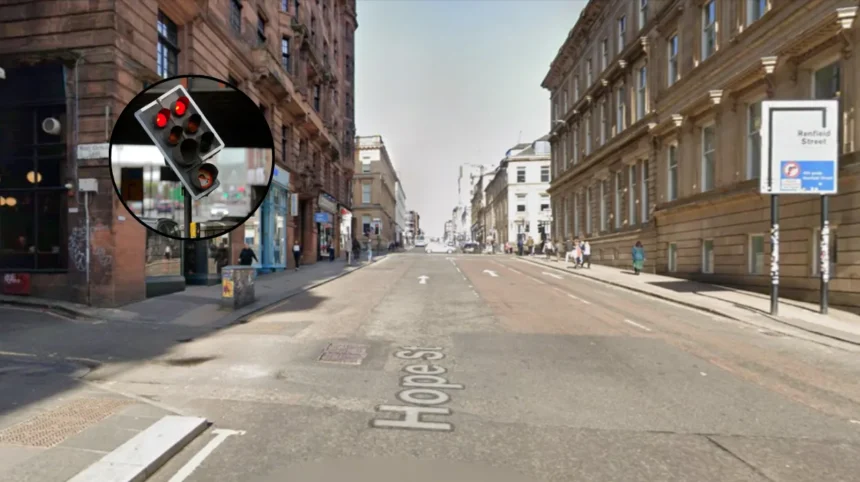
- Faulty lights caused some signals to remain stuck on green without changing, while others stayed on red without activating green phases.
- Chaos erupted at busy junctions in the west end and southside of the city, leading to severe queuing and gridlock.
- Motorists reported waiting over 15 minutes at junctions, with queues backing up into residential estates.
- Some drivers had to carefully proceed through red lights when safe to avoid being stranded.
- Furious drivers described the situation as “absolutely ridiculous” and “total chaos,” blaming council chiefs for the disruption.
Glasgow (Glasgow Express) May 6, 2026 – Fuming motorists have criticised Glasgow City Council after a major traffic light fault caused widespread disruption across Scotland’s largest city this morning.
The glitch hit the traffic signal system shortly before 8am as thousands of drivers were commuting to work, according to reports from The Scottish Sun. Busy junctions in the west end and southside ground to a halt, with traffic queuing extensively due to malfunctioning lights.
Some lights stayed permanently on green and failed to change phases, while others remained stuck on red, preventing any green signals from activating. This led to gridlock as drivers encountered multiple faulty sets of signals in sequence.
How Did the Faulty Lights Affect Key Junctions?
Motorists faced severe delays at critical points across the city. In the west end, one junction became a particular bottleneck where the light refused to change.
As reported by an unnamed driver speaking to The Scottish Sun, the situation was dire:
“It’s absolutely ridiculous, the light wouldn’t change and it was letting every car on the other road through and blocking the junction.”
He explained that a massive queue of cars backed up into the nearby estate.
The driver continued:
“There was a massive queue of cars backed up into the estate. Eventually a bunch of cars had to go through the red light when it was clear otherwise we’d have been stranded.”
He noted waiting over 15 minutes before taking action.
What Did Southside Commuters Experience?
Drivers approaching the city centre from the southside reported similar issues. The fault created a cascade effect, with vehicles easing through one problematic signal only to hit gridlock at the next.
One woman, quoted anonymously by The Scottish Sun, described the scene: “It felt like total chaos.” She highlighted how the uncoordinated signals trapped traffic in prolonged queues.
The disruption was widespread, affecting multiple roads simultaneously. No official response from Glasgow City Council was immediately available in initial reports, leaving drivers to vent their frustration publicly.
Why Were Motorists Forced to Ignore Red Lights?
The persistent red lights posed a unique challenge. Standard procedure advises against running reds, but safety concerns arose when signals failed to cycle.
In the west end incident, the driver emphasised caution: cars only proceeded when it was clear to do so. This prevented complete standstill but raised questions about enforcement and risk.
The Scottish Sun noted that some motorists had no choice but to navigate the faults manually, easing through when oncoming traffic permitted. No collisions were reported in connection with the glitch.
When Did the Fault First Impact Rush Hour Traffic?
The issue emerged just before 8am, coinciding with peak morning rush hour. This timing amplified the impact on commuters reliant on timely journeys.
Thousands were affected as they joined roads in the west end and southside. The fault’s sudden onset caught drivers off guard, with no prior warnings issued.
Reports indicate the system-wide nature of the problem, hitting several roads at once. Recovery efforts were not detailed in early coverage.
Who Is Responsible for Glasgow’s Traffic Lights?
Glasgow City Council oversees the city’s traffic management, including signal maintenance. Motorists directed their anger at council chiefs for the lapse.
The Scottish Sun’s coverage highlighted public blasts at officials, with drivers questioning infrastructure reliability. No council statement was attributed in the report.
Similar faults have occurred elsewhere, but this incident stood out for its scale in Scotland’s biggest city.
Background of the Particular Development
Traffic light systems in Glasgow rely on interconnected controllers managed by the city council’s traffic department. These use timed cycles and sensors to manage flow at over 800 junctions citywide.
The fault aligns with occasional glitches reported in urban UK networks, often due to power surges, software errors, or hardware wear. Historical data shows Glasgow experiences around 50-100 signal failures annually, typically resolved within hours by on-call engineers.
No prior warnings were noted for this event, and the system’s design includes fail-safes like manual overrides, though widespread activation was not confirmed here.
Prediction
This development can affect Glasgow commuters by increasing daily travel times during peak hours if repairs are delayed or recurring faults emerge. Frequent disruptions may heighten frustration, leading to more cautious driving and potential minor collisions at unmanaged junctions. Businesses in the west end and southside could see reduced footfall from delayed workers, while council resources might divert to fixes, slowing other infrastructure projects. Long-term, repeated issues could prompt public calls for upgrades, influencing budget allocations and affecting taxpayers through higher maintenance costs.