Key Points
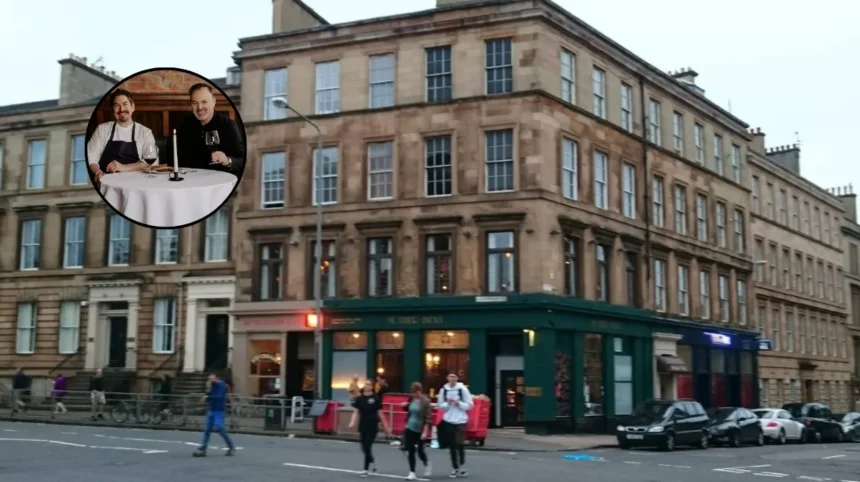
- Monaghan-born chef Peter McKenna has launched a new bistro, Eleven Fifty Five, in Finnieston, Glasgow.
- The restaurant aims to celebrate Irish and Scottish culinary connections while challenging stereotypes about traditional cuisine.
- McKenna previously founded The Gannet in 2013, which gained recognition for its tasting menu format before closing in 2024.
- Eleven Fifty Five features a menu combining Irish and Scottish produce, including beef sourced from Hannan Brothers in Armagh.
- The chef highlights the importance of hospitality, local sourcing, and cultural identity in shaping the concept.
- McKenna’s career includes international experience, including working as a private chef for a Saudi prince.
- The new venture introduces accessible pricing, including seasonal offers such as two courses for £25.
- The opening reflects broader themes of cultural identity, heritage, and evolving food scenes in Glasgow.
Glasgow (Glasgow Express) April 23, 2026 –
A new dining venue in Glasgow’s Finnieston district is drawing attention for its approach to Irish and Scottish cuisine, as chef Peter McKenna opens Eleven Fifty Five, marking a new chapter following the closure of his well-known restaurant The Gannet.
- Key Points
- What is the concept behind Eleven Fifty Five in Glasgow?
- Why did Peter McKenna close The Gannet?
- How does the menu reflect Irish and Scottish influences?
- What influences shaped McKenna’s culinary career?
- How does the restaurant address cultural identity and heritage?
- What is the pricing and dining experience like?
- What role does local sourcing play in the restaurant?
- Background of the Development
- Prediction: How could this development affect Glasgow’s dining audience?
What is the concept behind Eleven Fifty Five in Glasgow?
As reported in the original feature, chef proprietor Peter McKenna has positioned Eleven Fifty Five as a restaurant that reinterprets Irish food traditions while integrating Scottish produce and hospitality culture. The bistro aims to move beyond what McKenna described as outdated perceptions of Irish cuisine.
McKenna stated that his dishes are “far from your mam’s ham, cabbage and spuds,” emphasising a modern and refined approach. The concept centres on combining high-quality ingredients with accessible dining, offering a contrast to the tasting menu format that defined his previous venture.
The restaurant’s location in Finnieston, an area known for its vibrant food scene, places it among a competitive cluster of independent eateries. However, McKenna’s focus on Irish heritage distinguishes it within the local market.
Why did Peter McKenna close The Gannet?
The decision to close The Gannet, which opened in 2013, marked a significant shift in McKenna’s career. The restaurant had gained a strong reputation for its tasting menu and was considered among Scotland’s notable dining destinations.
According to McKenna, the closure was driven by a desire for change rather than declining success. He explained, “It was just time to try something new,” highlighting a personal motivation to explore different culinary directions.
He further noted that he wanted to “lean into where I come from,” signalling a deliberate move towards showcasing Irish identity in his cooking. This shift reflects a broader trend in the hospitality industry where chefs increasingly foreground personal and cultural narratives in their work.
How does the menu reflect Irish and Scottish influences?
The menu at Eleven Fifty Five combines ingredients sourced from both Ireland and Scotland, reinforcing what McKenna described as a “synergy between Ireland and Scotland.”
One of the standout elements is the use of beef from Hannan Brothers in Armagh. McKenna highlighted the quality of their Himalayan salt-aged beef, stating that “everyone comments on the depth of flavour,” while also noting the appeal of their sugar-pit beef cheeks.
Scottish produce remains central to the offering, continuing McKenna’s established approach from The Gannet. He previously argued that Scottish ingredients are exceptional, saying, “You’d be stupid not to,” a position he maintains in the new venture.
Dishes described in the report include:
- Smoked and maple-glazed chicken wings, deboned and served with tarragon and shallot dressing.
- Trout with crispy skin, accompanied by fennel and colcannon enriched with pancetta and shellfish butter.
These dishes illustrate the restaurant’s emphasis on refining familiar elements into more contemporary presentations.
What influences shaped McKenna’s culinary career?
McKenna’s background plays a significant role in shaping Eleven Fifty Five. Born in Monaghan, he grew up in a family environment closely tied to food and hospitality.
He recalled early experiences helping with grocery shopping and observing butchery processes, stating that he found watching animals being prepared “mesmerising.” This exposure contributed to his understanding of ingredients and food preparation.
In addition, he grew up in a family-run pub, where he developed an appreciation for hospitality. He described standing on “Coca Cola boxes to pull a pint” at the age of ten, highlighting how early his involvement in the industry began.
His professional journey includes international experience across several countries. Notably, he worked in Saudi Arabia as a private chef for a prince, an experience he said “set me up” and enabled him to eventually establish his own restaurant ventures.
How does the restaurant address cultural identity and heritage?
A key aspect of Eleven Fifty Five is its focus on Irish identity within the Glasgow context. McKenna pointed to a perceived gap in the city’s food scene, stating that he did not see others “celebrating their Irish heritage through food.”
He also acknowledged broader social dynamics, noting that “there’s still an element of sectarianism” and that “flying your flag can feel like a risk.” These comments reflect ongoing sensitivities around identity in parts of Scotland.
McKenna’s approach is to present food as a unifying element. He stated,
“I wanted to do something positive, with good food at the centre,”
positioning the restaurant as a space that emphasises shared cultural connections rather than divisions.
What is the pricing and dining experience like?
Eleven Fifty Five aims to balance quality with accessibility. The restaurant offers seasonal deals, including a two-course meal priced at £25, which positions it competitively within Glasgow’s mid-range dining sector.
The dining experience is described as relaxed, with unhurried service designed to encourage a more leisurely pace. This contrasts with the more structured format of tasting menu restaurants and aligns with the bistro-style concept.
The emphasis on value is notable given the quality of ingredients and presentation, suggesting a deliberate strategy to broaden the restaurant’s appeal beyond fine dining audiences.
What role does local sourcing play in the restaurant?
Local sourcing is a central pillar of McKenna’s approach. At The Gannet, he prioritised Scottish produce, and this continues at Eleven Fifty Five alongside the inclusion of Irish suppliers.
McKenna expressed strong support for regional ingredients, describing them as “brilliant” and integral to the restaurant’s identity. The combination of Irish and Scottish sourcing reflects both his personal background and the restaurant’s thematic focus.
This approach aligns with wider industry trends that prioritise sustainability, traceability, and support for local producers.
Background of the Development
Peter McKenna first gained prominence in Scotland’s culinary scene with the opening of The Gannet in 2013. Located in Finnieston, the restaurant became known for its tasting menus and emphasis on seasonal Scottish produce.
Over more than a decade, The Gannet established a reputation as a destination restaurant, contributing to Glasgow’s emergence as a notable food city. Its closure in 2024 marked the end of a significant chapter in McKenna’s career.
The launch of Eleven Fifty Five represents both a continuation and a departure. While it retains a focus on quality ingredients and hospitality, it shifts towards a more personal and culturally specific concept, reflecting McKenna’s Irish heritage and broader industry trends towards identity-driven dining.
Prediction: How could this development affect Glasgow’s dining audience?
The opening of Eleven Fifty Five may influence Glasgow’s dining audience by expanding interest in Irish-inspired cuisine within the city. For local diners, the restaurant offers a new perspective on familiar ingredients, potentially reshaping perceptions of Irish food.
For the hospitality sector, it may encourage other chefs to explore cultural identity more explicitly in their concepts, contributing to greater diversity in the city’s food scene.
Tourists and visitors could also be drawn to the restaurant’s distinct positioning, particularly those interested in regional and heritage-driven dining experiences.