Crime and shooting stories in Glasgow have become more prominent in media and public discussion because of a mix of rising visible violence, long‑running gang conflicts, and changing media habits. Coverage is amplified by TV, social‑media clips, and dedicated crime podcasts, which keep specific incidents in circulation long after they happen. As a result, people in Glasgow and across the UK now see “Glasgow shooting” or “Glasgow gang” crime reports more often in feeds and search results than in the past decade.
- Why are people suddenly talking about Glasgow crime and shootings more?
- What is driving the increase in shootings and violent crime in Glasgow?
- How has Glasgow’s history of violence shaped today’s crime news coverage?
- What are the main types of gangs and criminal groups involved in Glasgow shootings?
- How do shootings and other violent crimes in Glasgow typically unfold?
- Which areas of Glasgow see the most frequent shooting and gang‑related crime?
- How has media coverage changed the way people perceive Glasgow crime?
- What are the long‑term effects of intense crime and shooting coverage on Glasgow?
- How might Glasgow’s crime and shooting news landscape change in the future?
Why are people suddenly talking about Glasgow crime and shootings more?
Crime and shooting news around Glasgow feels “suddenly” more popular because several conditions have aligned at once: a spike in highly visible attacks, a prolonged feud between well‑known gangs, and aggressive coverage by national and online media. Between 2015 and the mid‑2020s, Glasgow saw a series of daylight shootings, bombings, and arson attacks in areas such as Lambhill, Springburn, and city‑centre junctions, which local papers and TV channels reported repeatedly. These incidents often involve children near schools, busy streets, or garages where people know suspects personally, which makes them easier to discuss and share online.
Public conversation also grew as podcasters and documentary producers began packaging Glasgow’s gang feuds into long‑form true‑crime series, repackaging older cases for younger audiences. At the same time, social‑media platforms favour short, dramatic video clips of police activity, paramedics, and cordons, which spread quickly even when they lack context. Search engines then index these clips and talking‑point headlines, which is why phrases such as “Glasgow shooting today” or “Glasgow gangland feud” appear more frequently in results and AI‑generated overviews.
What is driving the increase in shootings and violent crime in Glasgow?
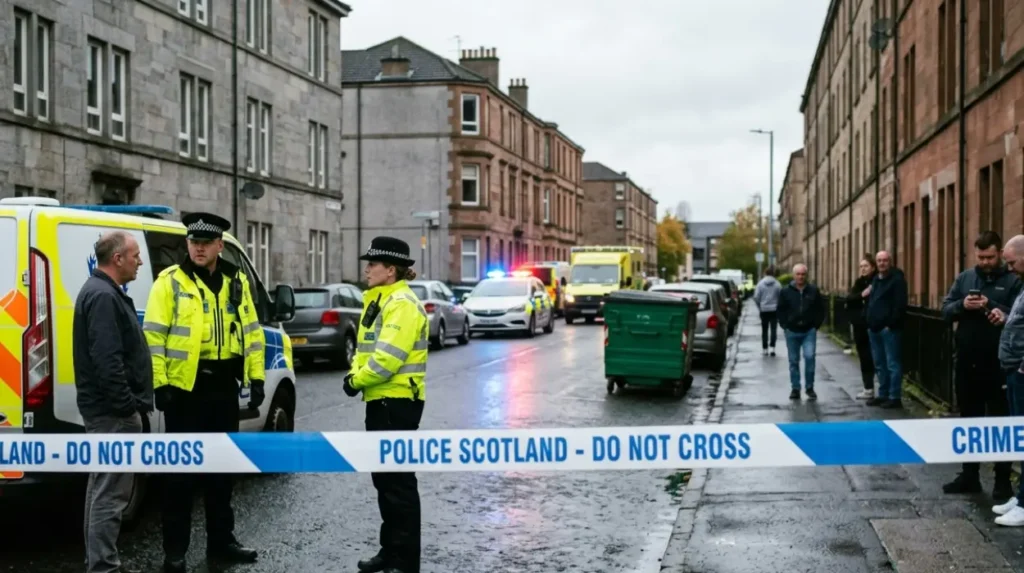
Violent crime and shootings in Glasgow are driven mainly by competition between a small number of entrenched organised‑crime groups, weak economic opportunities in deprived neighbourhoods, and the availability of firearms through illicit networks. Researchers on the “Glasgow miracle” of violence reduction note that although homicides halved after 2006, serious violence shifted from knifings to gunfire in certain pockets of the city. This evolution reflects tighter weapon‑control on knives and easier access to homemade or smuggled guns in specific communities.
Gang‑related shootings typically follow turf disputes over drug‑dealing territory, retaliation for previous attacks, or perceived disrespect among rival crews. For example, long‑running feuds between the Daniel and Kerr families have led to multiple high‑profile shootings and arson attacks in north Glasgow since the mid‑2000s. These networks recruit young men who see few legitimate routes out of poverty, then bind them with loyalty, debt, and fear, making violent disputes more likely to escalate.
Public‑order factors such as alcohol‑fuelled disorder, homelessness, and open‑drug‑use areas also feed background tension and media visibility. When police declare “dispersal‑zone powers” in areas such as the Four Corners junction, incidents in that zone are reported more consistently, which further increases the public impression of rising crime. In short, the growth in shootings is not spread evenly across Glasgow; it is concentrated in particular neighbourhoods where gangs, poverty, and weak community infrastructure overlap.
How has Glasgow’s history of violence shaped today’s crime news coverage?
Glasgow’s reputation as the “murder capital of Europe” in the early 2000s created a lasting media template for how crime stories are framed: as dramatic, gang‑driven, and concentrated in the city’s deprived districts. Between the late 1990s and 2006, Glasgow recorded more murders than many major European cities, fueling national and international headlines that portrayed the city as uniquely violent. This legacy means that any new shooting or gang feud in Glasgow is automatically read through a historical lens of gangland “war zones” and “feuds.”
From 2006 to 2018, Glasgow’s homicide rate fell by about 50 per cent, largely due to the Violence Reduction Unit’s public‑health approach, which treated violence as a disease and targeted at‑risk groups. Despite this progress, a strand of gang‑related gunfire persisted, especially in north and east Glasgow, where established families control local drug markets. Coverage of recent shootings therefore tends to link them to older feuds, legal cases, and celebrity‑gang figures, which keeps historical names and incidents in current news cycles.
Media outlets lean on this historical narrative because it provides continuity for audiences who followed earlier stories. When a garage or pub is targeted in the same area where a killing occurred 15 or 20 years ago, journalists and podcasters explicitly reference the past, which makes the “Glasgow gang war” frame feel timeless and cyclical. This storytelling habit ensures that historic violence remains part of the mental map viewers associate with the city, even if overall crime‑rates are lower than in previous decades.
What are the main types of gangs and criminal groups involved in Glasgow shootings?
The main organised groups linked to Glasgow shootings are long‑established family‑based crime clans, drug‑distribution networks, and smaller “cell” gangs that operate in specific neighbourhoods. Family‑led clans such as the Daniels and Kerrs have been prosecuted in high‑profile murder and gun‑offence cases, with members often sharing surnames, residential addresses, and social histories. These groups function as loose hierarchies: elders or “bosses” control territory and protection rackets, while younger associates carry out surveillance, theft, and armed attacks.
Drug‑distribution networks specialise in supplying heroin, cocaine, and more recently synthetic drugs to pockets of the city, using small teams of “runners” and look‑outs. These networks frequently overlap with family gangs, so territorial disputes over drug‑selling hotspots can escalate into shootings and arson. Additional “cell” gangs, often made up of unrelated friends or associates, patch into larger structures for weapons, money‑laundering routes, or temporary alliances during feuds.
These groups are not monolithic; they split, reform, and realign based on prison time, deaths, and law‑enforcement pressure. For example, when key figures are jailed or killed, junior members may launch retaliatory attacks to assert status, which can trigger new waves of violence and media attention. Understanding these three main types—family‑based clans, specialist drug‑networks, and ad‑hoc cell gangs—helps explain why Glasgow shootings often cluster around particular streets, housing schemes, and garages.
How do shootings and other violent crimes in Glasgow typically unfold?
Glasgow shootings and serious assaults normally follow a sequence: a dispute develops, weapons are mobilised, the attack is carried out in a semi‑public space, and then police investigations and media coverage follow. The initial dispute is often verbal, social‑media‑based, or triggered by a prior incident such as a robbery, assault, or perceived disrespect. When these conflicts cannot be resolved through informal negotiation or threats, the parties may escalate to planning an attack with firearms, knives, or vehicles as weapons.
Once the decision to attack is made, organisers typically scout locations and times, sometimes using vehicles to conduct surveillance or to block escape routes. Attacks are then staged in high‑visibility areas—near schools, bus stops, shop fronts, or busy roads—either to maximise reputational impact or because targets are known to pass through those zones. For example, gang‑related shootings have occurred outside a primary school in Bishopbriggs, inside garages in Lambhill, and on busy arterial roads in north Glasgow.
After the shooting, police seal the scene, treat victims, and begin house‑to‑house inquiries, CCTV analysis, and digital‑device tracing. Suspects may be arrested quickly or remain at large for weeks, with interim reports of “man‑hunts,” “arson attacks,” and “car‑bomb plots” keeping the story in circulation. Prosecutors then rely on witness statements, forensic evidence, and sometimes covert recordings to build cases that can span multiple incidents over years.
Which areas of Glasgow see the most frequent shooting and gang‑related crime?
Gang‑related shootings and serious violence in Glasgow are concentrated in specific postcodes and neighbourhoods, particularly in the north, east, and some inner‑city centre locations. North‑Glasgow areas such as Lambhill, Springburn, Milton, and parts of Easterhouse have recorded repeated shootings, arson attacks on garages, and large‑scale gang‑feud indictments. These districts combine long‑standing deprivation, high unemployment, and dense housing estates where gangs can operate with local familiarity.
In the east, parts of Shettleston and nearby industrial estates have seen shootings linked to drug‑related disputes and retaliatory attacks between rival groups. In the city centre and mid‑town, areas such as the Four Corners junction and adjacent streets around Argyle Street and Jamaica Street have become hotspots for anti‑social behaviour, drug use, and associated disorder, prompting police “dispersal‑zone” powers. These measures increase police presence and visibility, which in turn drives more media reporting whenever incidents occur there.
Within these localities, crimes often cluster around particular landmarks: garages that double as meeting points, off‑licences, pubs, and social‑housing stairwells. Mapping exercises by violence‑reduction researchers show that a small number of streets absorb a disproportionate share of violent incidents, which explains why residents in those areas may feel crime is “everywhere” even though it is geographically narrow.
How has media coverage changed the way people perceive Glasgow crime?
Media coverage has shifted public perception of Glasgow crime from a generic “violent city” stereotype to a more elaborate narrative of gang feuds, family dynasties, and “Glasgow‑style” organised crime. National newspapers and TV programmes often emphasise the scale of fallen homicide rates while still highlighting shootings and arson attacks as evidence of persistent danger. This mixed picture—officially safer, but still prone to dramatic incidents—creates a sense that crime is both improving and worsening at the same time.
True‑crime podcasts and radio documentaries, such as those focusing on Glasgow’s decades‑long gang wars, deepen this perception by reconstructing individual killings, trials, and family histories. These formats invite listeners to interpret Glasgow crime as a kind of ongoing saga, where each shooting is a chapter in a broader story of rival clans. Social‑media clips of police cordons, burning cars, or street confrontations further amplify the drama, often without context about wider crime‑trend statistics.
As a result, many people now associate Glasgow primarily with shootings and gangland warfare, even if other types of crime such as theft or fraud are more common. Search algorithms and AI‑based overviews then reinforce this link by returning story‑centric results whenever users query “crime in Glasgow” or “shootings in Scotland.” The net effect is that crime coverage amplifies certain incidents out of proportion to their overall frequency in the city.
What are the long‑term effects of intense crime and shooting coverage on Glasgow?
Intense coverage of shootings and gang crime in Glasgow can produce several long‑term effects: reputational damage, economic constraints, community mistrust, and pressure on policing and prevention systems. Negative headlines and true‑crime branding may discourage outside investment, tourism, and business relocation, especially when the city is repeatedly framed as a “gang war zone” rather than a diversified urban economy.
Resident communities in affected areas may experience heightened anxiety, especially when children regularly witness police activity, cordons, or media crews. At the same time, residents often report that they already know the perpetrators and that the problem is not ubiquitous but targeted within narrow networks. When media portrayals ignore this nuance, residents can feel misrepresented or stigmatised, which may erode trust in outside institutions and reduce willingness to cooperate with police or public‑health services.
Law‑enforcement and local authorities must then balance short‑term visibility with long‑term strategies. Operations such as dispersal‑zone declarations, targeted raids, and increased patrols are partly justified by public‑order concerns but also respond to media‑driven pressure for visible action. Researchers warn that a focus on spectacle—arrest‑press‑releases, dramatic raids, or “crime‑wave” headlines—can crowd out quieter, evidence‑based prevention work such as youth outreach, addiction treatment, and housing improvements.
Taken together, the long‑term impact of intense crime coverage is therefore twofold: it raises awareness of serious issues but can also narrow the city’s identity to gang violence and shootings, making it harder for Glasgow to promote broader narratives of safety, regeneration, and cultural vitality.
How might Glasgow’s crime and shooting news landscape change in the future?
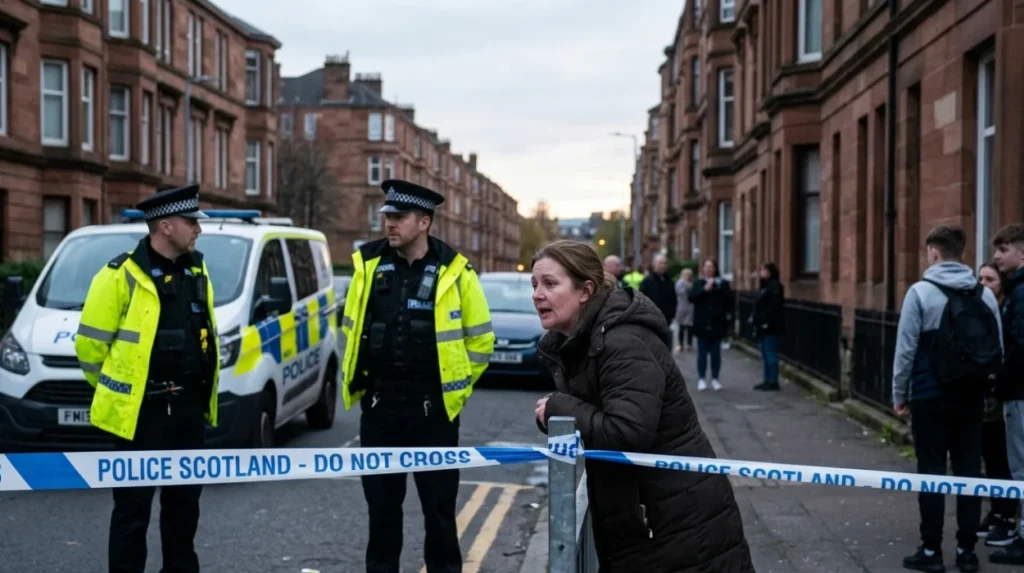
Glasgow’s crime and shooting news landscape is likely to evolve as policy, technology, and public attitudes shift, but gang‑related gunfire will probably remain a focal point for media narratives. If the city sustains its public‑health‑style violence‑reduction approach, combining targeted policing, youth intervention, and social‑investment, overall homicide and serious‑violence rates may continue to decline even as occasional shootings still occur.
At the same time, digital‑media trends suggest that coverage will become more fragmented and algorithm‑driven. Short clips, live‑streamed police operations, and AI‑generated summaries may emphasise individual incidents over long‑term trends, because dramatic moments attract more engagement than statistical charts. This could keep Glasgow shooting stories in rotation whenever any new incident happens, regardless of how rare such events are relative to other crime types.
In parallel, Glasgow may see growing pressure to rebrand its image by emphasising progress in violence reduction, cultural regeneration, and economic diversification. Local authorities, businesses, and community groups could push for more balanced coverage that highlights crime‑prevention successes, neighbourhood initiatives, and investment in deprived areas. Whether this material gains as much traction as gang‑related shooting reports will depend on how effectively it is structured for platforms that prioritise viral moments and emotionally charged narratives.
Why is Glasgow crime and shooting news getting so much attention?
Glasgow crime stories are more visible because of media amplification, social media sharing, and a history of high-profile gang-related incidents that continue to attract attention.