

Key Points
- Savills has secured planning permission for a new purpose‑built student accommodation (PBSA) scheme on Cadogan Street in Glasgow city centre, following a full approval decision by Glasgow City Council.
- The project at 38 Cadogan Street will deliver 259 student beds in a design‑led building a short walk from George Square.
- The development will replace an existing seven‑storey office block that is described as energy‑inefficient and no longer fit for modern commercial use.
- Accommodation will be a mix of studio apartments and cluster flats to cater for different student preferences.
- Amenity spaces will include wellness facilities, roof terraces, communal study and working areas, and a rooftop growing garden aimed at supporting mental wellbeing.
- The scheme is being delivered by Bankfoot APAM, providing development management on behalf of an overseas property fund, with Savills managing the planning process.
- The project is valued at around £59 million and is expected to start on site in late 2026, with completion targeted ahead of the 2028 academic year.
- Craig Gunderson, associate director at Savills, stated that the approval reflects a strong planning strategy and design response, and that the scheme will support Glasgow’s position as a leading UK university city.
Central Glasgow (Glasgow Express) April 22, 2026 – Savills has secured planning permission for a new purpose‑built student accommodation (PBSA) scheme at 38 Cadogan Street in Glasgow uk/local/city-centre/">city centre, following a formal approval decision by Glasgow City Council. The project will deliver 259 student beds in a design‑led building located just minutes’ walk from George Square, placing it at the heart of the city’s commercial, academic and cultural core. As reported by Scottish Housing News, the council’s resolution brings a £59 million proposal to the construction‑ready stage, marking a significant step in the city’s wider student‑housing pipeline.
- Key Points
- What will the new PBSA at Cadogan Street look like?
- Why is this development being built on Cadogan Street?
- How does this fit into Glasgow’s wider student‑housing strategy?
- Who is behind the planning and delivery process?
- Background of the particular development
- Prediction: How might this development affect different audiences?
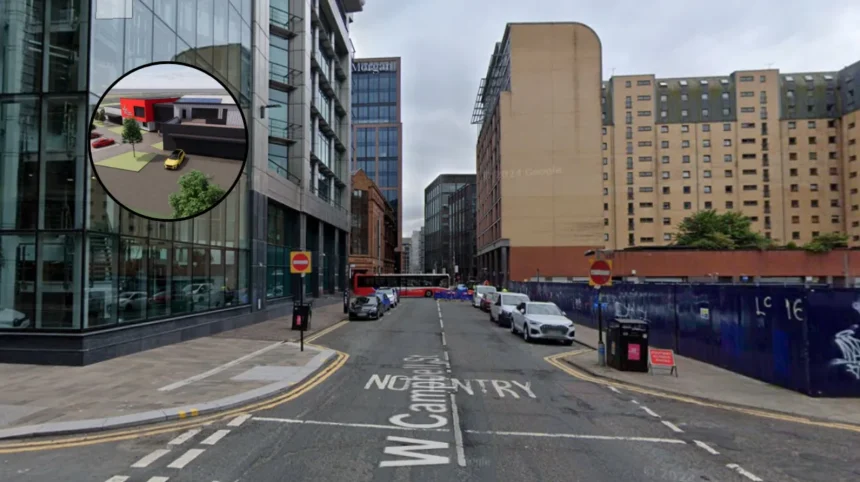
According to Urban Living News, the scheme will replace an existing seven‑storey office building at 38 Cadogan Street that is described as highly energy‑inefficient and no longer suitable for modern commercial tenants. Bankfoot APAM, acting as development manager for an overseas property fund, submitted detailed plans for the PBSA earlier in 2025, with Glasgow City Council later indicating it was “minded to grant” permission before the final approval. As noted by Marketscreener, the decision follows a robust planning strategy and early, ongoing engagement with council officers, including viability and carbon assessments that supported the case for redevelopment.
What will the new PBSA at Cadogan Street look like?
Glasgow City Council’s planning documents, as summarised by Urban Living News and Scottish Housing News, show the project will provide 259 student bedrooms across a mix of studio apartments and cluster units. The design is being led by Russ Drage Architects, with the scheme conceived to respond to the constraints of an urban infill site while maximising natural light, amenity provision and energy efficiency. As Marketscreener reports, the proposals aim to deliver high‑quality accommodation alongside a “generous package of amenity space, including wellness facilities, roof terraces and collaborative study and working areas”.
Urban Living News adds that the building will feature a rooftop growing garden intended to support mental wellbeing and encourage interaction with nature, as well as a dedicated cooking classroom to promote healthy eating and practical life skills. Other facilities outlined in the coverage include a communal roof terrace, a gym and shared study spaces, designed to foster a sense of community and cater to contemporary student lifestyles. Bankfoot APAM has previously described the scheme as a “forward‑thinking, wellness‑led” approach to student living, reflecting growing emphasis on wellbeing‑focused design in the PBSA sector.
Why is this development being built on Cadogan Street?
The location at 38 Cadogan Street falls within Glasgow’s Central Business District, just off Renfield Street and a short walk from George Square and the city’s main university quarter. As Scottish Housing News notes, the site benefits from excellent rail, subway and road connectivity, which is cited as a key factor in supporting both student demand and broader regeneration in the area. The existing office block, which is slated for demolition, is described as not meeting modern energy standards for commercial occupiers, and Savills’ brief on behalf of Bankfoot APAM has concluded that redevelopment is the most sustainable long‑term option.
In a statement cited by Marketscreener, Craig Gunderson, associate director at Savills, said the approval “reflects the strength of the planning strategy and design response” and that the project shows how high‑quality PBSA can be delivered on a challenging city‑centre site. He went on to say the scheme’s central location, “excellent connectivity and quality of amenity will ensure it makes a positive contribution to both the student housing market and the wider regeneration of this part of the city.” Bankfoot APAM has similarly framed the project as transforming an underperforming site into a vibrant, energy‑efficient addition to the city centre, aligning with Glasgow’s broader sustainability goals.
How does this fit into Glasgow’s wider student‑housing strategy?
Coverage from Scottish Housing News and Urban Living News positions the Cadogan Street scheme as one of several recent PBSA developments in Glasgow, reflecting sustained demand for purpose‑built student accommodation in the city. Earlier projects such as Broadway Studios and the Central Quay student‑flats development have been highlighted as part of a broader trend of private‑sector investment in Glasgow‑centre PBSA, often in response to pressure on traditional university‑managed halls. The Cadogan Street project is also aligned with Glasgow City Council’s evolving PBSA spatial standards, which seek to ensure new student blocks meet higher benchmarks for energy efficiency, amenity provision and integration with existing neighbourhoods.
Within this context, Urban Living News notes that the 259‑bed Cadogan Street scheme will help address the city’s ongoing need for modern, centrally located student housing while supporting the economy through construction‑phase jobs and later through on‑site management and services. As Scottish Housing News explains, the project’s design‑led approach and emphasis on sustainability and wellbeing are intended to “set a benchmark” for future PBSA in the city, rather than simply adding generic beds.
Who is behind the planning and delivery process?
Savills is acting as planning and development consultant on behalf of Bankfoot APAM, which is providing development‑management services for the overseas property fund backing the project. As Marketscreener reports, Savills coordinated the wider consultant team, including Russ Drage Architects, structural engineers Heyne Tillett Steel, environmental and sustainability consultants Crookes Walker Consulting Limited, and building‑services specialists Cavendish and Catella APAM. Urban Living News notes that Bankfoot APAM ran public‑consultation events after the initial Proposal of Application Notice (PoAN), a process that both the company and council have highlighted as helping to shape the final design.
In a statement quoted by Urban Living News, Chris Moore, managing director at Bankfoot APAM, said his firm was “delighted to have reached this important milestone” and stressed that the proposals aim to meet strong, sustained demand for PBSA with a wellness‑led, sustainable model. He added that the company is proud of the design, the public‑engagement work, and the emphasis on sustainable living that runs through the entire scheme. Craig Gunderson’s comments to Marketscreener about the project’s role in reinforcing Glasgow’s status as a leading UK university city echo this framing, underscoring the strategic importance of the development beyond its immediate physical footprint.
Background of the particular development
The Cadogan Street PBSA project forms part of a wider wave of private‑sector student‑housing investment in Glasgow city centre over the past decade. Following earlier large‑scale PBSA applications such as Broadway Studios and the Central Quay student‑flats scheme, the Cadogan Street approval continues a pattern of converting older, less‑efficient office or commercial sites into modern, high‑density student blocks. The project also reflects more recent policy changes at Glasgow City Council, which has sought to introduce stronger spatial standards and sustainability requirements for PBSA to ensure such schemes contribute positively to streetscapes and neighbourhood amenity.
Bankfoot APAM and its partners have positioned the Cadogan Street scheme as a city‑centre example of that evolving standard, combining higher‑spec energy‑efficient design, wellness‑oriented amenities and a focus on community interaction. The location’s proximity to George Square, major universities and multiple transport nodes makes it attractive from both an investment and a student‑experience perspective, while the decision to demolish the existing building rather than refurbish it is justified by detailed carbon and viability appraisals. Taken together, these elements place the Cadogan Street PBSA within a broader narrative of urban regeneration, decarbonisation and the reshaping of inner‑city land use around Glasgow’s growing student population.
Prediction: How might this development affect different audiences?
For prospective students and current tenants in Glasgow, the Cadogan Street PBSA is likely to add a sizeable chunk of modern, centrally located accommodation to an already competitive but supply‑constrained market. Its mix of studio and cluster flats, combined with wellness‑oriented amenities such as the rooftop growing garden and cooking classroom, may appeal to those seeking a higher‑spec, community‑focused living environment within walking distance of George Square and the universities. However, private‑sector PBSA projects of this scale can also exert upward pressure on rents in nearby areas, particularly if university‑managed halls remain limited or heavily oversubscribed.
For local residents and businesses around Cadogan Street and the wider Central Business District, the scheme is expected to bring more footfall and activity during evenings and weekends, which can benefit nearby hospitality and retail outlets. On the other hand, the scale and density of the build‑to‑rent PBSA block may raise concerns about noise, litter or the character of the area, especially if the new residents are a transient student population. Community‑engagement activities undertaken by Bankfoot APAM and the council before approval may help mitigate some of these tensions, but long‑term integration will depend on how the building is managed and how students interact with the surrounding neighbourhood.
From an investor and development‑sector perspective, the Cadogan Street approval reinforces Glasgow’s status as an attractive market for PBSA capital, particularly for projects that can meet both planning and sustainability thresholds. The involvement of an overseas property fund and a specialist development‑management firm signals confidence in the city’s long‑term demand profile, even as national housing and student‑finance policies evolve. For other developers watching the outcome, the project may serve as a template for how to navigate Glasgow’s spatial standards and deliver a “wellness‑led” PBSA product that can win both planning consent and market interest.