Milngavie, a charming suburb just northwest of Glasgow, offers an ideal blend of natural beauty, historical depth, and modern convenience for residents and visitors alike. Nestled along the Allander Water in East Dunbartonshire, this town serves as a peaceful gateway to Scotland’s great outdoors while maintaining strong ties to the bustling energy of Glasgow.
Origins and Historical Evolution
Milngavie’s roots trace back to a modest country village in the parish of New Kilpatrick, where its Gaelic name, Muileann-Ghaidh, likely derives from “windmill” or “windy hill,” reflecting its early rural character. By the early 19th century, the area had blossomed into a small manufacturing hub, powered by the Allander River. Industries flourished with whisky distilleries, calico printing works, linen weaving factories, cotton spinning mills, and bleachfields at Clober and Craigton, where engineer James Watt experimented with bleaching innovations.
The town’s transformation accelerated in 1875 when it gained burgh status, enabling local governance led by enterprising businessmen like Provost James Watt of the mill—who should not be confused with the famed engineer—and builder John Woodburn. Woodburn played a pivotal role in reshaping Milngavie into a commuter suburb akin to nearby Bearsden, constructing stone villas and semi-detached homes for affluent Glasgow professionals after the railway arrived in 1863.
Post-World War II, local authority housing emerged west of the town center to accommodate those displaced from bombed Clydebank areas, while private developments of bungalows dotted South Mains and Clober in the 1950s and 1960s. The town center underwent pedestrianization in 1974 to enhance safety and flow, replacing older structures and introducing a superstore in the 1990s, solidifying its dormitory role for Glasgow commuters. Today, with a population around 13,537 in 2018—many retirees—Milngavie balances its industrial legacy with suburban appeal.
Strategic Location Near Glasgow
Positioned about eight miles from Glasgow city center, Milngavie enjoys seamless connectivity, making it a prime choice for those seeking suburban tranquility without sacrificing urban access. The road distance spans roughly 7.2 miles, with driving times as short as 12 minutes under ideal conditions. This proximity positions Milngavie as a commuter haven, where professionals can reach Glasgow Queen Street Low Level or Central stations effortlessly.
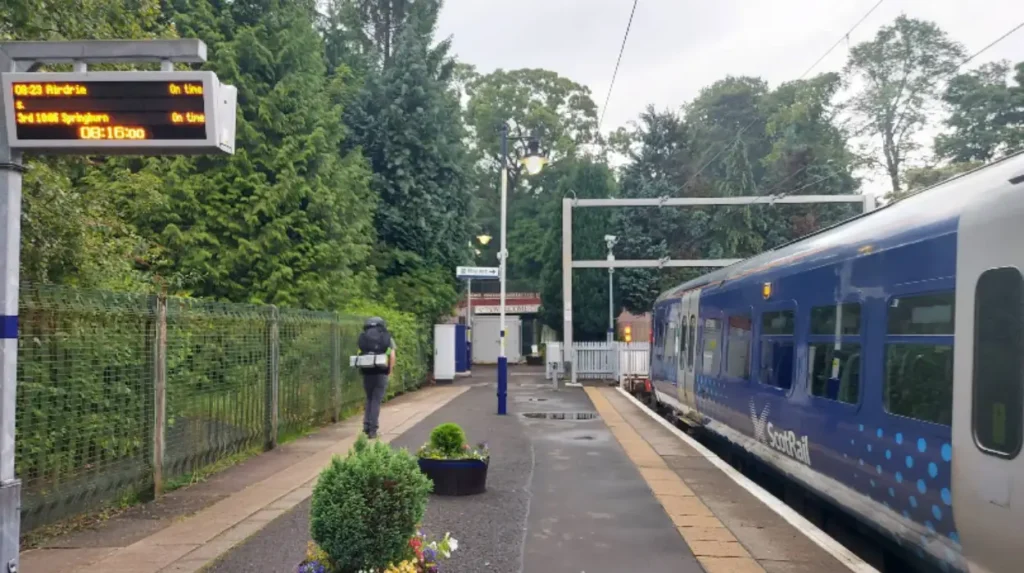
Public transport bolsters this link: ScotRail trains depart hourly from Milngavie station, covering the 23-minute journey to Glasgow for £4-£13, operating reliably Monday to Saturday with extensions to Edinburgh. Buses, like First Greater Glasgow’s service from Ashfield Road to New City Road every 15 minutes, take about 32 minutes for £1-£3. Taxis offer the quickest option at 12 minutes for £18-£22, ideal for those prioritizing speed. These options underscore Milngavie’s enduring appeal as Glasgow’s northwestern gateway.
Efficient Commuting Routes
For daily commuters, Milngavie’s North Clyde Line railway station stands as a Victorian-era landmark, rebuilt around 1900 to accommodate growing demand from new villas. Trains run frequently every 15-20 minutes from Glasgow Central or Queen Street, ensuring average journey times of 23-30 minutes. The average full trip to Glasgow Central clocks in at 28 minutes, with minimal disruptions even on weekends.
Buses complement rail with direct routes operating daily every 10 minutes, providing flexible alternatives amid traffic variability. Cycling enthusiasts favor the Forth and Clyde Canal towpath or Kelvin Walkway, both starting from Milngavie and offering scenic, car-free paths into Glasgow— the latter stretches 20 km to the Riverside Museum in Partick. These routes not only shorten commutes but enhance quality of life, blending exercise with efficiency for the modern worker.
Iconic West Highland Way Gateway
Milngavie earns global acclaim as the official starting point of the West Highland Way, Scotland’s premier long-distance footpath spanning 154 km to Fort William. A granite obelisk in the pedestrianized town center marks the trailhead, drawing thousands of hikers annually to embark on this iconic journey through lochs, munros, and glens. The route’s accessibility from Glasgow—via a quick £4 train ride—makes Milngavie the perfect launchpad for multi-day treks or day hikes.
Beyond thru-hiking, the path invites casual explorers to sample initial sections amid lush woodlands, fostering a deep connection to Scotland’s wild landscapes. This distinction elevates Milngavie’s profile, blending adventure tourism with its commuter identity and attracting nature lovers year-round.
Majestic Reservoirs and Engineering Marvels
The Mugdock and Craigmaddie Reservoirs, perched north of town, represent Victorian ingenuity at its finest, supplying Glasgow’s primary water source since Queen Victoria’s 1859 opening. Engineer John Frederic Bateman’s ambitious Loch Katrine project channeled water 26 miles via aqueducts, pipes, and tunnels into Mugdock’s 550-million-gallon basin, fully operational by 1860. A second aqueduct and Craigmaddie Reservoir followed in 1896, overcoming fissured rock with massive excavations and clay linings.
These sites now form a conservation area, where walkers trace historic pathways amid serene waters and heather moors, the Auld Wives’ Lifts rock formation adding geological intrigue nearby. Visitors appreciate the reservoirs’ dual role as functional infrastructure and tranquil retreat, embodying Milngavie’s contribution to Glasgow’s lifeblood.
Outdoor Escapes in Mugdock Country Park
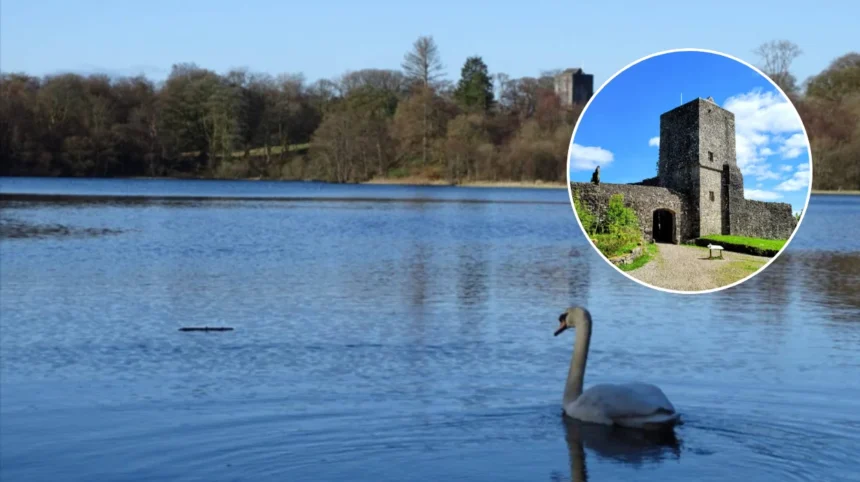
Adjacent Mugdock Country Park spans 270 hectares of woodland, moorland, and heathland, offering endless trails for all abilities—from paved paths around the visitor center to challenging woodland routes. Highlights include the evocative 14th-century Mugdock Castle ruins, evoking Scotland’s turbulent past amid ponds, lochs, and wildlife hotspots. Families flock to play areas, cafes, and garden centers, while stargazing events and adventure exhibitions at the Campsie Gallery enrich seasonal visits.
The park’s network connects seamlessly to the West Highland Way and reservoirs, creating a vast outdoor playground that underscores Milngavie’s commitment to green living. Spring mornings reveal nature’s renewal with low crowds, making it an evergreen haven for rejuvenation.
Cultural Gems and Town Center Vibrancy
Milngavie’s pedestrian precinct buzzes with independent shops, cafes, restaurants, and a local bookshop, fostering a community-focused atmosphere. The Lillie Art Gallery showcases Scottish works from the 1880s onward, providing cultural depth in a compact setting. Gavin’s Mill, a remnant of industrial heritage, stands as a testament to the town’s milling past along the Allander.
Events like the Easter Trail and Merry Milngavie Christmas infuse the center with cheer, funded by local BID businesses—think live music, Santa grottos, and reindeer sightings. This vibrant core, enhanced by Waitrose and leisure spots, ensures Milngavie remains a lively hub despite its suburban scale.
Thriving Community and Lifestyle
Milngavie boasts a high-income, professional demographic, with many over 45 and retirees in owner-occupied homes, supported by light industries like Scottoiler. Education shines through Douglas Academy, named Scottish State Secondary School of the Year 2026 by The Sunday Times Parent Power Guide, featuring a renowned music school for gifted youth. Primary options include Clober, Craigdhu, and Milngavie schools, plus The Glasgow Academy’s nursery.
Sports abound at Allander Leisure Centre, Milngavie Golf Club, West of Scotland F.C. rugby grounds, and Rangers’ training center. Churches like St. Paul’s and Cairns reflect a rich ecclesiastical tapestry. Property values reflect desirability, with detached homes in Tannoch fetching offers over £995,000.
Why Choose Milngavie?
Milngavie’s fusion of history—from mills to reservoirs—with unparalleled access to Glasgow’s opportunities and Scotland’s trails creates an enduring allure. Whether commuting via swift trains, hiking from the obelisk, or unwinding in Mugdock, this town delivers a balanced lifestyle that captivates. For those eyeing a Glasgow-area base, Milngavie’s evergreen charm promises lasting satisfaction.