Hillhead Glasgow captivates visitors and residents alike with its blend of historic charm, academic prestige, and lively cultural scene. Nestled in the fashionable West End, this neighborhood offers timeless appeal for those exploring Glasgow’s rich heritage.
A Storied Past
Hillhead’s origins trace back to its formation as an independent police burgh in 1869, a status it held amid Glasgow’s rapid nineteenth-century expansion. The area, shaped by ancient glacial drumlins, evolved from rural landscapes into a bustling suburb as the city encroached, leading to its full administrative integration into Glasgow on November 1, 1891. This annexation marked the end of its autonomy under Provost Robert Miller, but preserved its distinct identity amid grand Victorian developments.
The neighborhood’s growth intertwined with educational shifts, particularly the University of Glasgow’s relocation from the High Street to Gilmorehill in 1870. This move spurred residential construction, including tenement blocks and terraces from the 1840s onward, establishing Hillhead as part of the West End Conservation Area with the highest concentration of listed buildings in Glasgow. Early maps from 1895 highlight this transformation, with streets like Victoria Street—later renamed Byres Road—forming the commercial backbone.
Industrial echoes linger in small villas and relics, while the area’s neoclassical Hillhead Burgh Hall, designed by George Bell and demolished in 1970, symbolized civic pride before conservation priorities shifted. Today, Hillhead stands as a testament to Glasgow’s Victorian legacy, where history informs every cobblestone and spire.
Architectural Treasures
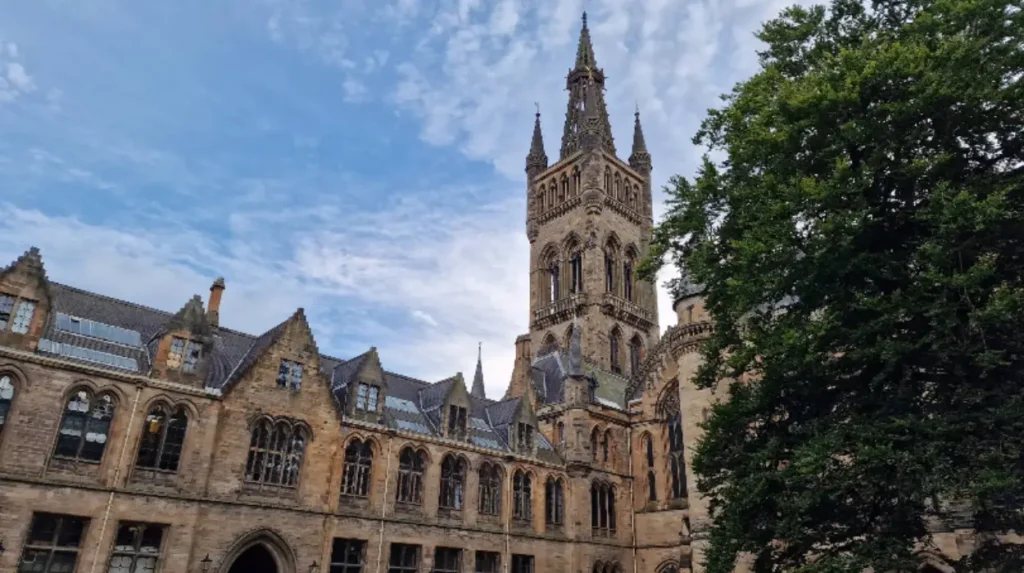
Hillhead boasts an extraordinary architectural tapestry, dominated by Victorian Gothic and neoclassical gems that define Glasgow’s West End skyline. The University of Glasgow’s Gilmorehill campus features striking spires and cloisters, a landmark visible across the city since its 1870 establishment.
Kelvinside Hillhead Parish Church exemplifies Parisian Gothic influence, completed in 1876 by architect James Sillars modeling after Sainte-Chapelle, its intricate stonework earning Category A listing. Wellington Church on University Avenue offers neoclassical elegance with its colonnaded facade, directly opposite the university and also Category A protected.
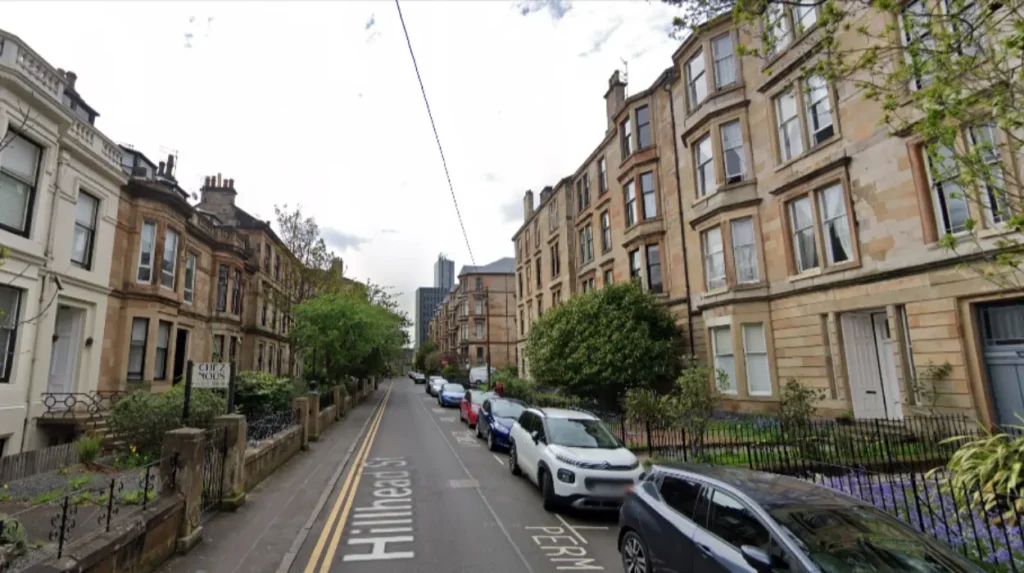
Tenements and terraces from the mid-nineteenth century dominate residential streets, interspersed with fine churches, schools like Hillhead High School and Glasgow Academy, and public buildings forming a cohesive conservation narrative. The Botanic Gardens add verdant elegance, with the 1841 Curator’s House by Charles Wilson and the 1873 Kibble Palace showcasing glasshouse innovation amid exotic plantings. These structures not only enhance Hillhead’s aesthetic but underscore its role in preserving Glasgow’s built heritage.
Iconic Landmarks
At Hillhead’s core lies the University of Glasgow, drawing academics, students, and visitors to its historic quadrangle and cloisters overlooking the River Kelvin. Since relocating here, it has fostered a diverse community of scholars, BBC employees, and creatives.
The Glasgow Botanic Gardens, relocated to Kelvinside in 1839 and opened in 1842, span 42 acres of serene landscapes originally founded by botanist Thomas Hopkirk in 1817. Home to 15 glasshouses including the iconic Kibble Palace—a fernery gifted in 1873—this green oasis provides teaching resources for the university and public respite.
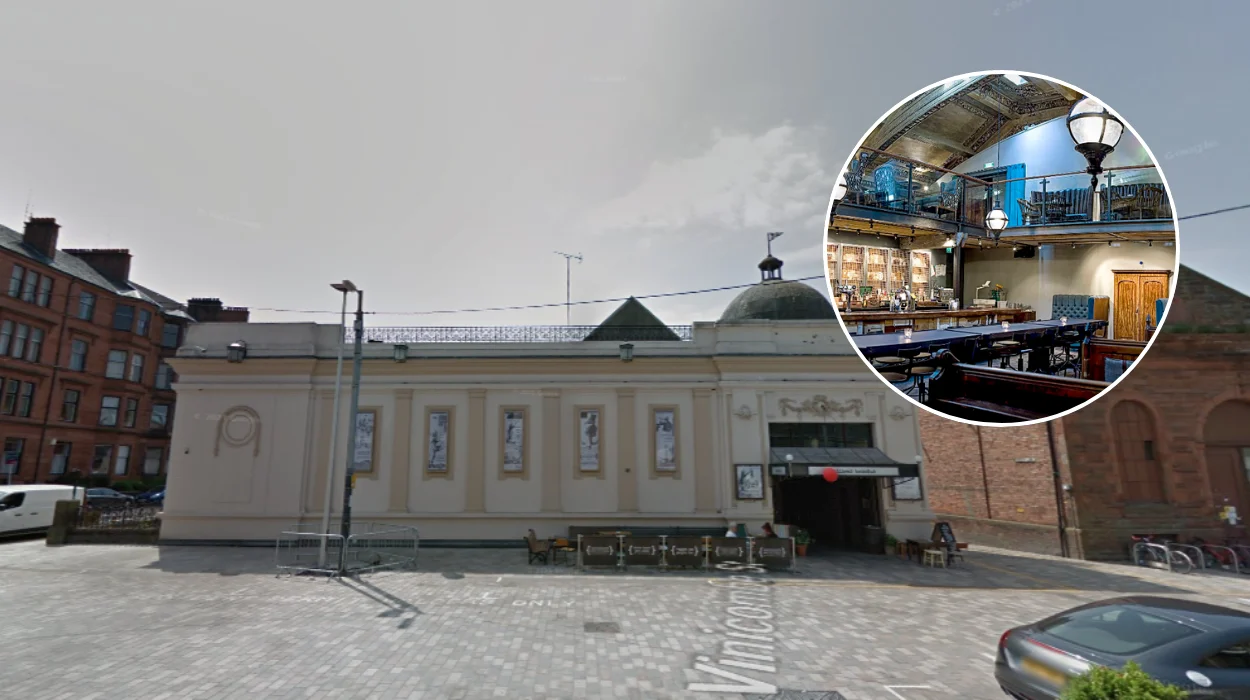
Ashton Lane emerges as a cobbled gem connected to Byres Road, famed for its intimate bars, restaurants, and the Grosvenor Cinema, evoking Dublin’s Temple Bar with its vibrant yet cozy vibe. The Western Baths, a Victorian swimming facility, adds historic leisure allure, while Kelvinbridge spans the river, once marking Hillhead’s boundary. These sites weave Hillhead’s landmarks into an enduring tapestry of culture and nature.
Bustling Byres Road
Byres Road serves as Hillhead’s lively western artery, a renowned thoroughfare brimming with independent shops, cafes, and eateries that pulse with West End energy. From supermarkets to prestigious restaurants, it caters to diverse tastes, with nearby lanes like Otago Lane hiding treasures such as the eclectic Voltaire & Rousseau bookshop and Tchai Ovna tea house offering infinite tea varieties and vegetarian fare.
This street’s commercial vibrancy extends to Cresswell Lane, where specialist shops complement the dining scene, drawing locals, students, and tourists year-round. Hillhead subway station anchors the area, providing seamless access and amplifying foot traffic to its eclectic boutiques and bistros. Byres Road embodies Hillhead’s accessible sophistication, where everyday errands blend seamlessly with leisurely exploration.
Cultural Pulse
Hillhead thrives as a cultural hub, amplified by the annual West End Festival—now WestFest—running from early June across 60 venues, featuring street theatre, choral concerts, and community galas that attracted 110,000 attendees in recent years. The neighborhood’s social fabric, enriched by university life and creative residents, culminates in these events, fostering inclusivity and artistic expression.
Glasgow Academy and Hillhead High School contribute educational vibrancy, while churches like Kelvinside Hillhead Parish host concerts and gatherings. The Grosvenor Cafe on Ashton Lane remains an iconic spot for film and pints, underscoring Hillhead’s blend of tradition and modernity. This cultural dynamism ensures the area remains a perennial draw for immersive experiences.
Community Demographics
Hillhead’s population reached 24,649 in 2016, with a density of 25,676 per square kilometer across 0.96 square kilometers, reflecting its urban compactness. Between 1996 and 2012, the area saw an 8% growth, driven by increases in 16-44 and 45-64 age groups, while minority ethnic representation rose from 15% in 2001 to 22% in 2011—well above Glasgow averages.
Students dominate due to the university, mingling with professionals, academics, and families in a economically diverse mosaic. Bounded by Byres Road, Dumbarton Road, and the River Kelvin, Hillhead fosters a cosmopolitan vibe, supported by the active Hillhead Community Council holding monthly public meetings. This evolving demographic underscores its appeal as a vibrant, inclusive enclave.
Getting Around Easily
Hillhead’s transport network enhances its accessibility, with Hillhead and Kelvinbridge subway stations on Glasgow’s Subway system offering quick links—five minutes to Buchanan Street and connections to Kelvinhall. Buses along Great Western Road and Byres Road provide frequent service, while taxis cover the four-minute hop to central Glasgow.
Cycling paths along the River Kelvin integrate with the area’s green spaces, promoting sustainable travel amid its pedestrian-friendly lanes. Proximity to major roads like Great Western Road ensures connectivity northwest, making Hillhead ideal for commuters and explorers alike.
Why Hillhead Endures
Hillhead Glasgow endures as the West End’s timeless jewel, where Victorian spires meet modern vibrancy in a neighborhood that balances heritage with contemporary allure. Its conservation status safeguards architectural splendor, while cultural festivals and botanic beauty offer endless discovery.
For Glasgow Express readers, Hillhead represents the city’s aspirational spirit—walk its lanes, savor Byres Road’s offerings, and uncover layers of history that invite return visits. This evergreen enclave continues to rank high among Scotland’s must-see districts, blending education, nature, and nightlife seamlessly.