East Kilbride, often called EK by locals, stands as Scotland’s pioneering new town, blending rich history with modern vibrancy just a short commute from Glasgow. This comprehensive guide explores its evolution, attractions, and connections, making it an ideal spot for residents, commuters, and visitors seeking the best of suburban life near Scotland’s largest city.
A Storied Past
East Kilbride traces its roots to prehistoric times, with evidence of Neolithic burial cairns and Bronze Age artifacts like flint arrowheads unearthed in the area, signaling early human settlement on the raised plateau southeast of Glasgow. Roman coins, footwear, and even a Romano-British oil lamp have surfaced nearby, hinting at ancient trade or military presence along routes near the Kype Water.
The town’s name derives from St. Bride, or Brigit, an Irish saint linked to a 6th-century monastery in Kildare, whose Celtic Church influence spread to Scotland via monks, possibly establishing a cell or chapel—reflected in the Gaelic “Cille Bhrìghde an Ear.” This early Christian site, potentially on a pre-Christian sacred spot tied to the Celtic goddess Brigid, evolved into a parish church that anchored a small village community. By the 18th century, “East” distinguished it from West Kilbride, preserving its identity amid Scotland’s feudal landscapes.
In 1793, Reverend David Ure’s History of Rutherglen and East Kilbride celebrated the Calderglen gorge as a “magnificent” natural wonder with craggy heights, wooded valleys, and cascades, drawing Romantic-era admirers. The Maxwells of Calderwood, an ancient family, resided in the now-ruined Calderwood Castle until its 1951 demolition, leaving remnants that underscore the area’s layered heritage.
Birth of a New Town
Post-World War II housing shortages in Glasgow, exacerbated by bomb damage and industrial overcrowding, prompted the 1947 designation of East Kilbride as Scotland’s first new town under the Clyde Valley Regional Plan. This initiative aimed to rehouse overspill populations from the Clyde Valley, transforming a village of about 900 into a planned burgh by 1967.
Development unfolded in residential precincts around a central shopping area, encircled by ring roads, with industrial estates like Nerston, College Milton, and Kelvin on the periphery. The design prioritized self-contained neighborhoods with local shops, schools, and pedestrian paths via underpasses, fostering community without heavy reliance on cars. By the 1970s, it absorbed workers from factories like Rolls-Royce, where employees notably refused to service engines for Chile’s military dictatorship from 1974 to 1978—a tale captured in the 2018 documentary Nae Pasaran.
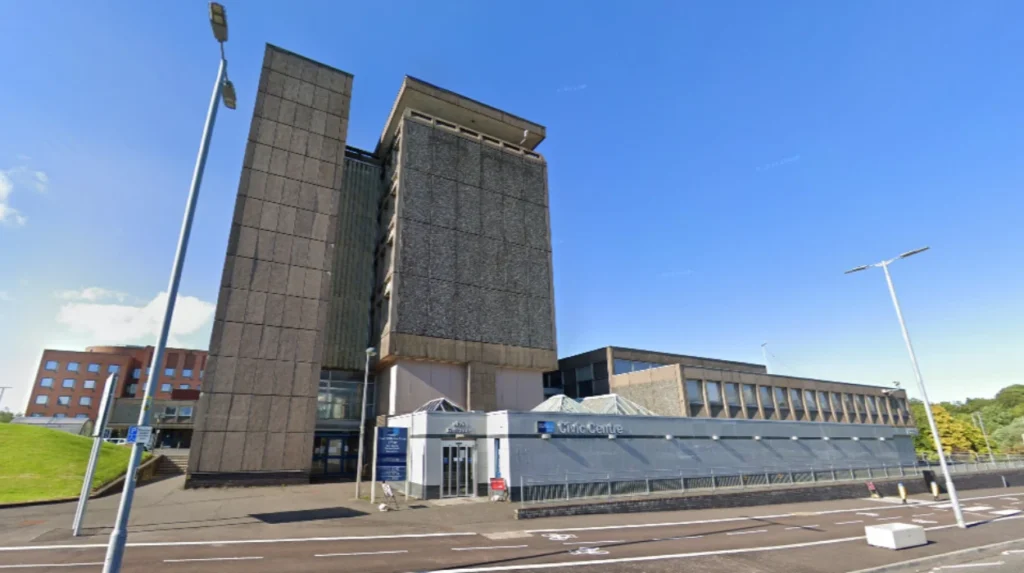
Governance shifted with 1975 reforms, creating East Kilbride District Council in Strathclyde until 1996, when South Lanarkshire Council took over from Hamilton. The Brutalist East Kilbride Civic Centre, opened in 1968, symbolized this era before local services consolidated. Today, ambitious £400 million town center redevelopment plans promise demolition of outdated structures for housing, civic spaces, and reduced retail footprints.
Vibrant Community Today
With a 2022 population of 76,607 across 25.38 square kilometers, East Kilbride boasts a density of 3,018 per square kilometer, growing steadily at 0.27% annually since 2011. Females slightly outnumber males (39,511 to 37,096), with 14,403 under 18, 47,261 aged 18-64, and 14,945 over 65—reflecting a balanced, family-oriented demographic.
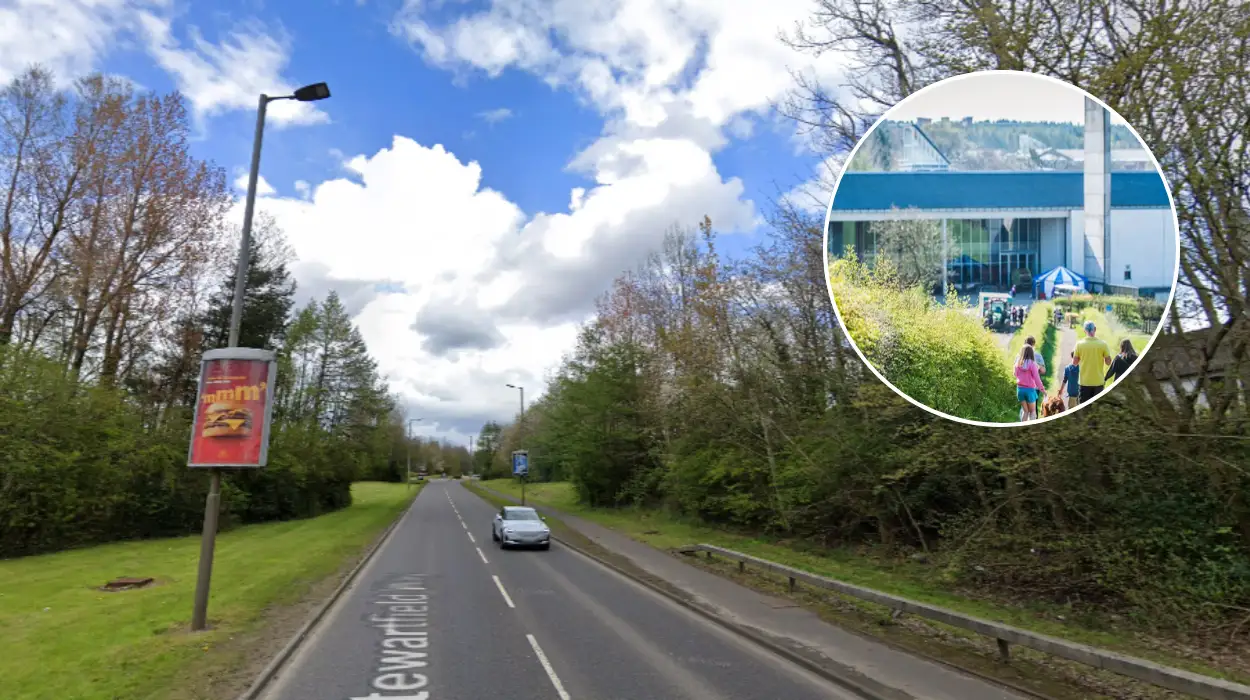
Neighborhoods like Calderwood, Greenhills, The Murray, St Leonards, and Westwood embody the original precinct model, while newer areas such as Stewartfield, Lindsayfield, and Jackton feature suburban cul-de-sacs. Recent housing booms, including £4.5 million transformations of disused sites into 28 affordable flats with EV charging and wheelchair access, address demand amid retail and service sector growth. This influx energizes local businesses, from expanded shops to hospitality, solidifying East Kilbride’s role as a sustainable commuter hub.
Bounded by White Cart Water to the west and Rotten Calder Water to the east, its plateau location offers mild climate akin to nearby Paisley: average highs of 11.8°C yearly, with 1,229 mm rainfall over 172 days, moderated by prevailing westerlies.
Seamless Links to Glasgow
Just 11 miles from Glasgow city center—with a road distance of 9.6 miles—East Kilbride integrates effortlessly into the Greater Glasgow conurbation via efficient transport. Trains from East Kilbride station to Glasgow Central run hourly, covering 33 minutes for £5-£14; Hairmyres station serves the south. Buses by First Greater Glasgow depart every 10 minutes from Carlyle Terrace to Wilson Street (39 minutes) or Gallery of Modern Art to Shira Terrace (43 minutes).
Roads like the A727 west to Clarkston, A749 north to Rutherglen, and Glasgow Southern Orbital (A726) to M77 bypass congestion, while Kingsway and Queensway handle internal north-south and east-west flow amid 199 roundabouts—earning the playful “Polo Mint City” moniker. Cycling networks, including National Route 756 and local paths to Strathaven or Calderglen, plus underpass systems, promote active travel. The revamped bus station at the shopping center, with 14 drive-through stances since 2005, ensures swift public transit turnover.
Premier Shopping Haven
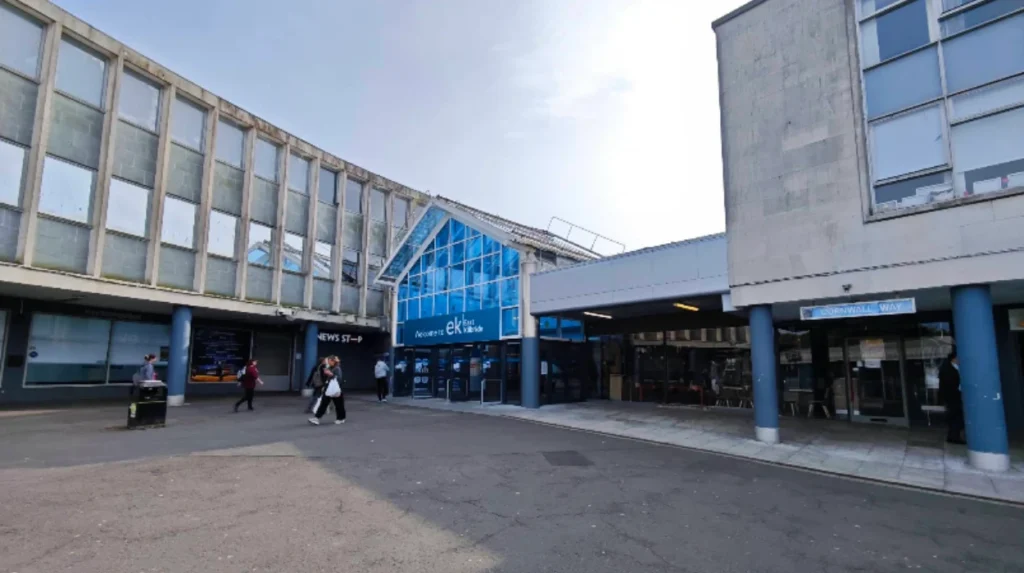
EK’s shopping center, Scotland’s largest undercover destination, spans six malls: Plaza (1972), Princes Mall (1984), Southgate (1989), Princes Square (1997), Centre West (2003), and Hub (2016), housing over 150 brands from high-street fashion to essentials. Open 9am-6pm daily (later Thursdays, Sundays 10am-6pm), it pairs with Odeon Luxe cinema, ice rink, eateries for coffee to date nights, and kid-friendly spots.
This retail core drives economic vitality, complemented by local expansions in services amid housing growth, positioning East Kilbride as a shopping magnet for South Lanarkshire and Glasgow commuters.
Green Spaces and Attractions
Nature abounds in East Kilbride’s parks and reserves. Calderglen Country Park offers woodland walks past ruins of Calderglen and Craigneith Castles; James Hamilton Heritage Park features a 16-acre loch for watersports beside 15th-century Mains Castle. Langlands Moss, a lowland raised peat bog nature reserve, and nearby Whitelee Wind Farm—UK’s largest onshore site with a visitor center—highlight conservation. The National Museum of Rural Life at Kittochside recreates 1950s farming via an 18th-century farm and modern exhibits linked by tractor ride.
Cultural gems include East Kilbride Arts Centre for performances like Revive Festival’s opera, music, mini-zoo, crafts, and storytelling; Village Theatre; and the Category A-listed Dollan Baths, a 1968 modernist pool complex refurbished in 2011. St Bride’s RC Church, by Gillespie, Kidd & Coia (1957-1964), exemplifies mid-century design.
Dynamic Economy and Education
Industrial legacies persist alongside modern sectors: former Rolls-Royce site now housing, with Nerston and Kelvin estates hosting businesses. Government offices like the Foreign, Commonwealth & Development Office at Hairmyres bolster employment, while retail, hospitality, and professional services surge with population growth.
Education thrives with over 20 primary schools (e.g., Auldhouse, Greenhills), secondaries like Calderglen High, Duncanrig, and St Andrew’s & St Bride’s, plus specialist needs provisions. South Lanarkshire College’s East Kilbride campus delivers vocational programs in state-of-the-art facilities, partnering with schools for 4th-6th year experiences.
Sports Powerhouse
Sports facilities shine: John Wright Sports Centre’s stadium, opened 1989, boasts an 8-lane 400m track, hurdles, jumps, throws, and 11-a-side football pitch. East Kilbride F.C. (League Two) and Motherwell Women F.C. play at K-Park; East Kilbride Thistle Juniors at Show Park; YM FC, oldest club since 1921. Rugby’s East Kilbride RFC at Torrance House Arena; Pirates American football; EK82 Handball.
Celebrated Locals
East Kilbride nurtures talent: Jesus and Mary Chain’s Jim and William Reid; Creation Records co-founder Alan McGee; Aztec Camera’s Roddy Frame; actors John Hannah (Four Weddings and a Funeral) and Julie Wilson Nimmo (Balamory); presenter Kirsty Young; footballer Ally McCoist (local schools alum).
Why East Kilbride Endures
From ancient cairns to new town innovation, East Kilbride offers timeless appeal: green escapes, top shopping, sports, education, and Glasgow proximity. Ongoing developments ensure its prosperity, inviting exploration of this evergreen suburban jewel.