Key Points
- The Scoreline: Partick Thistle and St Mirren played out a grueling 1-1 draw in the first leg of the William Hill Premiership play-off final at Firhill.
- The Goalscorers: Killian Phillips opened the scoring for St Mirren in the 39th minute, while Aidan Fitzpatrick equalised for Partick Thistle in the 62nd minute.
- Tactical Decisions: Interim St Mirren manager Craig McLeish deployed Killian Phillips in an advanced role almost as a striker alongside Mikael Mandron, while Partick Thistle manager Mark Wilson substituted Logan Chalmers for Ts’oanelo Lets’osa at half-time to spark a comeback.
- Historical Context: St Mirren entered the play-offs after winning the Premier Sports Cup in December but finishing second-bottom of the top flight. Partick Thistle are attempting to break a streak of four consecutive years of play-off heartbreak.
- The Decider: The tie remains completely level heading into the second leg, which will be played at the SMiSA Stadium in Paisley on Monday night.
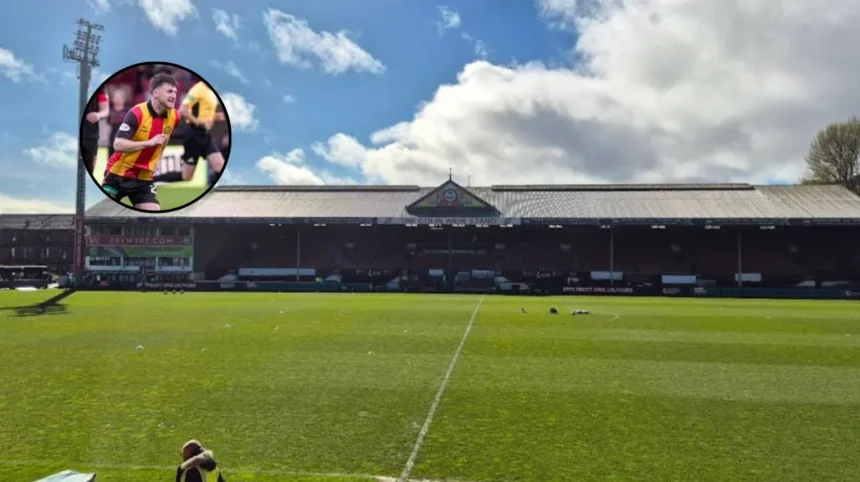
Maryhill (Glasgow Express) June 1, 2026. In a relentless, end-to-end encounter that barely offered players or spectators a moment to breathe, Partick Thistle and St Mirren fought out a 1-1 draw at Firhill Stadium in the first leg of the William Hill Premiership play-off final. The high-stakes match left the crucial tie entirely balanced ahead of the return fixture in Paisley. Killian Phillips rewarded the visitors’ early intent with a close-range finish in the 39th minute. However, a spirited second-half revival by Mark Wilson’s men culminated in a 62nd-minute equaliser from Aidan Fitzpatrick, leaving everything to play for on Monday night.
- Key Points
- What Happened in the Lively First Leg Between Partick Thistle and St Mirren?
- How Did St Mirren Take the Lead in the First Half?
- How Did Partick Thistle Standardise a Second-Half Comeback?
- Who Scored the Crucial Equaliser for the Jags?
- Background of This Particular Development
- Prediction: How This Development Can Affect Scottish Football Supporters
What Happened in the Lively First Leg Between Partick Thistle and St Mirren?
The match began at a frantic pace, with both sides demonstrating an acute awareness of what was at stake. St Mirren’s interim manager Craig McLeish opted for an aggressive tactical approach, deploying midfielder Killian Phillips in an advanced position.
Phillips operated effectively as a second striker next to the physically imposing Mikael Mandron. This tactical wrinkle caused early complications for the Partick Thistle backline.
As reported by sports journalists covering the fixture at Firhill, Phillips signalled his attacking intentions within the opening minutes, seeing two separate goalbound efforts blocked inside the Jags’ penalty area. Partick Thistle responded rapidly to the early pressure. In the eighth minute, winger Aidan Fitzpatrick cut inside from the left flank and unleashed a curling effort from the edge of the box that drifted just wide of Ross Sinclair’s far post.
The opening half-hour developed into an open, oscillating affair. St Mirren constructued a fluid attacking sequence down the right wing involving Mandron and defender Richard King, which culminated in Phillips seeing another shot deflected wide for a corner from 16 yards out.
Partick Thistle proved equally dangerous on the counter-attack. A lapse in concentration from St Mirren’s Richard King resulted in a sloppy header, allowing Jags striker Alex Samuel to bustle past central defender Alex Gogic. Samuel latched onto the loose ball and fired a powerful shot, but St Mirren goalkeeper Ross Sinclair reacted swiftly to thwart the danger.
How Did St Mirren Take the Lead in the First Half?
The visual map of the first half showed St Mirren progressively finding more space in the final third. The connection between Mandron and Phillips became the focal point of the Buddies’ attacking threat.
Josh Clarke, the Partick Thistle goalkeeper, was called into action to save a low, driving shot from Phillips, who had been cleanly threaded through by a well-weighted pass from Mandron.
Moments later, the action shifted back to the opposite end of the pitch. St Mirren midfielder Jacob Devaney was dispossessed in a dangerous central area by Tony Watt.
The veteran Thistle forward drove clear of the midfield line and unleashed a powerful strike, which Sinclair managed to parry away to safety.
The deadlock was broken six minutes before the interval. Mandron, who proved to be an excellent focal point for the visitors throughout the first half, controlled the ball inside the penalty area and delivered a precise pass to Phillips.
The box-to-box midfielder timed his run perfectly, stabbing the ball past the advancing Clarke to give St Mirren a 1-0 lead.
However, Partick Thistle missed a golden opportunity to draw level immediately before the referee blew for half-time. Following a well-delivered corner from Fitzpatrick, Jags captain Lee Ashcroft found himself unmarked merely six yards out from goal.
To the frustration of the home support, the defender directed his header wide of the post, sending his side into the tunnel a goal down.
How Did Partick Thistle Standardise a Second-Half Comeback?
Seeking greater control in the midfield and an injection of energy, Partick Thistle manager Mark Wilson made a tactical substitution ahead of the second half, replacing Logan Chalmers with Ts’oanelo Lets’osa.
The structural tweak quickly altered the momentum of the match, though it was not without initial scares for the hosts.
Early in the second half, goalkeeper Josh Clarke dallied in possession inside his own penalty box and was dispossessed by the alert Mandron.
The ball broke loose to St Mirren midfielder Allan Campbell, who attempted a first-time lob over the stranded goalkeeper. Fortunately for the Maryhill club, Campbell’s effort lacked accuracy and sailed yards wide of the target.
On the hour mark, Fitzpatrick committed a severe misjudgement when his attempted long-range pass back to his own defense was intercepted by Mandron.
The St Mirren forward drove toward the box, but his final shot lacked placement and went straight into the grateful arms of Clarke.
Who Scored the Crucial Equaliser for the Jags?
Fitzpatrick quickly made amends for his defensive error just two minutes later. In the 62nd minute, Tony Watt found space on the right wing and delivered an accurate cross into the penalty area.
The St Mirren defensive line suffered a total breakdown in communication, leaving Fitzpatrick completely unmarked 14 yards from the goal line. The wide man kept his composure and calmly converted the cross past Sinclair to level the score at 1-1.
Following the equaliser, the Jags enjoyed their best spell of the match, pinning the top-flight side back into their own half. Despite sustained pressure and a series of set-pieces, they could not break through a resilient St Mirren defense.
In the dying moments of stoppage time, substitute Gary Mackay-Steven struck the inside of the far post with a dramatic effort, but any potential celebrations were cut short as the assistant referee had already raised the offside flag. The referee blew the final whistle shortly after, concluding an exhausting first leg.
Background of This Particular Development
To fully comprehend the magnitude of this play-off final, it is necessary to examine the contrasting and turbulent seasons both football clubs have experienced leading up to this fixture.
St Mirren enter this two-legged tie following a highly anomalous campaign. In December, the Paisley club achieved a historic milestone by winning the Premier Sports Cup final, a triumph that promised a highly successful season.
However, their league form deteriorated drastically in the subsequent months. A prolonged run of poor results saw them slide down the table, ultimately finishing second-bottom of the William Hill Premiership.
This poor run led to the departure of their permanent manager, leaving interim boss Craig McLeish with the task of preserving the club’s top-flight status through the precarious play-off system.
Conversely, Partick Thistle represent a club defined by recent play-off persistence and heartbreak. The Maryhill-based side has successfully reached the promotion play-offs in each of the last four consecutive seasons, only to fall short at the final hurdles.
This prolonged history of near-misses has created an intense psychological barrier, but also a battle-hardened squad determined to return to the Premiership. Under Mark Wilson, the Jags have shown immense resilience, qualifying for the final once again and demonstrating against St Mirren that they possess the quality to compete directly with top-tier opposition.
Explore More Glasgow Sports News
Rangers reject Dynamo Dresden friendly over schedule – Glasgow 2026
Scott McKenna Rules Out Celtic Move for World Cup 2026 — Glasgow, 2026
Prediction: How This Development Can Affect Scottish Football Supporters
The 1-1 draw at Firhill sets up a definitive, high-stakes second leg at the SMiSA Stadium, a scenario that carries profound implications for both sets of passionate supporters.
For the St Mirren fan base, the outcome of Monday night’s match will dictate the emotional narrative of their entire season. A victory on home turf would allow supporters to celebrate a highly unique double: retaining their Premiership status while retaining the silverware of the Premier Sports Cup.
Conversely, relegation would turn their cup-winning season into a historic disappointment, forcing fans to adjust to the harsher realities, lower revenues, and reduced media coverage of the Scottish Championship next season.
For the Partick Thistle collective, the psychological stakes could not be higher. A victory in Paisley would finally break a four-year curse, sparking a massive celebration and vindicating years of stubborn loyalty through consecutive play-off failures.
It would restore the club to the top flight, bringing high-profile fixtures, increased ticket demand, and financial stability back to Maryhill. However, another defeat would inflict deep sporting trauma on the fan base, forcing them to endure at least another year in the secondary tier and testing the limits of fan endurance and season-ticket renewals.