
Key Points
- Unprovoked Assault: An 18-year-old woman, Morgan Findlay, pleaded guilty to a violent, sustained 4.5-minute attack on a 15-year-old girl on a train.
- Sustained Violence: The victim was punched, kicked, stamped on, and dragged by her hair, resulting in hair being pulled from her head and extensive facial bruising.
- Gang Involvement: Findlay was accompanied by a group of youths who filmed the incident on their mobile phones and obstructed a passenger attempting to intervene.
- Legal Status: At the time of the offence, Findlay was already on bail from Glasgow Sheriff Court.
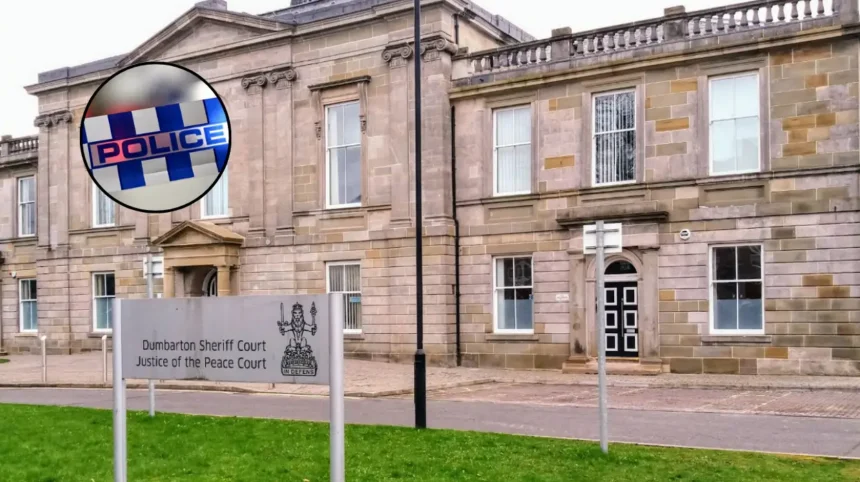
- Judicial Action: Sheriff John McElroy KC revoked Findlay’s bail at Dumbarton Sheriff Court, remanding her in custody ahead of sentencing on June 16.
Glasgow (Glasgow Express) June 1, 2026 — A violent and sustained assault on a 15-year-old girl aboard a public transit service has resulted in an 18-year-old woman being remanded in custody after admitting to an attack that court officials heard put the victim’s life in danger. Morgan Findlay appeared at Dumbarton Sheriff Court where she pleaded guilty to the assault, acting with others, which occurred on a ScotRail service traveling between Renton and Balloch stations. The incident, captured on CCTV, involved multiple perpetrators who filmed the assault on mobile phones while systematically beating the isolated teenager.
- Key Points
- What Coincided with the Outbreak of Violence on the Service?
- How Did the Group Escalate the Encounter?
- What Did the Sustained Assault Involve?
- Did Any Passengers Attempt to Assist the Victim?
- What Were the Medical and Investigative Findings?
- How Did the Accused Respond to Police Questioning?
- What Legal Determinations Were Made in Court?
- Background of Rail Safety Frameworks and Youth Disorder Trends
- Prediction: How This Development Can Affect Rail Passengers and Commuters
- Increased Demands for Clearer Transit Surveillance and Intervention Interventions
- Potential Policy Shifts in Conditions of Carriage
What Coincided with the Outbreak of Violence on the Service?
The court presentation detailed the sequence of events that transpired on May 7 of last year, aboard the 5:13 PM rail service operating from Airdrie to Balloch.
As outlined in the prosecution’s evidence, the 15-year-old victim boarded the train at approximately 6:25 PM and walked into the carriage where Findlay and a group of female youths were already seated.
As reported by court journalists attending Dumbarton Sheriff Court, the fiscal depute stated that Findlay, who was 17 at the time of the incident, initially grabbed the younger girl’s arm “as if in an attempt to make her dance.” The victim chose not to engage with the group, freeing herself and moving into an adjacent carriage to sit alone.
How Did the Group Escalate the Encounter?
Following the victim’s attempt to de-escalate the situation by moving away, Findlay and her associates pursued the teenager into the next compartment.
According to court records of the closed-circuit television (CCTV) footage, Findlay approached the seated youngster and initiated a verbal confrontation, which her associates quickly joined.
Findlay subsequently confiscated the 15-year-old girl’s mobile phone from the table in front of her. While the victim stood up in an attempt to recover her property, the phone was thrown onto the train seats, and members of the accompanying group began recording the interaction on their personal mobile devices.
What Did the Sustained Assault Involve?
The physical confrontation intensified rapidly after the victim’s phone was taken. Court documentation reveals that Findlay lunged at the 15-year-old, seizing her body, grabbing her head, and striking her multiple times. The force of the initial blows caused the victim to fall into the central aisle of the carriage.
Once the victim was on the floor, the group launched a coordinated physical assault. As recorded in the official indictment, the teenager was repeatedly punched, kicked, and stamped upon across both her head and body. During the final stages of the 4.5-minute assault, the victim was dragged by her hair along the floor toward the exit doors of the train, with sufficient force to pull clumps of hair directly from her scalp.
Did Any Passengers Attempt to Assist the Victim?
During the presentation of the Crown’s case, it was noted that an unidentified male passenger attempted to step forward to halt the ongoing violence. However, upon seeing his approach, Findlay gestured down the carriage to another female youth within her group. This individual ran forward and physically pushed the man away, preventing him from intervening. The assault continued uninterrupted until the train arrived at the subsequent station, where Findlay and her associates exited the service.
What Were the Medical and Investigative Findings?
Following the departure of the attackers, the 15-year-old girl was discovered in a state of distress, crying and shaking, with visible blood on her face. She was transported to a local hospital for medical evaluation. Examination results confirmed extensive contusions and severe bruising across her face, head, and body. Medical staff confirmed that no bone fractures or internal structural injuries were sustained, though the psychological trauma and soft-tissue damage were documented as substantial.
How Did the Accused Respond to Police Questioning?
British Transport Police investigators subsequently tracked down Findlay using CCTV analysis and witness descriptions. Upon being formally apprehended and cautioned by officers, Findlay attempted to distance herself from the severity of the incident and the identity of the victim. Police records note that she stated to officers:
“I didn’t steal her phone” and “I don’t know her.”
What Legal Determinations Were Made in Court?
On May 26, Findlay, a resident of Panmure Street, Possilpark, entered a formal guilty plea to the charge of serious assault acting with others. The indictment explicitly detailed that she:
- Lunged at the complainer and seized her by the body.
- Repeatedly struck her on the head, causing her to fall.
- Repeatedly struck, kicked, and stamped on her head and body.
- Dragged her by the hair, causing hair to be removed from her head.
The prosecution noted that the nature of the collective assault, particularly the repeated stamping on the head of a prone individual, constituted an action to the injury and danger of the victim’s life.
During the review of Findlay’s legal status, the court noted that she committed this offence while subject to an active bail order previously granted at Glasgow Sheriff Court.
Confronted with the gravity of the unprovoked attack and the breach of prior bail conditions, Sheriff John McElroy KC determined that a non-custodial status was no longer appropriate. Sheriff McElroy revoked Findlay’s current bail and remanded her in custody. The court has deferred final sentencing until June 16 to allow for the compilation of comprehensive criminal justice social work reports.
Explore More Glasgow Crime News
Glasgow Chemical Incident Sparks Emergency Evacuation in Springburn 2026
Renfrewshire Sex Offender Jailed Over PlayStation Breach 2026
Background of Rail Safety Frameworks and Youth Disorder Trends
This development comes amid a period of heightened scrutiny regarding safety standards and staff security across the Scottish rail network.
Over the past 36 months, transport unions, including the National Union of Rail, Maritime and Transport Workers (RMT) and ASLEF, have consistently raised concerns regarding an escalation in anti-social behaviour, verbal abuse, and physical violence targeted at both passengers and rail staff on central belt routes.
Statistical data published by the British Transport Police (BTP) has indicated a post-pandemic rise in youth-related disorders on suburban lines connecting major urban hubs like Glasgow and Edinburgh to outlying regions such as West Dunbartonshire.
In response to these trends, transport authorities have previously initiated targeted operations involving increased deployment of high-visibility patrols, mobile detection units, and upgrades to station digital surveillance systems.
The specific line between Airdrie and Balloch, which traverses high-density urban zones and scenic recreational areas, has historically been identified by transport operators as a route requiring structured monitoring during weekend evening hours.
The legal proceedings in this case underscore ongoing challenges faced by transport providers in balancing open public access with robust physical security measures on moving carriages where immediate emergency response times are subject to transit geography.
Prediction: How This Development Can Affect Rail Passengers and Commuters
The judicial decision to remand the perpetrator and the public disclosure of the severe nature of the assault are expected to influence the daily experiences, security expectations, and routines of the travelling public on the Scottish rail network.
For daily commuters and vulnerable passengers—particularly school-aged children, elderly individuals, and solo travellers—the details of this unprovoked daytime attack are likely to increase feelings of anxiety regarding personal safety while using public transport.
Passengers may increasingly adapt their travel habits to mitigate perceived risks. This can manifest as avoiding specific transit windows (such as early evening or weekend services), choosing to sit only in front carriages near the driver’s cabin, or abandoning rail travel entirely in favour of alternative, more secure modes of transport.
Increased Demands for Clearer Transit Surveillance and Intervention Interventions
This development will likely intensify public pressure on transport operators like ScotRail and policing authorities to demonstrate more visible deterrents. Passengers will likely demand more stringent safety measures, including:
- The regular presence of transport security officers or BTP personnel on known problematic routes.
- Clearer signage and more accessible emergency communication tools within individual carriages.
- Enhanced training or clear guidance for passengers regarding bystander intervention, given that a member of the public in this instance was actively deterred from assisting by members of the group.
Potential Policy Shifts in Conditions of Carriage
Over the longer term, the legal focus on the filming of the assault by associates may accelerate policy discussions regarding the use of mobile devices to record anti-social behavior for digital dissemination. Transport authorities may face pressure to implement stricter enforcement mechanisms or update their conditions of carriage to address group disorder, potentially leading to more rapid bans from the rail network for individuals associated with repeat anti-social behaviour or bail violations.