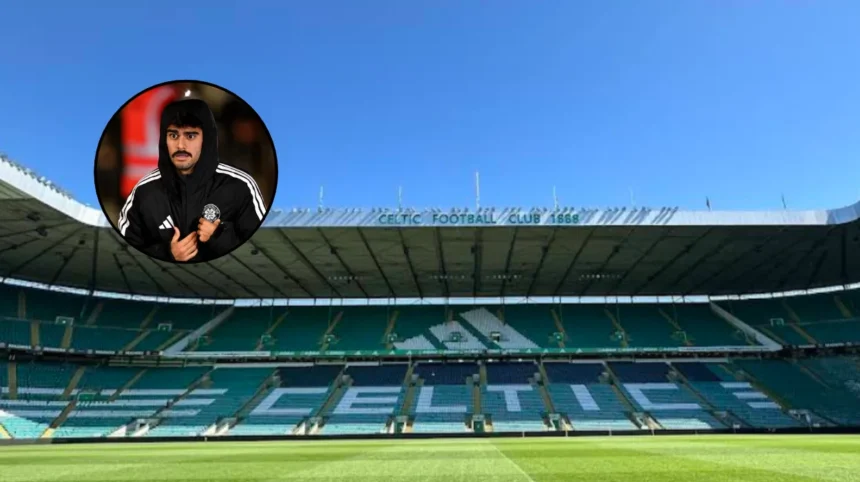
Key Points:
- Half-Time Withdrawal: Celtic manager Martin O’Neill substituted Portuguese winger Jota at the half-time interval during the 1–0 victory over Kilmarnock.
- First Start in 18 Months: The fixture marked Jota’s first starting appearance in a year-and-a-half following a recovery period from an anterior cruciate ligament (ACL) injury.
- Pre-Planned Fitness Assessment: O’Neill clarified that the early substitution was tied directly to energy levels and fitness management rather than a fresh injury setback.
- Prior Communication: The manager had briefed the player ahead of kickoff that his physical condition would be evaluated at the interval, having initially hoped he might manage up to 60 minutes.
Glasgow (Glasgow Express) November 9, 2026 – Celtic manager Martin O’Neill has disclosed that the decision to withdraw Jota at half-time during the 1–0 win against Kilmarnock was taken due to visible fatigue as the player continues his return from a long-term injury lay-off.
The match represented a major milestone for the Portuguese winger, marking his first starting role in 18 months following a prolonged recovery process from a serious anterior cruciate ligament (ACL) knee injury.
As reported by the reporting staff of local sports media, Martin O’Neill stated that
“Jota, that was his first start. I didn’t expect him to last.”
The manager explained that while initial expectations were for the winger to potentially complete an hour of action, the physical demands of the match became apparent in the closing stages of the opening period.
As reported by the sports desk team, Martin O’Neill stated that
“I maybe thought he might get 60 minutes in the game, but he was really tiring in the last 10 minutes before half-time.”
O’Neill further highlighted that clear communication had been established with the player prior to kickoff regarding his physical output and match duration.
As reported by matchday reporters, Martin O’Neill stated that
“I said to him before the game, ‘I don’t expect you to go the whole way, I want to see how it is at half-time.'”
Despite the early exit, Celtic secured a 1–0 victory over Kilmarnock, maintaining their momentum while managing the load of returning squad members during a key stretch of the season.
Background of Jota’s Injury Recovery and Return to Celtic
The background to this tactical decision lies in the long-term rehabilitation process required for anterior cruciate ligament injuries in professional football. An ACL reconstruction routinely demands an extended period of physical therapy, gradual reconditioning, and progressive match integration to reduce the risk of secondary soft-tissue injuries or secondary joint fatigue.
Jota had been absent from starting line-ups for approximately 18 months prior to this fixture. During such prolonged absences, players undergo isolated physical conditioning, but the high-intensity sprinting, rapid changes of direction, and competitive contacts of full Scottish Premiership matches cannot be fully replicated in training environments.
Coaching and medical staff routinely monitor total distance covered, high-speed running metrics, and heart-rate recovery indicators during match play. When a player exhibits physical tail-off near the end of a half—as noted in the ten minutes preceding the interval in this instance—management teams frequently opt for preemptive substitutions to protect the athlete’s long-term musculoskeletal health.
What Does This Development Mean for Celtic’s Squad and Supporters?
This development indicates that while Jota has successfully cleared the medical hurdles required to start competitive fixtures, his match sharpness and stamina remain in a transitional phase.
For Celtic supporters and the broader squad, the news carries several practical implications:
- Rotation and Load Management: Management will likely continue to manage Jota’s minutes incrementally over the coming weeks, utilizing planned substitutions or rotational squad roles rather than expecting immediate 90-minute contributions.
- Tactical Flexibility: As Jota builds match conditioning, Celtic’s coaching staff will have greater depth on the flanks, allowing for tactical variation between early-game intensity and bench options in the second half.
- Injury Risk Mitigation: By adhering to strict fitness thresholds and responding to visible fatigue during matches, the club minimizes the risk of muscular strains or compensatory injuries that frequently affect players returning from extended ACL rehabilitation.