- Frank McAvennie criticises Celtic Football Club for scheduling an Oasis concert at Parkhead on May 25, 2027.
- The date marks the exact 60th anniversary of the Lisbon Lions’ historic European Cup triumph in 1967.
- The former striker argued on his podcast that the milestone should mean everything to the club, but accused the board of letting commercial interests overshadow tradition.
- McAvennie highlighted that past anniversaries, such as the 50th, were marked by special celebrations like Rod Stewart’s concert at the Hydro.
- He suggested the club should have blocked off the significant date during negotiations, pointing out that Noel Gallagher is a known Celtic fan who would likely have understood.
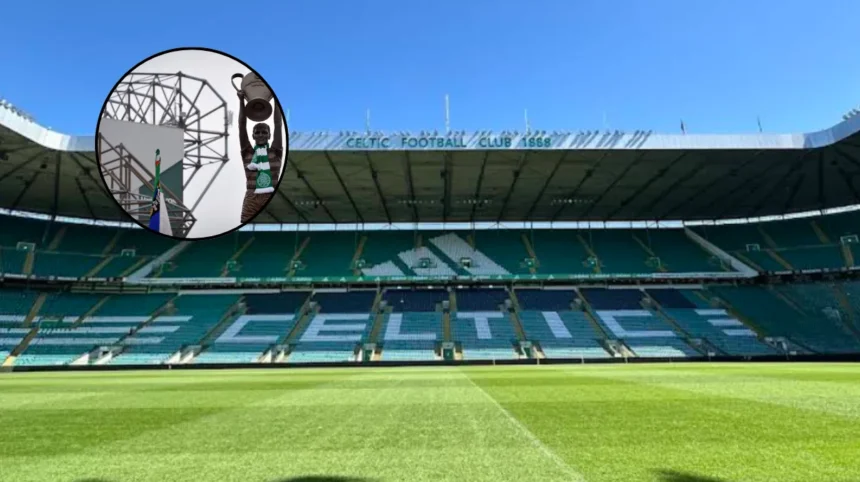
Celtic Park (Glasgow Express)September 28, 2026 — Former Celtic striker Frank McAvennie has launched a blistering attack on the Parkhead hierarchy after it was revealed that an Oasis reunion tour concert has been booked at the stadium on the exact date of the club’s ultimate historic milestone. The legendary May 25 date will mark precisely 60 years since Jock Stein’s iconic side defeated Inter Milan 2-1 in Lisbon to become the first British club to conquer Europe. Rather than hosting an event to honour the heroes who put the club on the global map, the venue will instead reverberate to Britpop anthems, sparking fierce debate among the fanbase.
Why is Frank McAvennie furious with the Celtic board over the Oasis concert?
The scheduling conflict has deeply aggrieved sections of the club’s loyal support, led vocally by former fans’ favourite Frank McAvennie. As reported by Ryan McDonald of the Daily Record, McAvennie let rip on his Let Me Be Frank podcast, questioning whether the people running the club have any awareness of Celtic’s unique identity.
As reported by Ryan McDonald of the Daily Record, McAvennie fumed on the podcast:
“It should mean everything to Celtic Football Club. But it obviously means nothing to Celtic. I’m really annoyed at that. I love Oasis, but they’ve got Oasis playing on the night of the 60th anniversary of the cup.”
McAvennie continued his critique by asking whether the current decision-makers simply fail to read the room. As reported by Belfast Live, the outspoken pundit stated:
“Does the people running Celtic not have a clue what’s going on? They had a 50th at the Hydro, Rod Stewart did it and it was a brilliant night. They’ve got to have a 60th. Are they going to try and sell tickets somewhere else when Oasis is on?”
How could Celtic have handled the stadium bookings differently?
Addressing the logistics of hosting a major multi-night concert residency at a football stadium, McAvennie offered an alternative scenario that would have accommodated both commercial revenue and historical reverence. Given that major concert tours typically secure venues for multiple consecutive nights, the former striker believes the club possessed enough leverage to protect the anniversary.
As detailed in the Daily Record coverage, McAvennie explained what he believed should have taken place during negotiations:
“Do you know what should have happened? They’ve got the stadium for five nights. What they should have done is said, ‘Look, you’re not getting it for the 25th because we’re going to have something for the anniversary. How about you guys playing, like Rod Stewart did?’”
Furthermore, McAvennie pointed to external connections that could have smoothed over any scheduling adjustments. As reported by the Irish Mirror, he added:
“Could they not have done something like that? Noel Gallagher is a big fan of Celtic. I’m sure Liam and the boys would’ve got behind it. Do Celtic not think about the fans anymore?”
What does the Lisbon Lions legacy mean to the club’s identity?
The core of the backlash centres on what the Lisbon Lions represent to the institution of Celtic Football Club. While acknowledging that subsequent generations of players and managers have successfully secured domestic doubles and trebles, McAvennie stressed that the 1967 European Cup triumph remains the foundational pillar of the club’s worldwide prestige.
As published in reports from Belfast Live, McAvennie emphasised:
“Celtic Football Club is the Lisbon Lions, let’s be honest about it. We’ve all played under great managers and won Doubles and Trebles. But the Lisbon Lions are what put Celtic on the map.”
Background of the Particular Development
The controversy arises from the intersection of modern football’s financial imperatives and traditional club heritage. Major football stadiums across Europe increasingly rely on summer concert residencies—such as lucrative rock and pop music tours—to generate vital non-matchday revenue during the close season. Celtic Park has frequently been utilised as a major concert venue, bringing significant commercial benefits to the club. However, May 25 holds a sacred position in Scottish football history. On that day in 1967, an entire team born within a few miles of Celtic Park achieved immortality by winning Europe’s premier club competition under manager Jock Stein, a feat that has never been repeated by a Scottish side. Balancing modern commercial commitments with the preservation of institutional memory has continually challenged football clubs, making clashes between stadium entertainment and historical reverence a sensitive subject for supporters.
Prediction
This development threatens to deepen fractures between the Celtic fanbase and the club’s executive board, amplifying ongoing debates regarding corporate prioritisation over traditional fan culture. While the Oasis concert will undoubtedly draw massive crowds and substantial financial gain, the decision to overlook the diamond anniversary of the Lisbon Lions risks alienating supporters who value heritage above commercial enterprise. In the long term, this friction may compel the club board to organise alternative, off-site commemorative events or adjust future scheduling parameters to appease fan groups. For the broader audience of Scottish football followers, it serves as a stark reminder of the constant tension modern clubs face when trying to balance contemporary business models with historical legacy.