

Key Points
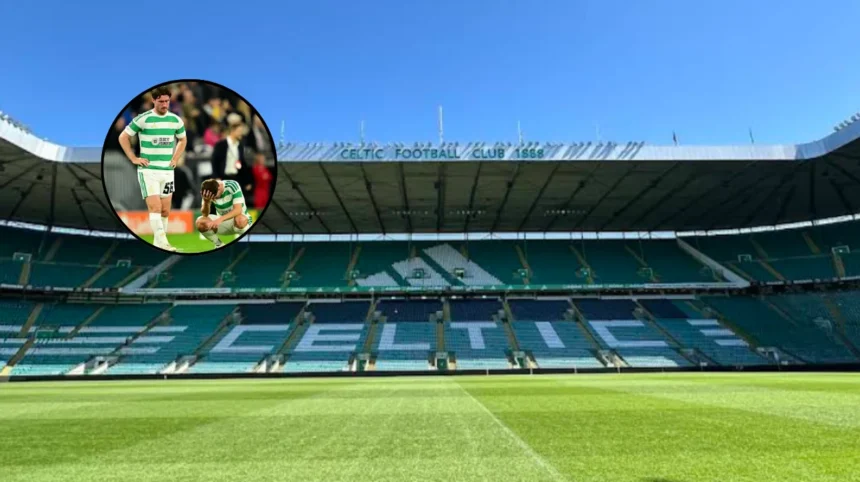
- Celtic surrendered a 4-0 aggregate lead to lose 5-1 after extra time against LASK in Linz, exiting the competition 5-4 on aggregate.
- Callum McGregor put Celtic ahead in the 21st minute to make it 4-0 on aggregate, after LASK had missed earlier chances through Mika Baur and Kasper Høgh.
- Benjamin Nygren’s misplaced backpass in the 32nd minute allowed Moses Usor to equalise and sparked LASK’s comeback.
- Robert Ljubičić scored from distance in the 48th minute before Samuel Adeniran struck in the 58th. Florian Flecker’s 90th-minute header then forced extra time.
- Adeniran dispossessed Luke McCowan in the 109th minute and scored his second goal, while Viljami Sinisalo later saved his penalty.
- Celtic’s elimination sends them into the UEFA Europa League league phase and means they miss out on more than £20 million in UEFA Champions League participation revenue.
Celtic (Glasgow Express) August 27, 2026 — Scottish champions Celtic have suffered an unprecedented European exit after collapsing to a 5-1 extra-time defeat against Austrian side LASK at the Raiffeisen Arena, forfeiting a four-goal aggregate cushion to lose 5-4 on aggregate in the UEFA Champions League play-off round.
As reported by Gavin McCafferty of The Standard, Celtic manager Martin O’Neill reflected on the devastating nature of the defeat, admitting that the loss ranked among his most painful nights in football. O’Neill stated that
“I’d put it down before the disappointment of losing the UEFA Cup final in 2003, but it’s so, so disappointing,”
while accepting full blame by adding,
“We should have been out of sight by half-time. We scored a goal, which was great, we missed two great, great opportunities. And then we give them a lifeline just before half-time and then one just after it. And they come roaring back. And obviously we conceded, from our viewpoint, not good goals at all. But that’s my team and that’s my responsibility.”
How Did Celtic Throw Away Their Four-Goal Aggregate Lead In Linz?
Having secured a commanding 3-0 victory in the first leg at Celtic Park, the visitors began the second leg in Linz with composure. Danish striker Kasper Høgh created early openings, latching on to loose balls in the opening 15 minutes, whilst midfielder Mika Baur stabbed a promising chance just wide of the target.
The Scottish champions extended their total aggregate lead to four goals in the 21st minute when South Korean winger Yang Hyun-jun linked up cleanly with Kieran Tierney down the left flank before picking out Callum McGregor. The Celtic captain took a first-time strike from the edge of the penalty box, which deflected past LASK goalkeeper Jörg Jungwirth into the back of the net.
However, the momentum shifted entirely in the 32nd minute following an unforced error in midfield. A slack, under-hit backpass from Benjamin Nygren allowed LASK forward Moses Usor to intervene, out-muscling defender Auston Trusty before slotting past Finnish goalkeeper Viljami Sinisalo to make it 1-1 on the night.
Why Did The European Tie Spiral Out Of Martin O’Neill’s Control?
LASK returned from the half-time interval with renewed intensity and reduced the aggregate deficit within three minutes of the restart. Usor turned provider in the 48th minute, working the ball inward for midfielder Robert Ljubičić, who drove a powerful 20-yard effort into the net.
Ten minutes later, in the 58th minute, LASK pulled level on aggregate at 4-4. American forward Samuel Adeniran collected possession outside the area and curled a 25-yard strike directly into the top corner of Sinisalo’s goal, leaving Celtic entirely on the defensive.
O’Neill attempted to stem the tide by making multiple defensive substitutions, introducing Reo Hatate, Luke McCowan, Sebastian Tounekti, Liam Scales, and Dane Murray, switching to a setup featuring four central defenders as Cameron Carter-Vickers struggled on the pitch with cramp. Despite Sinisalo turning away a header from João Victor Tornich and Adeniran striking the underside of the crossbar, the host side found their fourth goal on the night in the 90th minute. Sinisalo saved an initial header from Tornich, but substitute Florian Flecker turned home the rebound from close range to send the play-off into extra time.
In the second half of extra time, during the 109th minute, Adeniran dispossessed McCowan outside the box and struck a long-range shot into the bottom corner to make it 5-1 on the night and 5-4 on aggregate. Sinisalo later saved a late penalty from Adeniran, but Celtic were unable to craft a response before the final whistle blew.
Background Of The Particular Development
The loss marks the second consecutive campaign in which Celtic have failed to negotiate the qualifying phase of UEFA’s elite club tournament. In the preceding season, the Scottish club were eliminated at the play-off stage via a penalty shootout following a goal-less tie against Kazakhstani club Kairat Almaty.
This latest setback occurs amidst structural changes within Celtic’s squad following the recent transfer window. The Scottish champions permitted key Belgian midfielder Arne Engels to leave the club shortly prior to the first leg against LASK, a decision that attracted significant scrutiny from supporters after the team struggled to maintain central midfield control during the second leg in Austria. The failure to reach the newly formatted 36-team Champions League phase also ends the club’s pursuit of elite European revenue streams following significant summer investments in squad depth.
Prediction: How This Development Can Affect Celtic Football Club And Its Stakeholders
This European elimination carries direct financial and competitive consequences for Celtic Football Club, its board of directors, and its fanbase:
- Financial Revenue Stream Loss: Missing out on the UEFA Champions League league phase strips Celtic of guaranteed base participation fees, television pool distributions, and matchday gate receipts estimated to exceed £20 million. Transferring into the UEFA Europa League league phase provides significantly lower performance bonuses and broadcasting distributions.
- Squad Rebuilding And Transfer Strategy: The reduction in projected continental income may constrain executive spending power during forthcoming transfer windows. The board may need to adjust squad wage budgets and alter player acquisition targets to mirror Europa League revenue parameters.
- Supporter Dissatisfaction And Pressure On Management: Failing to reach the primary draw of European football in successive seasons increases fan frustration regarding recruitment decisions and continental tactical approaches. Manager Martin O’Neill and the club’s football operations executive will face heightened scrutiny regarding team selection and squad management across domestic competitions.