Key Points
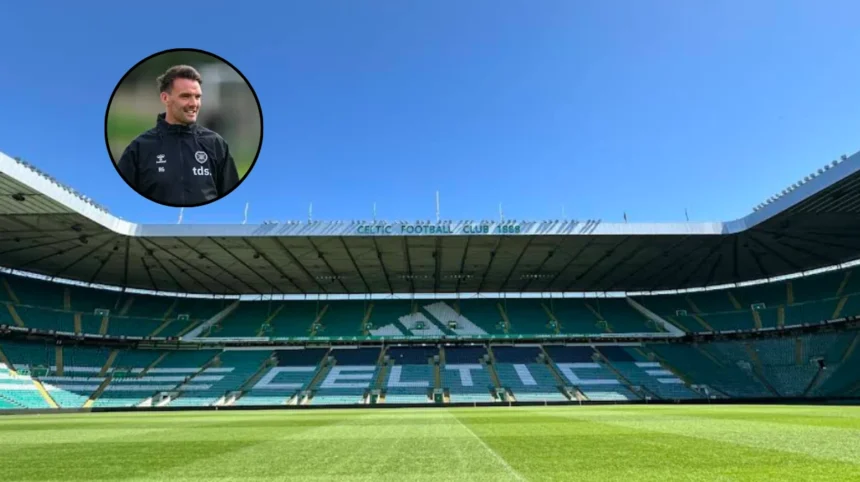
- New Appointment: Celtic have officially confirmed the acquisition of highly-rated tactical coach Ross Grant from Scottish Premiership rivals Heart of Midlothian.
- Specialist Role: Grant will serve as a first-team backroom staff member under manager Martin O’Neill, focusing exclusively on set-piece analysis and coaching.
- Direct Replacement: The move follows the sudden departure of former Celtic First Team coach Gavin Strachan, who left the Glasgow club to join West Bromwich Albion.
- Proven Track Record: Under Grant’s tactical guidance, Hearts scored 23 goals from set-pieces during the 2025/26 Premiership season, the joint-highest in the league alongside Rangers.
- Key Deficiency Solved: In stark contrast to Hearts’ output, Celtic scored just 10 goals from dead-ball situations during the same domestic campaign.
- Personal Connection: Grant is a lifelong Celtic supporter and holds a prestigious UEFA ‘A’ Licence, bringing a decade of coaching experience from community football to the professional tier.
Celtic FC (Glasgow Express) June 29, 2026 — Scottish Premiership champions Celtic have swiftly secured the services of specialist set-piece coach Ross Grant from Heart of Midlothian to reinforce manager Martin O’Neill’s backroom staff ahead of the upcoming 2026/27 campaign. The official announcement, issued late Sunday evening, details that the lifelong Hoops supporter has moved across the division to fill a vital analytical vacancy in Glasgow’s East End. This tactical acquisition materializes just days after the first-team squad returned to Lennoxtown for routine fitness testing and data collection, signalling a structured overhaul of the club’s technical hierarchy before competitive football resumes.
- Key Points
- Who is Ross Grant and why did Martin O’Neill recruit him?
- How did Ross Grant’s dead-ball expertise impact the Scottish Premiership last season?
- Why did Celtic need to appoint a new set-piece specialist?
- What are the statistical discrepancies between Celtic and Hearts from dead-ball situations?
- How did senior figures react to Ross Grant’s coaching methods?
- Background of the Particular Development
- Prediction: How This Development Can Affect Celtic Supporters and the First-Team Squad
Who is Ross Grant and why did Martin O’Neill recruit him?
As confirmed in an official statement published by Celtic Football Club, Ross Grant arrives at the club possessing a UEFA ‘A’ Licence and a decade of specialized coaching experience.
Prior to his highly successful single-season stint with Hearts at Tynecastle Park, Grant dedicated four years to player development and professional phase coaching within the academy and first-team setups at Dundee United.
His professional philosophy has been significantly shaped by his close relationship with former Hearts manager and current Scotland analyst Austin MacPhee.
Working via MacPhee’s AM Soccer Club, Grant provided direct support to MacPhee during his high-profile coaching assignments with the Scottish National Team and English Premier League outfit Aston Villa.
Expressing his enthusiasm regarding the appointment, Celtic manager Martin O’Neill told the club’s official website:
“I am really pleased to welcome Ross to our backroom staff, I know he is a highly rated coach and look forward to working with him.”
How did Ross Grant’s dead-ball expertise impact the Scottish Premiership last season?
The statistical data underlying Grant’s single season in Edinburgh highlights why the Glasgow champions moved aggressively to secure his signature.
As reported by Lubo98 of Celtic Shorts, Grant’s core responsibilities at Tynecastle were dedicated almost entirely to designing complex training sessions, conducting meticulous opposition analysis, and maximizing marginal gains from dead-ball situations.
According to contextual data compiled by The Hearts Standard, Heart of Midlothian scored the joint-most goals from set-pieces in the Scottish Premiership last season, registering a total of 23 goals.
A significant portion of this tally—15 goals—originated directly from corner routines, validating the forensic approach Grant applies to attacking play.
Furthermore, as noted by analyst Dougie Anderson on social media, Celtic experienced the potency of Grant’s tactical setups first-hand.
Throughout their four tight league meetings during the 2025/26 campaign, Hearts managed to score eight total goals against O’Neill’s side, with five of those strikes coming directly from set-piece routines designed by Grant.
Why did Celtic need to appoint a new set-piece specialist?
The structural opening in Martin O’Neill’s coaching setup arose following the confirmed departure of first-team coach Gavin Strachan.
As reported by The Celtic Way, Strachan officially vacated his position earlier this month to join the backroom staff at English Championship side West Bromwich Albion.
The club’s management confirmed that Strachan’s decision to relocate to the Midlands was motivated by a desire to live closer to his family following a highly decorated and successful tenure in Glasgow.
Rather than opting for a generic coaching replacement, O’Neill and the Celtic board explicitly sought out a modern tactical specialist to address an area of objective weakness within the squad’s performance metrics.
What are the statistical discrepancies between Celtic and Hearts from dead-ball situations?
The necessity for a dedicated set-piece coach is emphasized by the stark contrast in efficiency between the two clubs during the 2025/26 league campaign.
While Celtic successfully pipped Derek McInnes’ Hearts side to the Premiership title on a dramatic final day, their proficiency from stationary balls lagged far behind their rivals.
Writing for Celtic Shorts, journalists verified that Celtic managed a meager total of 10 goals from set-pieces across the entire domestic campaign.
The recruitment of Grant is designed to immediately rectify this imbalance, integrating him into an established coaching unit that already features prominent assistants Shaun Maloney, Mark Fotheringham, and Stephen McManus.
How did senior figures react to Ross Grant’s coaching methods?
Grant’s immediate impact at Tynecastle did not go unnoticed by the management team he left behind. Following a crucial 3-2 victory over Dundee United at Tannadice last August—where every single one of Hearts’ goals originated from a dead-ball scenario—then Hearts manager Derek McInnes praised the analyst explicitly.
In a broadcast interview transcribed by BBC Sport Scotland, McInnes stated:
“Set-plays have always been a huge part for any team. We’ve obviously brought in Ross to aid us with that and it’s his job to look forensically at the opposition and where we can get gains. I’ve seen the gains that can be made and as a manager, you have to take advantage. There’s a lot of clubs so finely balanced and sometimes set-plays can be the difference. It’s something we’ve always done as a staff, but we’ve got that added time and added focus on it from Ross. He’s done brilliant and long may it continue.”
McInnes further elaborated on the foundational elements of Grant’s training pitch methodology, adding:
“It’s about identifying areas where we can get as much joy as possible. Underneath it all, it’s about good deliveries, good timing and aggressive players wanting to get on the end of it. I’m glad we’ve got Ross. He’s been huge value to us and it’s good that he’s getting recognition for his work because his work is good.”
Background of the Particular Development
The appointment of Ross Grant reflects a profound structural shift across elite European football toward highly specific, compartmentalized backroom staffing. Historically, set-pieces were managed generally by a manager or their primary assistant.
However, pioneering work by modern coaches like Austin MacPhee at Aston Villa, Gianni Vio at Tottenham Hotspur, and Nicolas Jover at Arsenal has proven that maximizing dead-ball efficiency provides teams with definitive “marginal gains.”
For Celtic, this development arrives during a period of backroom stabilization under Martin O’Neill. Having narrowly secured the league championship against a relentless Hearts team managed by Derek McInnes (who has since departed Tynecastle to take the reins at Rangers, replaced by Wouter Vrancken), O’Neill is actively modernizing the club’s technical framework.
The departure of Gavin Strachan forced the hierarchy to reassess their staff capabilities, shifting from a traditional coaching model to an analytical, data-driven framework ahead of concurrent domestic and European campaigns.
Prediction: How This Development Can Affect Celtic Supporters and the First-Team Squad
The structural integration of Ross Grant into Celtic’s training infrastructure is predicted to significantly alter both the on-field dynamics for the first-team squad and the matchday experience for the club’s supporters.
For the players, central defenders like Cameron Carter-Vickers and Liam Scales will likely see their attacking expectations increase, with Grant establishing rigid blocking schemes, targeted near-post runs, and varied delivery triggers.
Midfielders tasked with crossing duties will undergo intensive technical refinement to ensure consistency in ball placement, turning low-value corner kicks into high-probability scoring opportunities.
For the Celtic fans, this appointment is expected to alleviate a long-standing source of tactical frustration. Supporters who have grown weary of predictable short corners and poor defensive positioning against physical opponents should see a more disciplined, innovative team.
If Grant successfully replicates the metrics he achieved at Hearts, Celtic could realistically double their set-piece scoring output in the 2026/27 season. In tight domestic fixtures and grueling UEFA Champions League group matches, where open-play chances are notoriously scarce, this newfound efficiency from dead balls could ultimately dictate whether Celtic successfully defend their league crown.