Key Points
- The Scottish Government has pledged £14 million towards restoring Glasgow’s historic People’s Palace and Winter Gardens.
- The funding takes the total committed to nearly £36 million, including contributions from Glasgow City Council, Glasgow Life and the National Lottery Heritage Fund.
- The museum closed in April 2024 for structural and display upgrades, while the attached glasshouse conservatory has been closed since 2019.
- The restoration project aims to restore the Grade A-listed landmark and reopen the combined venue to the public in 2027.
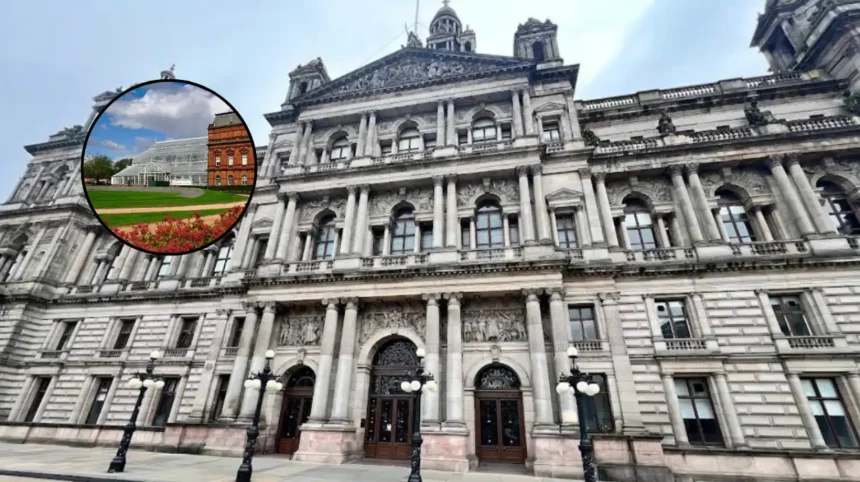
Glasgow (Glasgow Express) August 27, 2026 — The Scottish Government has officially committed £14 million in capital funding toward the comprehensive refurbishment of the People’s Palace and Winter Gardens on Glasgow Green. The funding guarantee completes the financial assembly required for the £35.9 million restoration plan managed by Glasgow Life, the charity delivering culture and sport on behalf of Glasgow City Council. The venue’s museum section was closed to the public in April 2024 to enable initial strip-out operations, while the glasshouse structure of the Winter Gardens has been closed continuously since January 2019 due to safety concerns over its aging structural framework.
- Key Points
- What Is the Total Financial Breakdown for the Restoration Project?
- Why Did the People’s Palace and Winter Gardens Close?
- What Are the Key Architectural and Heritage Plans for 2027?
- Background of the Particular Development
- Prediction: How This Development Will Affect the Local Community and Heritage Sector
What Is the Total Financial Breakdown for the Restoration Project?
The newly announced £14 million award from the Scottish Government adds to pre-allocated funding packages, securing the total cost required for the full scale of structural works. Prior to this commitment, Glasgow City Council and its cultural trust, Glasgow Life, pledged significant capital alongside a major grant from heritage sector bodies.
As detailed by local municipal reports, Glasgow City Council allocated £11 million to the capital project, while the National Lottery Heritage Fund awarded an initial round of £8.5 million in development funding, with an additional £2 million contributed via Glasgow Life through dedicated fundraising initiatives. The newly provided £14 million Scottish Government contribution covers the remaining shortfall, establishing a full project budget of £35.5 million to £36 million.
The capital allocation will be distributed over multiple budget cycles to align with the construction, engineering, and architectural phases planned leading up to the scheduled completion date.
Why Did the People’s Palace and Winter Gardens Close?
The Winter Gardens conservatory was sealed off to visitors in January 2019 after structural engineers identified that the glasshouse’s structural sealant and cast-iron frame required full overhaul to meet health and safety standards. At the time of its closure, the glass structure was deemed unfit for public occupancy without significant restoration.
The museum itself remained operational until April 2024, when Glasgow Life initiated a full closure of the main building to allow contractors access for structural surveys, inventory packing, and preliminary conservation work. The full closure was deemed necessary to permit comprehensive structural repairs to the roof, brickwork, interior gallery spaces, and environmental management systems.
What Are the Key Architectural and Heritage Plans for 2027?
The targeted completion date for the entire project is 2027. According to project documentation released by Glasgow Life, the restoration will focus on both the physical infrastructure and the curation of historical displays within the venue.
How Will the Museum Infrastructure Be Modernised?
The technical scope of the project includes:
- Structural Glasshouse Repair: Full restoration of the Victorian glass and iron architecture of the Winter Gardens, including new climate-control installations to preserve plant collections and prevent structural decay.
- Building Envelope Upgrades: Repair work covering the main red sandstone museum facade, roof repairs, insulation upgrades, and modernised ventilation systems to reduce energy consumption.
- Accessibility Enhancements: Installation of new step-free access routes, modernised lift infrastructure, and accessible public facilities designed to support multi-generational visitors.
- Community and Exhibition Spaces: Redesign of interior display layouts to highlight Glasgow’s social history from the late 19th century to the present day, incorporating digital archives and community-curated spaces.
Background of the Particular Development
Opened on 22 January 1898 by the Earl of Rosebery, the People’s Palace was originally designed by city engineer Alexander B. McDonald as a cultural center for the working-class populations living in the East End of Glasgow. From its inception, the venue offered reading rooms, museum exhibits, and a public glasshouse, serving as a social and civic hub for the local community.
Over its 128-year history, the venue has faced multiple operational challenges. In the late 20th century, structural degradation led to periodic partial closures for repair work. By late 2018, safety inspections identified significant risks concerning the glass panel fixings and timber framing within the Winter Gardens, leading directly to its January 2019 closure.
Community advocacy groups and heritage organisations continuously campaigned for public investment to secure the landmark’s future, resulting in Glasgow City Council establishing a multi-agency restoration strategy in partnership with heritage bodies and the national government.
Prediction: How This Development Will Affect the Local Community and Heritage Sector
The full funding of the £36 million restoration project will have distinct impacts across several key groups in Glasgow and the wider cultural sector:
Impact on Glasgow East End Residents and Community Groups
The restoration returns a primary community asset to active civic use. The continued closure of the venue created a deficit in free, accessible public spaces within Glasgow Green. Upon its reopening in 2027, local residents will regain access to neighborhood community spaces, educational programs, and public amenities, reversing the loss of local footfall experienced by nearby businesses since the initial 2019 closure.
Impact on Heritage and Tourism Operators
Securing the complete funding package protects one of Glasgow’s key grade A-listed municipal assets. The reopening in 2027 is projected to restore visitor numbers to pre-2019 levels, driving cultural tourism within the city’s East End. Furthermore, the integration of energy-efficient systems into the 19th-century structure provides a functional model for municipal heritage managers attempting to modernise historic civic sites across Scotland.