Key Points
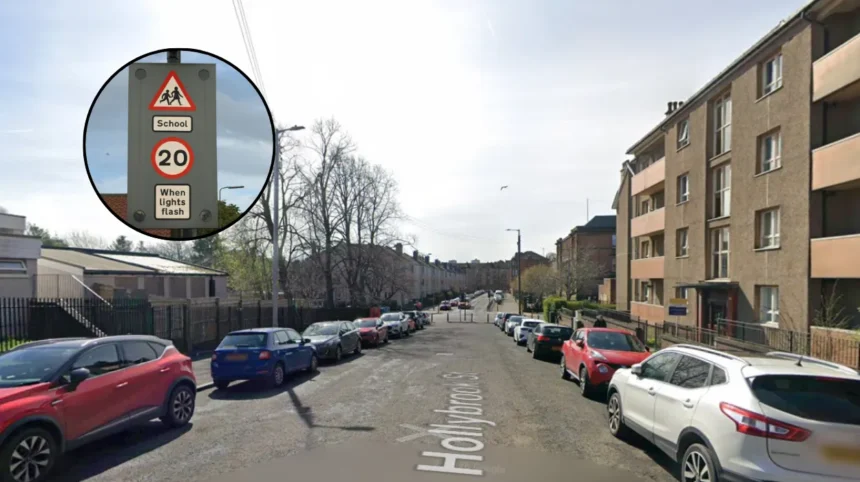
- Speed limits on hundreds of Glasgow streets will be reduced to 20mph from 22 September.
- Phase 1 will introduce new 20mph signs and road markings on nearly 800 residential streets and roads near schools.
- The rollout covers Southside Central, Calton, East Centre and Shettleston, along with selected streets in Haghill, Ruchazie and Strathbungo.
- The full multi-phase programme is expected to cover around 3,800 streets by March 2027.
- The scheme is supported by £2.5 million from the Scottish Government as part of a wider £41 million national road safety investment.
- The new limits will be introduced through Temporary Traffic Regulation Orders (TTROs) lasting up to 18 months, without immediate installation of physical speed humps.
Glasgow (Glasgow Express) August 28, 2026 – Speed limits across hundreds of streets in Glasgow will be reduced to 20mph over the coming weeks as local authorities intensify efforts to improve road safety for pedestrians and cyclists. Starting on September 22, almost 800 neighbourhood streets will have new 20mph signs and road markings installed, concentrating primarily on residential corridors and roads surrounding local schools. The initiative covers major districts including Southside Central, Calton, East Centre, and Shettleston, alongside specific streets in Haghill, Ruchazie, and Strathbungo. This latest physical intervention will take several weeks to complete and marks the final stage of Phase 1, which originally commenced in Govan earlier this year.
- Key Points
- What is the timeline and location schedule for Glasgow’s 20mph speed limit extension?
- What do transport officials and government ministers say about the reduced speed limits?
- How is the 20mph scheme being legally enforced and monitored?
- Background of the Glasgow 20mph Speed Limit Implementation
- Predictions: How This Development Can Affect Drivers, Residents, and Local Businesses
What is the timeline and location schedule for Glasgow’s 20mph speed limit extension?
As reported by STV News, the installation work scheduled for late September represents a major progression in Glasgow City Council’s active traffic management strategy. The implementation will focus heavily on densely populated residential areas and school zones. The rollout order across the city was directly informed by historical collision data, specifically focusing on locations with recorded incidents involving pedestrians and cyclists.
Following the initial trial in Govan, where 194 streets moved to 20mph under a legal order in June 2026, the current phase expands the lower speed restriction across key eastern and southern electoral wards. Council contractors will erect new signage and apply updated road paint over a multi-week period. Roads with existing speed limits of 40mph or above remain exempt from the project. Once the entire multi-phase delivery strategy concludes in March 2027, around 3,800 streets or street sections will operate under a mandatory 20mph limit.
What do transport officials and government ministers say about the reduced speed limits?
As reported by Glasgow Live, Angus Millar, Glasgow City Council’s Convener for Transport and Climate, stated that “this next phase of default 20mph rollout will bring safer speed limits to almost 800 more local neighbourhood streets across the city”. Millar emphasized the health and safety rationales behind the operational changes, asserting:
“Lower speed limits save lives and help make our communities safer, particularly for children travelling to and from school. That’s why we’re rolling out 20mph limits in neighbourhoods across the city, helping to reduce the risk of collisions and lessen the severity of injuries if incidents do occur.”
He further encouraged local residents and businesses to attend scheduled public drop-in sessions to inspect the precise maps and design layouts.
As reported by The Herald, Cabinet Secretary for Transport Stephen Flynn highlighted the national policy alignment and financial backing behind the scheme. Flynn stated:
“We all want our local streets to be as safe as possible and the £41million that the Scottish Government is investing in road safety shows just how important that aim is to us all.”
He noted that reducing vehicle speeds on busy local streets forms a crucial element of efforts to diminish severe casualty rates while improving overall liveability. Flynn confirmed that the Scottish Government is supporting Glasgow City Council’s localized plan with £2.5 million in targeted funding.
How is the 20mph scheme being legally enforced and monitored?
As detailed by local authority guidance, the lower limits are being introduced under Temporary Traffic Regulation Orders (TTROs), which can remain active for up to 18 months. This legal framework enables the local authority to monitor traffic behaviors, record average speeds, and analyze casualty statistics in real-time before moving to enact permanent Speed Limit Orders. Physical speed cushions or speed humps are not being installed as part of the primary rollout; instead, compliance relies on explicit street signage, road markings, and standard police enforcement. Police Scotland retains full statutory authority to issue fixed penalty notices (£100 fine and three penalty points) or court summonses to drivers exceeding the newly posted limits. Baseline speed surveys were recorded across hundreds of city locations in early 2025 to evaluate post-implementation compliance.
Background of the Glasgow 20mph Speed Limit Implementation
The transition to a 20mph default limit across Glasgow’s urban network is the result of a multi-year policy framework aligned with the Scottish Government’s National Strategy for 20mph. In 2020, Glasgow City Council formally approved a policy establishing 20mph as the standard speed for all residential streets, high-density shopping districts, and active travel corridors.
To prepare for implementation, engineering consultancy Stantec conducted a comprehensive assessment of approximately 5,900 streets across the city on behalf of the council. The street-by-street evaluation determined that roughly 3,800 streets currently set at 30mph should be lowered to 20mph, 1,400 streets already at 20mph should retain their status, and around 700 arterial streets should remain at 30mph to maintain essential traffic flow. The citywide framework is divided into six distinct delivery phases running through early 2027. Research cited in the council’s Road Safety Plan notes that a pedestrian struck by a vehicle travelling at 30mph is up to seven times more likely to suffer fatal injuries compared to an impact at 20mph.
Explore More Local Glasgow News
Convicted Arsonist Kasim Ahmed Kept as Private Landlord Glasgow 2026
Glasgow Office Home to Daily Record and Sky Sold Glasgow 2026
Predictions: How This Development Can Affect Drivers, Residents, and Local Businesses
The physical expansion of 20mph zones across nearly 800 additional Glasgow streets will produce distinct impacts across key stakeholder groups:
- Motorists and Commuters: Drivers using local residential cut-throughs will experience minor increases in overall journey times. The primary adjustment will involve monitoring speedometers closely on roads previously designated at 30mph. Drivers failing to adjust risk financial penalties and license points as Police Scotland enforces the temporary orders.
- Pedestrians, Schoolchildren, and Cyclists: Vulnerable road users will see immediate safety benefits. Lower vehicle speeds significantly increase driver reaction times and reduce stopping distances, creating safer environments around school gates, nurseries, and local parks. Lower traffic noise and reduced vehicle speeds are also expected to encourage higher rates of walking, wheeling, and cycling for everyday journeys.
- Local Businesses and Freight Services: Commercial delivery operators may need to make slight recalibrations to delivery schedules when navigating inner-neighbourhood routes. However, retail traders in residential centres often benefit from calmer street environments, as reduced traffic speeds typically foster higher footfall and improved accessibility for local shoppers.