Key Points
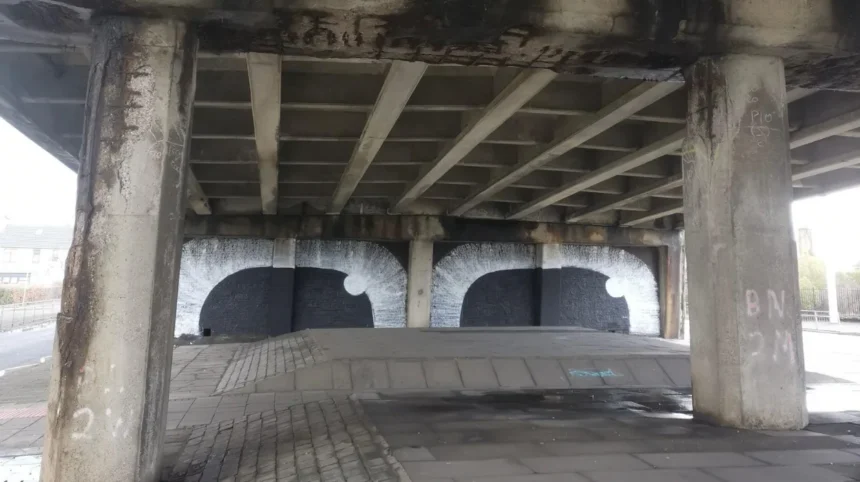
- An experimental approach in a Glasgow pedestrian underpass aimed at addressing long-standing anti-social behavior and public safety concerns has officially failed.
- Modernist urban infrastructure, including underpasses, flyovers, and elevated walkways, is widely perceived by the public as hazardous and neglected rather than forward-looking.
- Previous local efforts across various cities to rehabilitate underpasses using murals, upgraded lighting, and fresh paint have largely proven ineffective against deeper structural and social challenges.
- Local authorities in Glasgow are now faced with determining the next steps to tackle urban safety and pedestrian infrastructure issues following the end of the trial.
Glasgow (Glasgow Express) October 10, 2026 – As reported by Mark Smith of The Herald, urban underpasses remain a significant source of anxiety for many pedestrians, functioning as persistent remnants of an era when city planning prioritised motor vehicles over foot traffic. Smith noted that architectural features such as skyscrapers, flyovers, and subterranean walkways were once viewed as symbols of modernist progress, but over time they became associated with threat, isolation, and decay.
As stated by Smith, cultural portrayals of underpasses in media—such as the violent depiction in Stanley Kubrick’s A Clockwork Orange—helped cement public apprehension regarding these isolated concrete corridors. The sense of vulnerability created by enclosed pathways, long corridors, and hidden corners continues to make underpasses areas that many residents actively avoid or rush through.
Have previous attempts to rehabilitate urban underpasses succeeded?
As detailed by Mark Smith of The Herald, various initiatives over the years have attempted to rehabilitate pedestrian underpasses by introducing brighter lighting, fresh paint, and community art murals. However, Smith stated that these measures have ultimately proven to be a losing battle against the inherent design challenges of brutalist architecture, failing to eliminate the underlying sense of dread felt by users.
The failed initiative in Glasgow represents the latest in a series of attempts to address safety and anti-social behaviour in these spaces. With the experiment yielding unsuccessful outcomes, civic planners and local authorities are left seeking alternative structural or community-focused solutions.
What is the background of Glasgow’s underpass development?
The construction of pedestrian underpasses in Glasgow gained momentum during the mid-to-late 20th century as part of major highway and urban regeneration projects, most notably the construction of the M8 motorway through the heart of the city. City planners of the era sought to separate pedestrian traffic from growing volumes of motor vehicles by diverting pedestrians into subterranean or elevated passageways.
Over subsequent decades, changes in urban planning philosophy shifted focus back towards street-level pedestrian movement and active travel routes. Consequently, many mid-century underpasses suffered from deferred maintenance, reduced footfall, and poor natural surveillance, rendering them hotspots for vandalism, anti-social behaviour, and safety concerns among local residents.
How will this development affect Glasgow residents and urban planners?
The failure of the recent experiment directly impacts local residents, daily commuters, and urban design strategists in several key ways:
- Pedestrian Safety and Mobility: Residents who rely on the underpass for daily travel will continue to navigate an environment perceived as unsafe or unpleasant, potentially forcing pedestrians onto longer, alternative routes.
- Civic Expenditure and Strategy: Local authorities in Glasgow will need to reallocate municipal resources toward alternative solutions, which may include filled-in underpasses, surface-level signalised pedestrian crossings, or increased security presence.
- Future Infrastructure Design: The outcome provides urban planners with critical data regarding the limitations of cosmetic or isolated interventions in brutalist infrastructure, likely accelerating the decommissioning or complete redesign of similar mid-century pedestrian routes across the city.