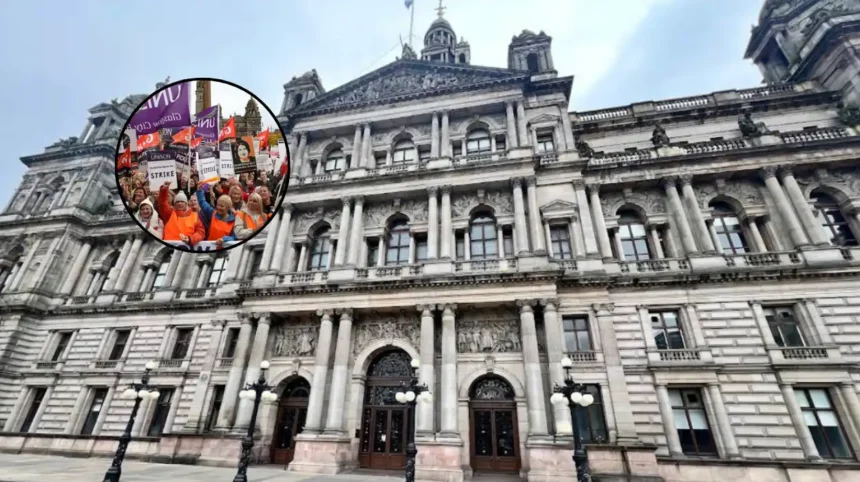
Key Points
- Negotiations regarding the controversial roll-out of a new pay and grading structure at Glasgow City Council are set to continue over the weekend.
- The trade union Unison has insisted that the threat of ‘fire and rehire’ must be removed permanently before meaningful progress can be achieved.
- Discussions between the local authority, trade unions, and the Scottish Government experienced a major collapse earlier in the week, briefly ending a pause on dismissal and re-engagement notices for thousands of workers.
- The dispute stems from a long-running equal pay reform process intended to address historic pay discrimination within the council’s workforce.
- Council estimates suggest that while roughly 90 per cent of staff will see a pay rise or no reduction, approximately 11 per cent of employees face salary reductions, with cuts reaching up to £11,500 per year.
- Acas-sponsored discussions are currently ongoing as stakeholders attempt to broker a collective agreement before implementation deadlines.
Glasgow (Glasgow Express) October 2, 2026 — Intensive negotiations concerning the contentious implementation of a revised pay and grading framework are persisting through the weekend, as trade unions and local government representatives scramble to avert a massive workforce crisis. The discussions follow a dramatic breakdown in talks earlier in the week, a development that briefly reactivated the prospect of dismissal notices being issued to more than 23,000 non-teaching personnel across the city.
What Are the Core Demands of Unison Regarding the Pay and Grading Structure?
As reported by staff journalists of the Glasgow Times, Unison branch secretary Chris Sermanni stated that
“our message going into these talks is simple: address the arrears, put enough money into the pay structure to improve outcomes, and give workers facing detriment meaningful protection.”
The union has maintained that the threat of fire and rehire tactics creates an atmosphere of coercion, rendering authentic negotiation impossible. Unison Scotland regional organiser Mandy McDowall added, as covered by the Morning Star, that “workers who have been historically underpaid should not be pitted against colleagues facing substantial reductions in their wages.” McDowall further emphasised that union members must live with the direct consequences of any settlement, meaning their voices must remain central to the ongoing deliberations.
Why Did Negotiations Break Down Between Glasgow City Council and the Trade Unions?
The underlying dispute is rooted in a complex equal pay reform initiative designed to rectify long-standing discriminatory pay practices identified within Glasgow City Council. Following roughly eight years of intensive consultations, the local authority approved a major overhaul of its grading system. According to council projections, the new structure aims to ensure equal pay for equal work, predicting that about 63 per cent of affected employees will benefit financially, and roughly 90 per cent overall will experience either a pay increase or no change in salary.
However, approximately 11 per cent of the non-teaching workforce faces potential salary reductions, with the most severe individual pay decrease estimated at roughly £11,500 per year. Tensions boiled over when Unison declined to put the council’s latest pay offer to a member ballot. Council leadership argued that an accepted ballot could have removed dismissal notices from consideration and secured immediate back-pay disbursements. In response, the local authority moved to initiate one of the United Kingdom’s largest fire-and-rehire exercises, prompting fierce condemnation from unions including Unite and GMB, before Acas-sponsored talks were initiated to salvage an agreement.
How Is Glasgow City Council Responding to the Ongoing Standoff?
Speaking on behalf of the local administration, workforce convener Allan Casey maintained a conciliatory tone while stressing the necessity of reform. As documented by regional reporting, Allan Casey stated that
“our goal remains clear: to secure collective agreement on a new pay and grading scheme that is free from discrimination and can be put to the workforce in a ballot.”
Casey further reiterated that both he and the broader council leadership remain fully committed to collaborating with trade unions and staff to forge a fairer, more sustainable pay architecture. The council has repeatedly emphasised that dismissal notices would be formally withdrawn if all recognised trade unions agreed to ballot their memberships on the proposed framework. With weekend talks now underway, all parties face mounting pressure to bridge ideological divides before structural implementation timelines take full effect.
Background of the Particular Development
The current impasse in Glasgow is the latest chapter in a protracted systemic struggle over municipal gender pay discrimination that has plagued Glasgow City Council for well over a decade. Historically, the council operated under complex pay and benefits review frameworks that tribunals and equal pay audits found to disproportionately disadvantage predominantly female workforces, such as home care workers, catering staff, and administrative personnel. Settling historic equal pay claims has already cost the local authority hundreds of millions of pounds, forcing a structural redesign of job evaluations and grading bands. While the necessity of eliminating pay inequality is universally acknowledged by the council, trade unions, and the Scottish Government, the practical mechanics of transitioning to a non-discriminatory pay model have generated fierce conflict over who bears the financial cost of equalization. The introduction of fire-and-rehire strategies as a mechanism to force acceptance of new contracts has amplified job security fears across Scotland’s public sector.
Prediction
This ongoing industrial dispute carries profound implications for the local workforce, municipal service delivery, and wider labour relations across the United Kingdom. For the 23,000 non-teaching council employees in Glasgow—ranging from refuse collectors and nursery staff to administrative personnel—the outcome of these weekend talks will directly determine their household financial stability and job security. If negotiations succeed in establishing a properly funded compromise that protects vulnerable earners from steep detriments, it could set a positive national precedent for resolving complex public sector equal pay restructurings without resorting to coercive employment practices. Conversely, if talks fail permanently and the council proceeds with large-scale fire-and-rehire measures, it risks triggering severe, prolonged industrial action that could severely disrupt municipal services across Glasgow. Furthermore, a breakdown here would likely embolden legislative scrutiny regarding the legal and ethical boundaries of fire-and-rehire tactics utilized by public authorities nationwide.