Key Points
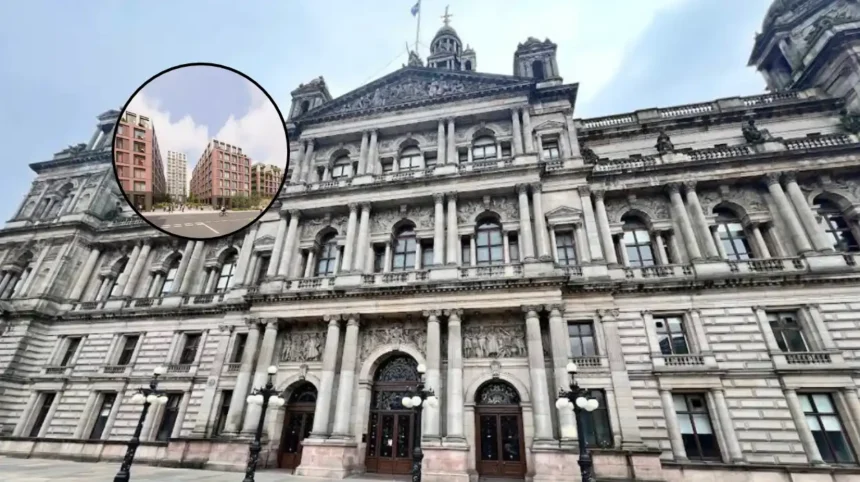
- The Scottish Government has put forward radical public service reform proposals that could see all 32 existing unitary authorities, including Glasgow City Council, abolished and replaced by between six and 10 strategic regional authorities alongside 120 to 160 community-based authorities.
- Green Party councillors in Glasgow have voiced serious concerns regarding the proposals, warning that the reorganisation must not be driven by cost-cutting measures and noting that these plans were never presented to voters prior to the last local election.
- Fears have been raised by local representatives and trade union representatives over democratic accountability, potential staffing cuts, service reductions, and the physical fragmenting or splitting up of Glasgow’s urban administration.
- Currently, Glasgow City Council is Scotland’s largest local authority in terms of budget size, total workforce, and number of elected councillors.
- Separately, Police Scotland officers have officially confirmed there are no suspicious circumstances surrounding the death of a 32-year-old man who was found unresponsive on Watson Street, located between Merchant City and Trongate, in the early hours of Saturday, 24 October 2026.
Glasgow (Glasgow Express) October 26, 2026 — Severe warnings have been issued to the Scottish Government following controversial proposals that could see Glasgow City Council completely abolished and replaced by a two-tier system of regional and local bodies.
- Key Points
- What Are the Key Details of the Scottish Government’s Proposed Council Reforms?
- Why Are Local Politicians and Union Leaders Raising Concerns Over Glasgow City Council Being Scrapped?
- What Occurred During the Watson Street Police Incident in Glasgow?
- Background of the Proposed Public Sector Reforms and Local Authority Structure
- Prediction: How Will This Development Affect Local Residents, Public Sector Workers, and Municipal Governance?
As reported by senior reporters across regional media outlets, local political figures have raised alarms after national reform documents revealed plans to scrap Scotland’s 32 unitary local authorities. The Scottish Government is evaluating a structural overhaul aimed at replacing current local authorities with between six and 10 large strategic regional authorities alongside a network of 120 to 160 community-based councils. Under the tentative outline, bespoke arrangements would also be introduced for island communities.
Councillor representatives from the Scottish Greens have strongly criticised the timing and scope of the proposed public sector reorganisation. As reported by local government correspondents, representatives from the Scottish Greens warned that radical restructuring must not be used as a cover for cost-cutting or budget reductions. Green representatives further highlighted that no mention of dissolving existing local authority structures was included in manifesto commitments or discussions prior to the last council elections, leading to questions over the democratic mandate of the proposals.
At present, Glasgow City Council stands as the largest local authority in Scotland, administering the nation’s biggest municipal budget, largest staff workforce, and most numerous elected council representatives. Opponents of the reform argue that splitting the municipality into broader regional tiers risks diminishing local democratic accountability, threatening municipal jobs, sparking deep service cuts, and carving up the administrative cohesion of the city.
Simultaneously, public safety authorities in the city have provided an update regarding an emergency response in central Glasgow over the weekend. As reported by crime reporters for Glasgow Live, Police Scotland confirmed that there are no suspicious circumstances surrounding the death of a 32-year-old man who was discovered unresponsive on Watson Street, situated between the Merchant City and Trongate areas, at approximately 2:20 am on Saturday, 24 October 2026.
Emergency services, including Police Scotland officers and Scottish Ambulance Service paramedics, attended the scene immediately following reports of concern for an individual on the street. Despite prompt emergency medical attention, the 32-year-old man was pronounced dead at the scene. While police initially treated the incident as unexplained and erected a security cordon near Barrowland Park between Gallowgate and London Road to conduct preliminary enquiries, investigating officers subsequently confirmed following a full assessment that no criminal or suspicious factors were involved in the fatality.
What Are the Key Details of the Scottish Government’s Proposed Council Reforms?
How significantly would the proposed reorganisation alter the structure of local government across Scotland? The policy document published by the Scottish Government sets out an “opening proposition” designed to dismantle the current single-tier local government structure that has been in place since 1996. Under the proposed framework, the 32 existing unitary authorities—including Glasgow City Council, City of Edinburgh Council, and Highland Council—would be phased out completely.
In their place, the government proposes establishing a two-tier model consisting of:
- Six to 10 Regional Authorities: These overarching bodies would take over strategic, large-scale public services across wider geographical zones. Responsibilities allocated to regional councils would include secondary and primary education, strategic waste management, transport planning, and regional economic development.
- 120 to 160 Community Authorities: Operating beneath the regional bodies, these localized councils would manage day-to-day community matters, including minor householder planning applications, local licensing decisions, local sports and leisure facilities, community parks, and historic environment management.
According to the policy proposition, elected councillors would continue to be chosen at current ward levels but would hold dual mandates, sitting on both their local community authority and the associated regional authority board. A parallel 10-week consultation process has been initiated with local councils, healthcare providers, and trade unions to discuss how social care delivery aligns with the structural proposals.
Why Are Local Politicians and Union Leaders Raising Concerns Over Glasgow City Council Being Scrapped?
Why have local representatives in Glasgow reacted so strongly to the Scottish Government’s structural proposals? Elected members across political groups in Glasgow City Chambers have expressed deep skepticism regarding the feasibility and intent of the reform.
As reported by political correspondents at the Glasgow Times, local councillors warned that shifting strategic decision-making to broad regional boards risks distancing voters from elected representatives and diluting the specific voice of Glasgow’s urban populace. The Scottish Greens highlighted that the sheer speed of the proposed 10-week consultation period creates severe uncertainty for council staff and municipal services.
Major concerns raised by political figures and union representatives focus on:
- Financial Motivation and Cost-Cutting: Concerns that the reorganisation is driven primarily by national fiscal pressures rather than a desire to improve service quality or local empowerment.
- Lack of Electoral Mandate: Critics emphasise that structural abolition of local councils was never put to voters during the previous Scottish local government elections.
- Staffing and Employment Vulnerability: Trade union representatives have voiced alarm over potential compulsory redundancies, job reassignments, and contractual restructuring across Glasgow City Council’s extensive municipal workforce.
- Fragmentation of the City: Fears that partitioning Glasgow’s urban administration across larger regional boundaries could dismantle integrated city-wide initiatives in housing, social care, and economic regeneration.
What Occurred During the Watson Street Police Incident in Glasgow?
What were the circumstances surrounding the emergency service deployment on Watson Street over the weekend? Emergency service call-handlers received a report of concern for a person on Watson Street, located on the border of the Merchant City and Trongate districts, at 2:20 am on Saturday, 24 October 2026.
Police Scotland officers and Scottish Ambulance Service personnel arrived at the scene shortly after the alert was raised. Paramedics examined the individual, a 32-year-old male, but he was pronounced deceased at the location. Police initially established a wide cordon encompassing portions of Watson Street and nearby Barrowland Park, stretching between Gallowgate and London Road, while forensic officers and detectives conducted preliminary field enquiries to establish the deceased man’s identity and determine the circumstances leading to his death.
Following an exhaustive investigation over the weekend, a Police Scotland spokesperson issued an official statement confirming that officers had concluded their initial enquiries. As reported by Glasgow Live, the police spokesperson stated that “around 2.20am on Saturday, 24 October, 2026, we were called to a report of concern for a man found on Watson Street, Glasgow,” adding that following thorough review, there were “no suspicious circumstances” surrounding the death. A report is being submitted to the Procurator Fiscal in accordance with standard procedure for non-suspicious sudden deaths.
Background of the Proposed Public Sector Reforms and Local Authority Structure
To understand the current friction surrounding the proposal to abolish Glasgow City Council, it is necessary to examine the evolution of Scottish local government governance over recent decades.
The present framework of Scottish local government was established under the Local Government (Scotland) Act 1994, which took full effect on 1 April 1996. This legislation abolished the previous two-tier system—which had operated since 1975 with nine regional councils and 53 district councils—and replaced it with 32 unitary authorities responsible for all local municipal services within their defined geographical boundaries.
Under this 1996 unitary structure, Glasgow City Council was formed, inheriting the administrative functions of the former Glasgow District Council along with several services previously managed by Strathclyde Regional Council. For thirty years, Glasgow City Council has functioned as Scotland’s premier urban local authority, managing social work, primary and secondary education, public housing policies, local roads, refuse collection, environmental health, and culture and leisure services through council-owned arms-length organisations.
However, over the past decade, local authorities across Scotland have faced mounting financial pressures driven by tightening real-terms budget allocations from the Scottish Parliament, rising operational costs, and increasing demand for social care and statutory public services. In response to long-term fiscal constraints, the Scottish Government initiated broader reviews into public service delivery, exploring ways to centralise strategic operations while decentralising micro-level community decisions.
The publication of the September 2026 reform paper marked the first formal proposal by national ministers to fundamentally dismantle the 1996 unitary council model. The proposition seeks to revert Scotland to a two-tier authority structure, albeit with far larger strategic regional zones than existed prior to 1996. The announcement caught local authority leaders, chief executives, and the Society of Local Authority Chief Executives (SOLACE) without prior notice, sparking widespread debate across the public sector regarding the governance, cost, and practicality of such a major institutional transition.
Prediction: How Will This Development Affect Local Residents, Public Sector Workers, and Municipal Governance?
If the Scottish Government proceeds with its proposed public service reforms and abolishes Glasgow City Council in favour of regional and community authorities, several distinct impacts are predicted for local residents, council employees, and the broader Glasgow community.
1. Impact on Glasgow Residents and Service Users
For local residents, the transition from a single unitary council to a two-tier structure could create significant administrative realignments. While micro-level issues such as local park maintenance and householder planning applications would be directed to newly formed community authorities, major public services such as education, roads, social care, and waste management would fall under the jurisdiction of a wider regional authority. Residents may experience a period of transitional disruption as service delivery frameworks are reorganized. Additionally, there are concerns that strategic decisions regarding Glasgow’s schools and major infrastructure could be determined by regional boards representing multiple council areas, potentially diluting direct local influence over urban priorities.
2. Impact on Council Staff and Public Sector Unions
For the thousands of workers currently employed by Glasgow City Council, the proposed abolition introduces a period of prolonged structural uncertainty. Merging departments, reallocating statutory duties, and establishing new regional headquarters typically involve significant organizational restructuring. Public sector trade unions are expected to resist any measures that could lead to post-duplication job losses, changes to localized collective bargaining agreements, or alterations to pension and working arrangements. The process of migrating staff from a single municipal employer into separate regional and community entities will require extensive negotiations to safeguard employment conditions.
3. Impact on Local Democratic Accountability and Governance
From a political and democratic standpoint, elected councillors will face expanded operational demands under the proposed dual-mandate system, where representatives sit on both community and regional authorities simultaneously. Balancing localized ward priorities with complex regional strategic planning could stretch councillor capacity. Furthermore, during the anticipated multi-year implementation process, significant council management resources and administrative focus will inevitably be diverted away from routine service delivery and toward navigating structural transition, policy harmonization, and legal reorganisation.