Key Points
- An official investigation is underway concerning serious safety and sanitary issues at two multi-storey housing developments in Glasgow.
- As reported by Stewart Paterson, Political Correspondent of the Glasgow Times, the properties affected are the Blythswood Court and St Vincent Terrace blocks located in the Anderston area of the city.
- Local residents have raised major alarms regarding defective fire doors across both developments.
- Complaints also highlight severe waste management failures, including blocked bin chutes lasting for several months and piles of accumulating rubbish.
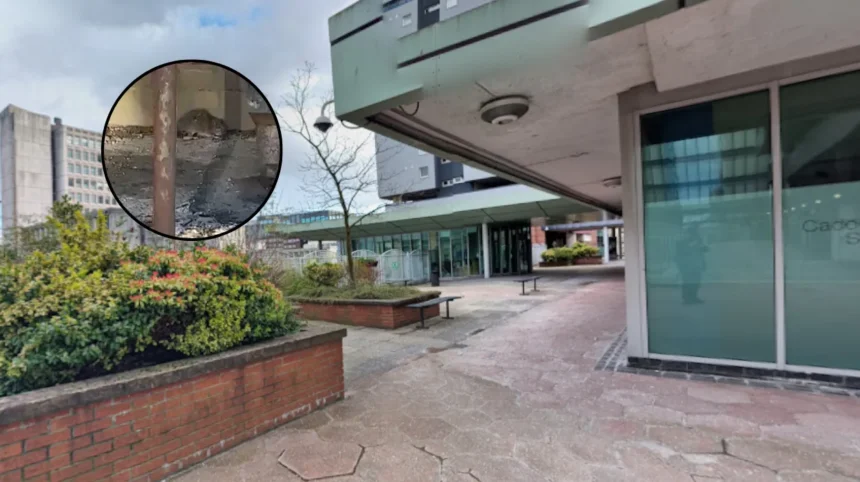
- Residents have reported major rodent infestations, with one local source describing an overwhelming presence of “rats, lots of rats” at Blythswood Court.
- Tenants and homeowners have drawn attention to a poor state of general disrepair in common areas, stairwells, and foyers, particularly at St Vincent Terrace.
- Glasgow West Housing Association has confirmed it is actively investigating the issues as a matter of priority, noting that both developments are mixed-tenure properties requiring cooperation from private homeowners for certain structural repairs.
Glasgow (Glasgow Express) October 2, 2026 – An intensive investigation has been officially launched following a cascade of alarming safety, structural, and public health complaints raised by tenants and homeowners living in two prominent multi-storey housing complexes within the city.
- Key Points
- What Are the Core Safety and Sanitary Violations Reported at Blythswood Court and St Vincent Terrace?
- How Severe Is the Rodent Infestation Within the Glasgow High-Rises?
- How Has Glasgow West Housing Association Responded to the Resident Complaints?
- Background of the Particular Development
- Prediction
What Are the Core Safety and Sanitary Violations Reported at Blythswood Court and St Vincent Terrace?
As detailed by Stewart Paterson, Political Correspondent of the Glasgow Times, local individuals residing within the Blythswood Court and St Vincent Terrace high-rise developments have formally brought forward multiple grievances to the landlord, Glasgow West Housing Association. These grievances centre heavily on compromised residential fire safety measures, waste disposal breakdown, and an escalating vermin crisis that has deeply unsettled the local community.
Among the primary dangers highlighted are defective fire doors identified across multiple floors in both residential blocks. Fire doors are a critical compartmentation element designed to halt the rapid spread of smoke and flames in high-density vertical living environments, meaning any compromise directly threatens resident evacuation routes and overall life safety.
Compounding these fire safety worries are acute refuse management failures. Residents told the Glasgow Times that several residential bin chutes have remained blocked for months, leading to an unacceptable accumulation of waste around communal areas. While housing association representatives have responded by stating that ongoing efforts are being directed towards clearing the blockages, the prolonged buildup has triggered secondary public health hazards.
How Severe Is the Rodent Infestation Within the Glasgow High-Rises?
The breakdown in refuse management has directly fuelled a severe rodent proliferation. Tenants have expressed deep frustration over surging pest numbers, with one local resident dramatically characterising the situation at Blythswood Court by stating there are “rats, lots of rats”.
Beyond the immediate vicinity of the waste collection points, inhabitants have pointed to an extensive lack of maintenance across shared grounds and common areas. Stairwells and entry foyers at St Vincent Terrace, in particular, were noted to be in a severe state of disrepair, further degrading the living standards of those who call the high-rise blocks home.
How Has Glasgow West Housing Association Responded to the Resident Complaints?
In response to the mounting pressure and media enquiries, Glasgow West Housing Association acknowledged the complaints, confirming that a full-scale investigation is underway as a matter of top priority. The landlord stated that structured surveys and technical inspections are actively planned to detect, assess, and rectify all reported building defects.
However, the housing association also pointed out structural complications inherent to the management of these specific sites. Both the Blythswood Court and St Vincent Terrace complexes operate under mixed-tenure arrangements, housing a combination of social housing tenants and private homeowners. According to the association, the execution and legal instruction of major improvement or repair works can frequently be contingent upon the specific wording of property title deeds and the direct co-operation of private owners.
Despite these administrative hurdles, community advocates and local stakeholders maintain that procedural delays offer no excuse for failing to tackle pressing health and safety hazards. Representatives have emphasised that individuals residing in social and mixed-tenure housing blocks retain an absolute right to feel safe, secure, and protected from vermin and fire risks within their own homes.
Background of the Particular Development
The current safety and sanitary inquiries at Blythswood Court and St Vincent Terrace highlight long-standing management and maintenance challenges associated with high-density, mixed-tenure housing developments in urban centres like Glasgow. High-rise blocks constructed decades ago often face systemic infrastructure aging, ranging from ventilation and waste chute degradation to outdated passive fire protection systems. Furthermore, the complexities of mixed-tenure models—where social landlords share building responsibilities with private leaseholders or owners—frequently introduce legal and financial friction into maintenance chains. When disputes or delays occur regarding who is liable for funding major structural overhauls, routine upkeep can slip, leading directly to the types of secondary failures seen here, including prolonged waste blockages, pest attraction, and compromised fire safety compliance.
Prediction
This unfolding development will likely trigger heightened regulatory scrutiny from local authorities and housing regulators across Scotland regarding the management practices of mixed-tenure high-rises. For the immediate audience—consisting of social housing tenants, private flat owners, and housing association management in Glasgow—the investigation serves as a critical turning point. If Glasgow West Housing Association acts swiftly to resolve the fire door defects and eradicate the rodent infestation, it could restore baseline confidence among residents and set a cooperative precedent for handling mixed-tenure repairs. Conversely, if bureaucratic delays persist, tenants and homeowners may ramp up formal protests, legal actions, and demands for municipal intervention, putting immense pressure on housing providers to overhaul their maintenance accountability frameworks.