Key Points
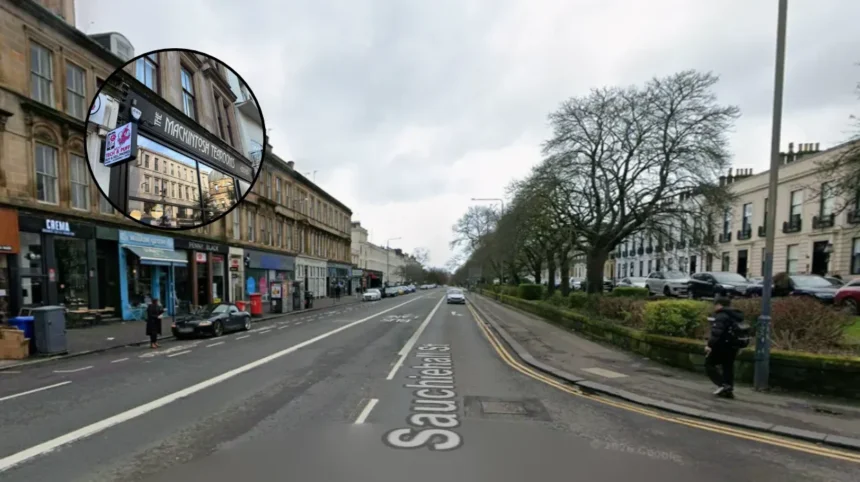
- Planning Enforcement Investigation Launched: Glasgow City Council has formally allocated a case officer to investigate unauthorized alterations made to 219 Sauchiehall Street, currently occupied by a vape shop.
- Proximity to Historic Landmark: The site is situated immediately adjacent to the iconic Mackintosh Tearooms in Glasgow city centre, raising heritage and aesthetic concerns.
- Political Intervention: Labour MSP for Glasgow Paul Sweeney contacted local authority planning officials after community members voiced alarms regarding missing listed building and conservation area consents.
- Safety and Community Concerns: Public anxiety has heightened following a major fire on Union Street on March 8, 2026, which originated in an unlicensed vape establishment.
- Discretionary Council Powers: Council officials confirmed that planning enforcement action is not statutory or compulsory, emphasizing that intervention depends on proving clear and demonstrable planning harm.
Sauchiehall Street (Glasgow Express) October 21, 2026 – Glasgow City Council has initiated a formal planning enforcement investigation into alterations made to the shopfront of a vape retailer located at 219 Sauchiehall Street, directly adjacent to the historic, category-A listed Mackintosh Tearooms. The local authority confirmed the allocation of a dedicated case officer following formal representations made by Paul Sweeney, Member of the Scottish Parliament (MSP) for the Glasgow region. The intervention comes amid heightened public scrutiny regarding unauthorized commercial changes within conservation areas, alongside safety fears raised by local residents following a destructive blaze on Union Street earlier this year that originated in an unlicensed vape outlet.
- Key Points
- What Prompted the Council Investigation Into the Sauchiehall Street Vape Shop?
- What Are the Specific Powers and Legal Criteria for Glasgow Planning Enforcement?
- Why Has Community Anxiety Heightened Around City Centre Vape Retailers?
- Background to the Development
- Prediction: How This Development Can Affect Stakeholders
What Prompted the Council Investigation Into the Sauchiehall Street Vape Shop?
The decision by Glasgow City Council to allocate a planning case officer follows growing public unease regarding recent visual and structural changes to the building envelope at 219 Sauchiehall Street. Paul Sweeney MSP formally raised the matter with municipal planning administrators after identifying that external alterations appeared to have been executed without the mandatory listed building consent or conservation area consent required for structures of such historical sensitivity.
Sharing official correspondence from the local authority on the social media platform X, Paul Sweeney MSP stated:
“I raised concerns with Glasgow City Council about the unauthorised alterations to 219 Sauchiehall Street, which appears to have been installed without the necessary listed building or conservation area consent.”
Following receipt of confirmation from civic officials regarding the active status of the file, Paul Sweeney MSP added:
“I’m pleased that the Council has now opened a planning enforcement investigation into the vape shop frontage.”
The commercial unit occupies a prominent position on Sauchiehall Street, one of Glasgow’s principal thoroughfares, operating directly beside the famous Mackintosh Tearooms—originally designed by renowned Scottish architect Charles Rennie Mackintosh.
What Are the Specific Powers and Legal Criteria for Glasgow Planning Enforcement?
In response to the parliamentary representation, Glasgow City Council detailed the statutory frameworks governing potential enforcement procedures, emphasizing that the opening of an investigation does not automatically guarantee formal penal action against the property owner or leaseholder.
As detailed in official correspondence issued by Glasgow City Council, municipal officers stated that enforcement action is “not compulsory” but remains “at the discretion of the Council.”
Outlining the strict legal thresholds required before physical remediation or legal orders can be issued, Glasgow City Council wrote:
“We will take action only where it is considered expedient to do so and where the reported matter causes clear and demonstrable harm in planning terms.”
The local authority further clarified that procedures will adhere strictly to civic operational protocols once preliminary facts are gathered. Glasgow City Council noted:
“The service standards set out in the Planning Enforcement Charter shall apply once the case officer is satisfied that all the necessary information is in place for the investigation to proceed.”
Addressing the procedural rights of the property occupiers and surrounding stakeholders should the municipality decide to issue formal notices, Glasgow City Council added:
“If a formal Enforcement Notice is served and subsequently appealed, you may be given the opportunity to make representations.”
Why Has Community Anxiety Heightened Around City Centre Vape Retailers?
The debate surrounding the frontage at 219 Sauchiehall Street coincides with widespread concern among Glasgow residents and civic societies regarding the proliferation and regulation of independent vape vendors in central commercial districts.
Community unease dramatically escalated following a severe fire on Union Street on Sunday, March 8. That incident, which resulted in extensive structural damage and localized transport disruption, was officially determined to have started within an unlicensed vape shop.
Consequently, local community groups and heritage advocates expressed strong fears regarding both safety compliance and aesthetic deterioration adjacent to priceless architectural assets. The physical proximity of an unauthorized storefront to the Mackintosh Tearooms has served as a focal point for public discussions regarding urban conservation and regulatory oversight across Glasgow’s traditional shopping precincts.
Background to the Development
The site at 219 Sauchiehall Street forms part of a historic streetscape in Glasgow city centre characterized by late 19th-century and early 20th-century commercial architecture. Located immediately next door is the historic Willow Tea Rooms building, designed in 1903 by Charles Rennie Mackintosh for tea merchant Catherine Cranston. The building is recognized internationally as an architectural masterpiece of the Glasgow Style and holds Category A listed status, representing the highest tier of statutory protection for structures of national or international importance in Scotland.
Under Scottish planning legislation, including the Town and Country Planning (Scotland) Act 1997 and the Planning (Listed Buildings and Conservation Areas) (Scotland) Act 1997, strict controls govern physical alterations to listed buildings and properties situated within designated conservation areas. Exterior changes—such as the installation of new signage, illumination, window frames, or alteration of traditional stone shopfronts—typically require prior permission from the local planning authority to ensure the historic integrity and aesthetic character of the area are preserved.
Glasgow City Council operates a dedicated planning enforcement charter that outlines how alleged breaches of planning control are logged, assessed, and prioritized. Enforcement investigations evaluate whether unauthorized development has occurred and whether it is expedient in the public interest to take formal action, which can range from negotiating retrospective applications to issuing formal Enforcement Notices or Stop Notices requiring the reinstatement of original features.
Prediction: How This Development Can Affect Stakeholders
Impact on Local Businesses and Commercial Tenants
Should Glasgow City Council determine that the shopfront at 219 Sauchiehall Street causes demonstrable planning harm, the property owners or business operators could be served with a formal Enforcement Notice requiring the removal or alteration of the non-compliant store frontage at their own expense. This outcome would likely establish a legal precedent, prompting increased regulatory scrutiny of independent retailers operating along Sauchiehall Street and wider city centre commercial districts. Commercial tenants across Glasgow may subsequently exercise greater diligence regarding lease negotiations and planning consents prior to executing fit-outs. Conversely, if the council determines that enforcement action is not expedient, it could signal a higher threshold for municipal intervention in conservation areas, potentially influencing future retail development choices.
Impact on the Local Community and Heritage Organizations
For local residents, heritage bodies, and preservation trusts, the outcome of this enforcement investigation will serve as a benchmark for how effectively municipal authorities balance city centre economic activity with heritage protection. A formal enforcement outcome requiring compliance with conservation guidelines could bolster public confidence in local authority oversight and support ongoing efforts to preserve the architectural setting of historic assets such as the Mackintosh Tearooms. Alternatively, a decision not to pursue enforcement could intensify calls from civic groups and political representatives for stricter legislative controls and heightened monitoring of high-street retail developments across Scotland.