Key Points
- Scrapping the Existing Structure: The Scottish Government has put forward a proposal to abolish the current 32 local authorities across Scotland.
- New Regional Councils: Under the reform, these 32 councils would be replaced with between six and 10 larger regional authorities to handle strategic decisions.
- Community Authorities: A secondary tier consisting of between 120 and 160 community authorities would be created underneath the regional level to deliver local services.
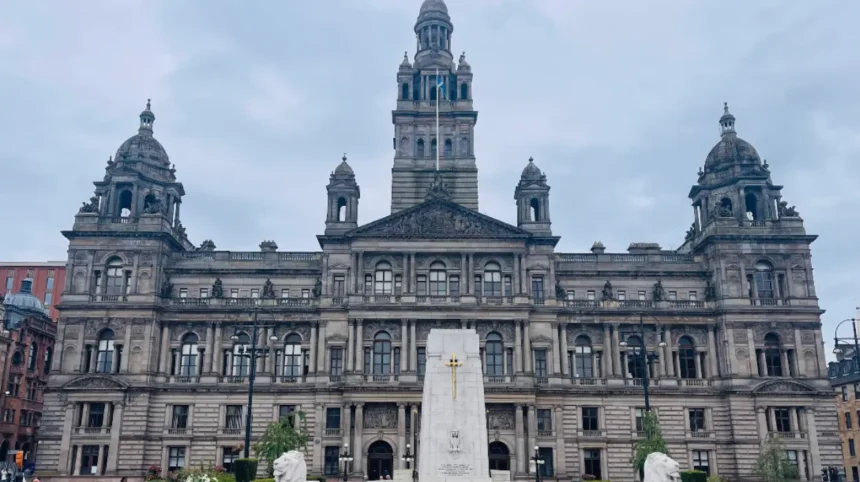
- Impact on Glasgow: Glasgow City Council could face abolition, replaced instead by a broader regional authority alongside neighbouring areas, accompanied by smaller community authorities within the city.
- Dual Mandates for Councillors: To prevent additional layers of bureaucracy or extra elections, councillors could sit on both community and regional bodies, which may prompt a pay rise and increased remuneration.
- Position Paper Status: The proposals serve as an initial starting point for debate, discussion, and intense engagement with local government partners and stakeholders.
Glasgow (Glasgow Express) September 21, 2026 — Proposals for the first major shake-up of local government in Scotland in nearly thirty years have been officially published, setting the stage for sweeping structural reforms. As reported by the Scottish Government, the administration has put forward a plan to scrap the current 32 local authorities and replace them with a streamlined system comprising between six and 10 larger regional councils. Beneath this upper tier, a secondary level featuring between 120 and 160 community authorities would be established to deliver a diverse range of services with a focused, local approach.
While broad outlines have been published, specific operational details regarding how these changes will translate into practical reality for individual regions have not yet been shared. Separate arrangements are also under active consideration for island communities in recognition of their unique geographical and social needs.
Detailing the rationale behind the plans, Deputy First Minister Jenny Gilruth stated that “reforming Scotland’s public sector is about delivering the best public services for people across Scotland.” As reported by Jenny Gilruth, the government believes that
“we need to ensure investment is focused on frontline delivery, with the right staff in the right roles to empower communities and deliver real improvements in public services.” She added that
“some decision making is best delivered at national level and regional level while others better sit closer to communities and we must get that balance right.”
How will Glasgow City Council and other major urban areas be affected?
The structural overhaul could spell the end of prominent administrative bodies such as Glasgow City Council. Under the newly published blueprint, the local authority could be completely replaced by a larger regional authority encompassing neighbouring areas to concentrate purely on major strategic decisions. Concurrently, the framework could result in the creation of several smaller community authorities situated within the city boundaries to handle grassroots matters.
First Minister John Swinney previously highlighted the underlying structural imbalance, noting that some current Scottish councils are “too small to be strategic and some are too big to be local.” Expanding on this perspective during the initial programme launch, First Minister John Swinney stated that
“the government believes that should change. What we propose is a rebalancing of power within Scotland, with our regions strengthened and our communities empowered to bring new life, new opportunities, into the places they love.”
Existing local government responsibilities could also be substantially broadened under the proposals. According to Jenny Gilruth, these changes could feature “enhanced roles in economic development and business support so that individual areas can reflect local strengths and ambitions.” Furthermore, the position paper notes that these structural reforms are intended to “provide a starting point to facilitate debate and discussion as we work to deliver reforms that strengthen public services and improve outcomes for the people and communities we serve.”
What are the implications for elected councillors and local elections?
To avoid creating an expensive extra layer of administration or triggering additional bureaucratic election cycles, the government has proposed that councillors continue to be elected under the current ward system. Under this model, elected members would sit on both the local community authority and the corresponding regional authority.
Because dual mandates and regional authorities would inherently bring a substantial increase in operational responsibilities and workload, the proposal explicitly notes that this “would prompt serious consideration of the appropriate remuneration and the time commitment expected of the role,” making a future pay rise for councillors likely.
Reacting to the release of the policy papers, Cllr Shona Morrison, president of the Convention of Scottish Local Authorities (COSLA), emphasized the importance of safeguarding democratic structures. As reported by Cllr Shona Morrison,
“There are important implications for local government and council services, particularly the proposed NHS reforms and what they will mean for the future delivery of social care.”
Cllr Shona Morrison further noted that
“over the coming days, COSLA will engage closely with our member councils and with Scottish Ministers to ensure these proposals are focused on what is best for communities across Scotland and respect the democratic legitimacy of local government.”
Stressing that public services function best when decisions are made as close to the populace as possible, COSLA confirmed it looks forward to meaningful dialogue moving forward.
Background of the Development
The roots of this local government review stretch back through decades of structural adjustments in Scottish public administration. Scotland’s local government layout underwent a major overhaul in 1975, creating a system of 53 districts, nine regions, and three unitary island councils. That framework was subsequently dissolved in 1996 under the Local Government etc. (Scotland) Act 1994, which established the present system of 32 unitary local authorities. Over the years, critics and policymakers have frequently debated whether these 32 councils possess the necessary scale to handle complex, regional economic planning, or conversely, whether they remain too detached from hyper-local community needs. The current Scottish National Party administration has increasingly emphasized public service reform, leading directly to this newly published position paper as a vehicle to reopen dialogue on regional centralization and community empowerment.
Prediction and Impact on the Particular Audience
For residents, local councillors, and public sector workers within Glasgow and across Scotland, this reform package carries profound implications. If implemented, local taxpayers and citizens can expect a fundamental shift in how civic services are delivered, moving away from municipal unitary management toward a dual-layered system of regional economic strategy and localized community boards. For local councillors, the transition promises significantly expanded workloads, heavier governance burdens, and potential remuneration adjustments via dual mandates. For local government employees, the centralization of strategic sectors—alongside parallel discussions regarding social care integration—signals a period of structural uncertainty as accountability lines are redrawn. Ultimately, while the Scottish Government frames the initiative as a vital upgrade to frontline efficiency, audiences across local government will experience an intensive period of consultation and debate over whether larger regional bodies can successfully maintain local accountability.