
Key Points
- Urgent talks are taking place to resolve a high-profile fire and rehire dispute involving Glasgow City Council after negotiations between Unison and the local authority broke down.
- The breakdown follows a previous intervention by Deputy First Minister Jenny Gilruth, which had temporarily paused the issuance of dismissal and re-engagement letters to more than 23,000 non-teaching staff.
- Council representatives expressed deep disappointment, stating that remaining union demands were unworkable and would cause employee detriment.
- While the pause on issuing letters to Unison members has ended, the local authority stated it is continuing discussions with Unite and GMB unions to prevent dismissals for their respective members.
- Unions have heavily criticized the controversial fire and rehire tactics, describing the dispute as a critical test for fair work principles and historical equal pay corrections in local government.
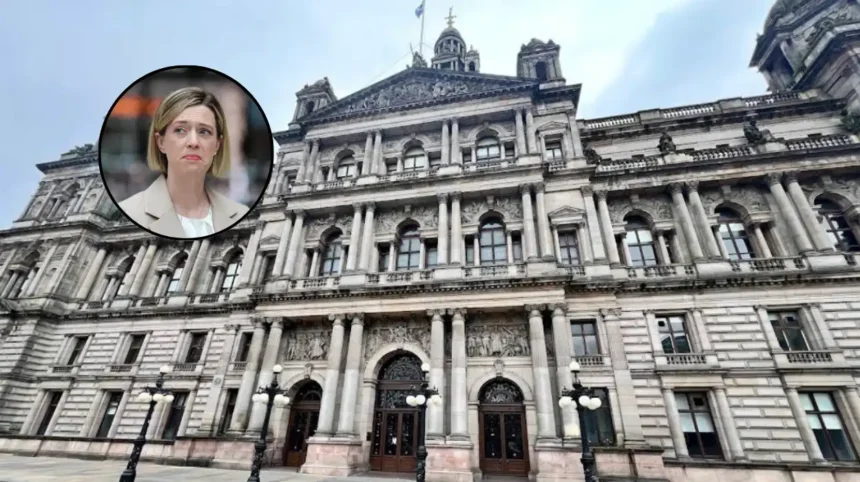
Glasgow Council (Glasgow Express) October 1, 2026 — Intense negotiations have resumed in an effort to avert a massive labor crisis after formal talks between Glasgow City Council and the Unison trade union collapsed following weeks of mounting tension over controversial workforce restructuring plans.
- Key Points
- Why Did Negotiations Break Down Between Glasgow City Council and Unison?
- How Are Other Trade Unions Responding to the Disruption?
- What Role Has the Scottish Government Played in the Dispute?
- Background of the Particular Development
- Prediction on How This Development Can Affect Council Workers and Local Services
As reported by staff journalists at The Herald, the breakdown in discussions officially brings an end to a temporary administrative pause that had halted the issuing of dismissal and re-engagement letters to roughly 23,000 non-teaching local government employees. The dispute centers around a major pay and conditions overhaul that council leadership argues is necessary to address long-standing equal pay issues, while labor organizations fiercely condemn the mechanism as an aggressive attack on worker rights.
Why Did Negotiations Break Down Between Glasgow City Council and Unison?
The sudden collapse of talks stems from fundamental disagreements regarding final financial protections, specific employee allowances, and the structural implementation of the council’s proposed pay model.
As reported by staff reporters at The Independent, council leader Councillor Ricky Bell expressed profound frustration over the impasse, stating:
“I’m deeply disappointed that, despite the Council putting a further year of pay protection on the table, Unison has once again chosen not to put this offer to its members.”
Councillor Bell further emphasized that while the administration went to great lengths to improve the package—representing well over a hundred million pounds in extra remuneration—certain union demands remained completely unworkable.
According to details covered by The Herald, council officials maintained that specific proposals for additional allowances requested by union negotiators would inadvertently create a detrimental financial impact on other vulnerable categories of employees. Because these remaining sticking points could not be mutually reconciled during the final bargaining window, the local authority confirmed that the protective shield pausing administrative letters for Unison members has formally lapsed.
How Are Other Trade Unions Responding to the Disruption?
While the administrative pause has concluded for Unison, the operational landscape across municipal departments remains fragmented as other major labor organizations chart distinct paths forward.
As detailed in reports by The Independent, Glasgow City Council explicitly clarified that municipal management is actively working alongside Unite and GMB representatives to ensure that their respective members are shielded from immediate dismissal and re-engagement cycles. Detailed sectoral discussions involving these specific unions are scheduled to finalize alternative agreements.
Previously, major union figures voiced intense outrage over the initial rollout of the restructure. Susan Fitzgerald, Unite Scottish Secretary, pointedly noted in statements covered by media outlets that the immediate threat of fire and rehire practices should never have been utilized in a public sector framework, describing the initial escalation as highly regrettable.
What Role Has the Scottish Government Played in the Dispute?
The high-stakes municipal dispute has drawn heavy scrutiny from Holyrood, prompting direct political intervention from senior government ministers seeking to enforce regional fair work standards.
As documented by political editors at The Herald, Deputy First Minister Jenny Gilruth previously convened emergency online mediation sessions involving council leadership alongside representatives from Unite, GMB, and Unison. This high-level intervention temporarily halted the dispatch of formal redundancy and re-engagement notices that threatened over 23,000 workers.
Scottish Government officials have consistently reiterated opposition to the deployment of fire and rehire mechanisms within public services, stressing that such methods run entirely counter to the expected tenets of fair work practice. Despite these administrative guardrails, the renewed friction between Glasgow City Council and Unison highlights the persistent volatility plaguing local government labor relations as authorities attempt to balance constrained public budgets with statutory equal pay obligations.
Background of the Particular Development
The current industrial standoff is deeply rooted in Glasgow’s turbulent history regarding municipal equal pay litigation. For years, Glasgow City Council has grappled with systemic equal pay liabilities stemming from historical grading and pay structures that predominantly disadvantaged female-dominated workforces, such as home carers, catering staff, and school-support personnel. Protracted legal battles and multi-million-pound settlements forced the local authority to restructure internal pay bands and introduce sweeping compensation frameworks.
However, implementing these mandatory reforms across tens of thousands of council posts proved exceptionally complex. To streamline modern pay scales and rectify lingering systemic discrimination, the council pursued structural changes to employee contracts. When voluntary agreement stalled, the local authority turned toward dismissal and re-engagement—commonly known as fire and rehire—to impose the new terms. This approach immediately triggered fierce pushback from labor unions, who labeled it the largest single act of its kind in British local government history, setting the stage for ongoing legislative, political, and industrial confrontations.
Prediction on How This Development Can Affect Council Workers and Local Services
The breakdown of talks and the resumption of restructuring notices carry profound implications for Glasgow City Council employees and the wider local community. For the tens of thousands of non-teaching staff facing altered employment terms, the immediate future is marked by heightened job insecurity, workplace anxiety, and the looming prospect of formal industrial action, including coordinated strikes across schools, social care, and cleansing departments. If labor relations deteriorate entirely, citizens across Glasgow could experience significant disruptions to essential municipal services.
Furthermore, the normalization of fire and rehire tactics within Scotland’s largest local authority sets a dangerous precedent for public sector employment security, potentially weakening collective bargaining power across other regional councils. Conversely, if renewed pressure from the Scottish Government and parallel negotiations with Unite and GMB manage to forge a compromise, it could establish a rigid framework ensuring that equal pay rectifications are achieved without stripping workers of core contractual protections.