Key Points
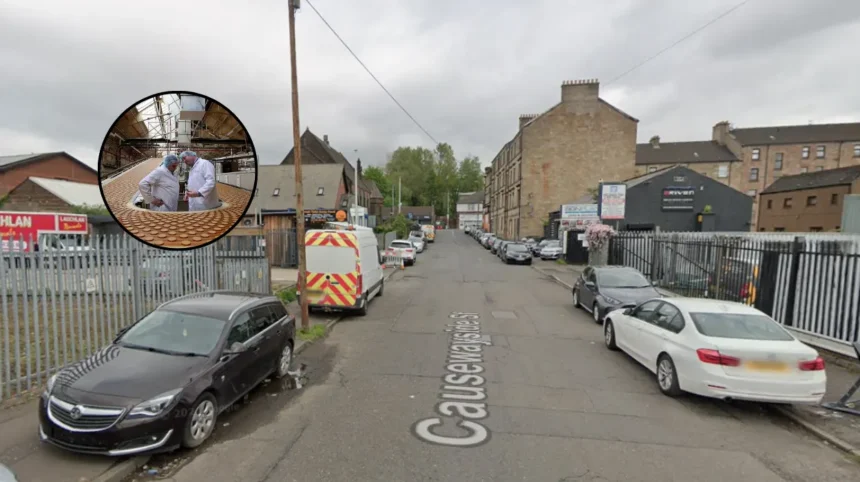
- Glasgow’s draft development plan earmarks the former McVitie’s factory site in Tollcross for housing.
- The plan says more than 200 homes could be built on the land.
- Pladis announced in 2021 that it would close the biscuit factory because of excess capacity in the UK.
- Around 500 jobs were lost when the factory shut in 2022.
- The site was reportedly sold to Clowes Developments in 2024, and demolition work has already taken place.
- The site is currently classified for industrial use, but the council says that no one is likely to build a factory there now.
- Clowes Developments and Keepmoat Homes are listed as partners in the draft plan.
- The project is viewed as long term and could be delivered in the final three years of Glasgow’s 10-year plan.
Glasgow (Glasgow Express) May 25, 2026 – Glasgow’s former McVitie’s factory site in Tollcross has been earmarked for housing in the city’s draft development plan, with officials saying the land could support more than 200 homes. The site, once home to a major biscuit factory, is being reconsidered for residential use as Glasgow looks at areas where the existing land classification no longer matches what is likely to happen there. That approach fits the inverted pyramid structure recommended in news writing, where the most important facts are placed first.
Why is the site being considered for homes?
As reported in the material supplied, Pladis announced in 2021 that it would close the biscuit factory because of excess capacity in the UK. The factory closed in 2022 and around 500 jobs were lost, which makes the site one of the more significant vacant industrial locations in the area. The site was reportedly sold to Clowes Developments in 2024, and demolition work has already been carried out. Those details help explain why the land is now being looked at for a different use rather than another industrial operation.
The draft plan says the redevelopment is a long-term project and may be delivered in the final three years of the city’s 10-year plan. Clowes Developments and Keepmoat Homes are listed as partners, which indicates that the proposal is not just a theoretical land designation but a project with named development interests attached. The plan is due to go out to public consultation later this year, meaning residents and other stakeholders will still have an opportunity to comment before anything is finalised.
What did councillors say?
Cllr Ruairi Kelly, the SNP convener for housing, development, built heritage and land use, said the site is currently zoned for industrial use, but argued that the classification no longer reflects likely demand. He said, “At the minute, it’s zoned for industrial [use], but nobody is going to build a factory now.” He added that the council is reviewing places where land use categories “no longer fits what is likely to be delivered” because “times have changed and the use of the city has changed” and “what people expect from it is different now.” That quote frames the council’s position as a planning adjustment rather than a sudden policy shift.
The wider planning context is important here. News writing guidance stresses the need to include the who, what, where, when, why and how, along with attribution and neutral reporting. In this case, the “who” is Glasgow City Council and the named development partners; the “what” is the possible redevelopment for housing; the “where” is the former McVitie’s site in Tollcross; the “when” is the draft plan period and coming consultation; the “why” is the land’s changing suitability for industrial use; and the “how” is through the city’s 10-year development framework.
What is the planning background?
The former McVitie’s site has moved through several stages: factory closure, job losses, sale, and now proposed residential redevelopment. The site’s history matters because it shows how a long-established industrial plot can become available for other uses once the original employer leaves. The council’s draft plan appears to treat the site as part of a broader reassessment of brownfield or previously industrial land across Glasgow.
The draft plan does not mean construction will begin immediately. It only signals that the site is being formally considered for housing and that the city believes the location may be suitable for that purpose. Public consultation later this year will be a key step, because it is during consultation that the council is likely to hear objections, support, practical concerns and design suggestions from local people and interested groups.
Explore More Local Glasgow News
Glasgow heatwave warning as Met Office forecasts 26C, 2026
Barklove Returns to SWG3 for Dog Festival, Glasgow 2026
Why does this matter locally?
For Tollcross and nearby communities, the proposal could eventually bring new homes to a site that no longer functions as a factory. If delivered, more than 200 homes would add to the city’s housing supply and could change the look and use of the area over time. The shift also reflects a wider urban trend, where disused industrial land is repurposed for housing when manufacturing activity declines.
At the same time, any redevelopment of this scale can raise questions about transport, infrastructure, local services and the character of the neighbourhood. The draft plan’s long timeframe suggests these issues are likely to be debated before a final scheme is approved. Because the project is still at the plan stage, the most accurate description is that housing is being proposed, not that housing has already been confirmed.
Background of the development
The McVitie’s factory in Tollcross was once a major industrial employer in Glasgow before Pladis announced its closure in 2021 due to excess capacity in the UK. The factory shut in 2022, leading to about 500 job losses, and the site later changed hands, with reports saying it was sold to Clowes Developments in 2024. Since then, demolition work has been carried out, and the land has entered the city’s planning discussion as a possible housing site.
The current proposal sits within Glasgow’s wider draft development plan, which is designed to guide land use over a 10-year period. In that context, the former biscuit factory site is being considered as one example of industrial land that may now be better suited to residential development. That makes the site part of a broader city planning conversation, rather than a standalone one-off decision.
Prediction
For local residents, the likely impact of this development is gradual rather than immediate, because the project is still in the draft-plan stage and would sit within a long-term timetable. If the proposal moves forward, Tollcross could see new housing, greater land use change and possibly more pressure on local infrastructure, depending on the final design and scale.
For the broader audience, the development may be seen as part of Glasgow’s ongoing shift from older industrial land uses towards housing-led regeneration. That could support city housing targets, but it may also prompt debate about how much former industrial land should be preserved for employment uses versus converted for homes. Because the council has already signalled that the industrial classification may no longer fit current realities, the direction of travel appears to favour residential redevelopment if consultation and planning approvals support it.