Key Points
- A London Gatwick-bound EasyJet service was forced to halt its take-off procedure and return to the gate at Glasgow Airport.
- The pilot aborted the movement while taxiing toward the runway after a passenger began behaving disruptively on board.
- Police Scotland officers were scrambled to the tarmac around 2.50pm on Saturday, September 19, 2026.
- Authorities later confirmed that despite the heavy police response, no formal complaints were made and no arrests resulted from the incident.
- The flight, originally scheduled to depart at 2.40pm, experienced a delay of nearly an hour before finally taking off at 3.38pm.
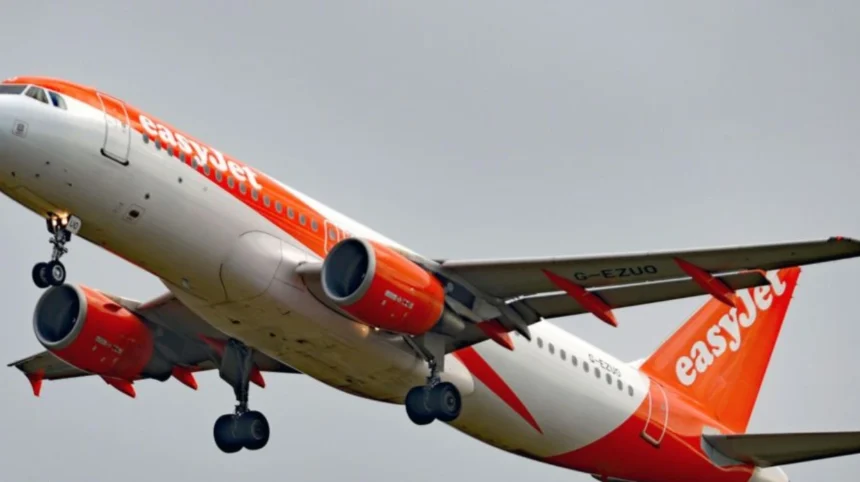
Glasgow (Glasgow Express) September 19, 2026 — Glasgow Airport became the centre of an unexpected security response when an outbound flight bound for the English capital was abruptly halted on the tarmac. As reported by Kevin Maguire of The National, a plane at Glasgow Airport was forced to return to its gate earlier where it was met by a police crew. The scheduled EasyJet service heading toward London Gatwick was actively taxiing and approaching the runway when the pilot suddenly aborted the movement, announcing over the intercom that a problem had arisen on board.
Witnesses on the aircraft noted that the sudden turnaround caught passengers by surprise, as everyone anticipated a routine departure before the pilot intervened. Upon returning to the stand, a heavy police presence materialized on the tarmac. According to reports from local media outlets, a police van accompanied by roughly half a dozen officers waited near the aircraft to address a passenger exhibiting disruptive behaviour.
How Did Passengers and Crew Respond to the Passenger Removal?
Once the aircraft was safely docked back at the gate, mobile boarding steps were immediately brought out to facilitate the removal of the individual. As detailed by eyewitness accounts given to local reporters, tension in the cabin dissipated into a notable reaction from travellers. Passengers seated near the front of the plane reportedly started clapping as the disruptive individual was escorted off the aircraft and placed directly into a waiting police vehicle.
An EasyJet spokesperson elaborated on the operational protocol followed during the event, stating that a flight from Glasgow to London Gatwick returned to stand prior to departure and was met by police due to a passenger behaving disruptively on board. The airline emphasized that once the passenger left the aircraft, the flight was cleared to continue its journey to London Gatwick.
Furthermore, the airline stressed the training and preparedness of its personnel. Cabin crew members are rigorously trained to assess all situations and to act quickly and appropriately to ensure that the safety of the flight and other customers is not compromised at any time. EasyJet reiterated its firm stance on conduct, noting that management takes such incidents very seriously and does not tolerate disruptive behaviour on board, keeping the safety and wellbeing of customers and crew as the highest priority.
What Official Statements Were Released by Law Enforcement?
Following the swift intervention of ground staff and law enforcement, authorities evaluated the situation on the tarmac to determine if criminal charges were warranted. A Police Scotland spokesperson provided clarification on the nature of the response, stating:
“Around 2.50pm on Saturday, September 19, 2026, we received a report of a disruptive passenger on a flight that had departed from Glasgow Airport”.
Officers attended the scene promptly, but law enforcement confirmed that no formal complaints were ultimately made by the airline crew or affected parties. Despite the considerable visible police presence and the operational disruption on the runway, authorities confirmed that no arrests were made as a result of the incident.
With the individual safely removed and local authorities standing down, the flight schedule resumed with minimal long-term disruption. The affected aircraft eventually departed from Glasgow Airport at approximately 3.38pm, pushing back roughly an hour behind its initial 2.40pm timetable, before successfully completing its journey down to London Gatwick.
Background of the Particular Development
In recent years, commercial aviation has faced an increasing frequency of disruptive passenger incidents across British and international airspace. Aviation authorities, including the UK Civil Aviation Authority, have consistently emphasized zero-tolerance policies regarding unruly behavior on commercial aircraft. Airlines have intensified crew training programs focusing on de-escalation, rapid communication with ground security, and immediate coordination with local law enforcement agencies like Police Scotland. Ground protocols dictate that any threat to cabin harmony—whether perceived or real—must be addressed before a plane reaches the active runway phase to prevent mid-air emergencies. Consequently, standard operating procedures now routinely involve returning to the departure gate if a passenger fails to comply with safety instructions, ensuring that air travel security remains uncompromised.
Prediction
This development highlights how strictly airports and airlines manage passenger compliance, which will likely affect regular travellers through increased vigilance, prompt ground interventions, and zero tolerance for unruly behavior. For frequent flyers using Scottish airports, such incidents underscore that airlines and local police will act swiftly to prioritize collective cabin safety, potentially reducing tolerance thresholds for disruptive conduct and leading to brief, managed flight delays rather than prolonged security threats.