Key Points
- Education Secretary Lucy Powell criticised broadcasters for airing Russell Brand’s prison message.
- Brand’s wife, Laura Gallacher, read the message on the couple’s Sunday Service programme.
- Brand said he was not guilty of the offences for which he is serving a 10-and-a-half-year sentence.
- UK authorities are investigating whether the broadcast breached prison rules.
- The Government is reviewing possible changes to the age of sexual consent following wider safeguarding concerns.
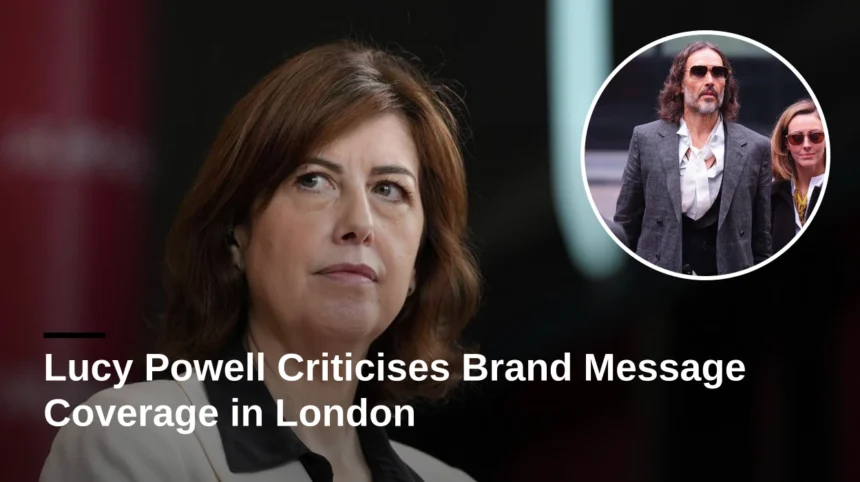
London (Glasgow Express) November 18, 2026 – Education Secretary Lucy Powell has criticised media organisations for “amplifying” a message from imprisoned comedian Russell Brand after his wife, Laura Gallacher, read it publicly on their Sunday Service programme. Brand, who is serving a 10-and-a-half-year sentence after being convicted of rape and sexual assault offences, used the message to maintain that he was not guilty. UK prison authorities are investigating whether the communication breached prison rules, while Downing Street has described it as “clearly appalling”.
Why did Lucy Powell criticise broadcasters?
As reported by BBC News and ITV News, Ms Powell told LBC Radio that she was “appalled” that mainstream media outlets had transmitted a clip of Ms Gallacher reading Brand’s message. She said the platform should not have been amplified and described Brand as showing no remorse or sensitivity towards victims.
The clip was carried or discussed by outlets including BBC Radio 4’s Today programme, ITV’s This Morning, Sky News, LBC and The News Agents podcast. Ms Powell’s comments focused on the decision to broadcast the message rather than on preventing public discussion of the investigation.
Ms Powell was previously a close aide to Ed Miliband when he appeared on Brand’s online show in 2015. She said that appearance took place in a different context, before the allegations and criminal proceedings involving Brand were known.
What is being investigated about Russell Brand’s message?
As reported by BBC News, ITV News and other outlets, the Ministry of Justice is examining whether Brand used a third party to communicate with the public in breach of prison rules. Downing Street said prisoners are prohibited from making statements that cause distress to victims, while contact with the media is permitted only in exceptional circumstances.
The Prime Minister’s spokesperson said prisoners could not evade those restrictions by having another person publish comments on their behalf and that action was expected if Brand was found to have broken the rules. The investigation remains ongoing, and no final outcome has been announced.
Ms Gallacher read the message on Sunday, in which Brand said he was not guilty of the offences for which he had been jailed. The broadcast prompted renewed public discussion about victims’ rights, prison communications and the responsibilities of media organisations when reporting statements by convicted offenders.
How does the issue relate to the age of consent debate?
Ms Powell said the Government was seriously considering possible changes to the law on the age of sexual consent. She told journalists after a policing conference that ministers needed to assess the effects of any change, its enforcement and its implications for relationships between teenagers.
People aged 16 and 17 can legally consent to sex with adults under current law, subject to protections covering abuse of trust and exploitation. Mia Latter has publicly alleged that Brand raped her when she was 16 and has called for legal reform. Allegations involving entertainer David Walliams have also contributed to the wider debate, although those allegations are separate from the prison-message investigation.
Ms Powell told BBC Radio 4’s Today programme that the law had not been changed for decades and that ministers were considering whether reform would be workable. She also said social attitudes and expectations around significantly older adults pursuing teenagers needed further examination.
What could the development mean for audiences?
For broadcasters and news audiences, the dispute is likely to sharpen scrutiny of how statements from convicted offenders are reported, particularly when those statements may distress victims or appear to challenge established court outcomes. Media organisations may face pressure to provide context rather than reproduce such messages in full.
For victims and survivors of sexual violence, the investigation and continuing coverage could increase concern about retraumatisation, while any confirmed prison-rule breach could lead to further restrictions on Brand’s communications. For policymakers, the case may add momentum to consultations about safeguarding older teenagers, but any legal change would depend on detailed review, victim testimony and an assessment of enforcement consequences.