Key Points
- Retrospective Planning Rejection: Glasgow City Council’s planning committee has once again turned down retrospective applications for unauthorised signs and advertisements at two Mòr Bakehouse locations in Glasgow city centre.
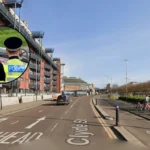
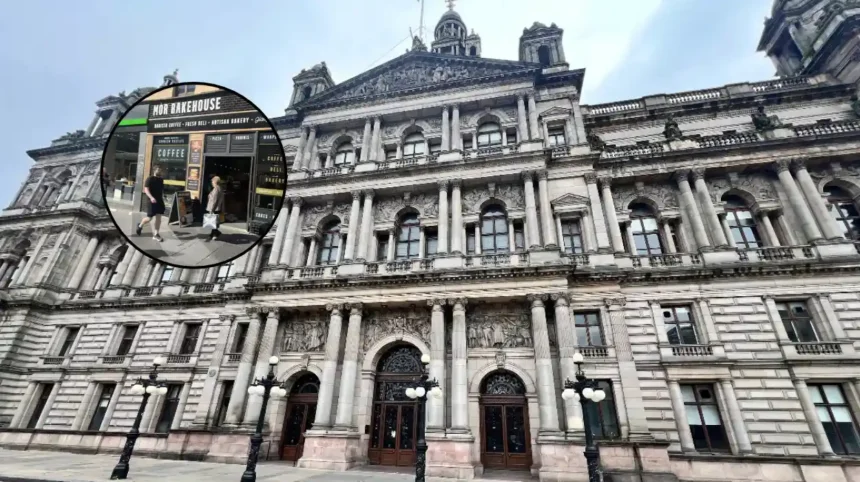
- Affected Locations: The disputed signage and visual elements are installed at venues on Argyle Street and Dundas Street, adjacent to Queen Street station.
- Council Planner Stance: Local planners argued that the council’s advertisement policy maintains a unified street frontage and stated that elements like four lightboxes on Dundas Street add “unnecessary visual clutter” to the B-listed building.
- Bakery’s Defense: Mòr Bakehouse contended that the local authority’s assessment was “subjective” and highlighted a customer survey indicating public support for the installed signs.
- History of Disagreements: After original retrospective applications were rejected in May, Mòr Bakehouse was granted approval for revised designs in early 2025; however, planners reported that additional non-compliant elements were subsequently added.
Glasgow (Glasgow Express) October 24, 2026 – A popular Glasgow bakery chain has suffered a fresh setback in its ongoing dispute with local authorities after Glasgow City Council rejected its latest retrospective applications for unauthorised signs and advertisements across two prominent city centre venues. The decision, delivered by the council’s planning committee on Tuesday, upholds previous enforcement assessments regarding properties situated on Argyle Street and Dundas Street, near Queen Street station.
Local planning officials determined that the installations failed to comply with established heritage and streetscape policies. According to council reports, the additions detract from the character of the historic structures, particularly at the Dundas Street venue, which holds a B-listed status. Conversely, the business maintained that the council’s position relies on subjective judgements, pointing to positive feedback gathered from consumer surveys to justify the retention of the signage.
Why Has Glasgow City Council Rejected the Bakery’s Signage Bids?
The core of the dispute centers on compliance with local authority design standards aimed at preserving the historic aesthetic of Glasgow’s commercial core. A council planner highlighted that strict adherence to the local advertisement policy “results in a much more unified street frontage”, preventing disparate visual features from disrupting the overall urban landscape.
At the Dundas Street venue, located near the busy transportation hub of Queen Street station, particular focus was drawn to four installed ‘lightboxes’. Planning officers described these features as “an incongruous addition to the historic frontage”, formally recording that the display introduces “unnecessary visual clutter to the detriment of the special architectural qualities of the listed building”.
The recent decision marks the continuation of a regulatory conflict that began earlier in the year. Retrospective bids for listed building consent and advertising permission were initialised and subsequently rejected by the planning committee in May. While the bakery chain was advised on how to achieve compliance—leading to approved revised designs in early 2025—officials noted in a subsequent report that additional non-approved elements were later fitted at both locations, triggering the latest refusal.
How Did Mòr Bakehouse Defend Its Signage Installations?
In response to the council’s planning assessments, Mòr Bakehouse urged Glasgow City Council to grant consent for the existing displays. Representatives for the bakery chain argued that the criteria used by municipal planners to evaluate visual harmony were largely “subjective” rather than definitive measures of public harm.
To bolster its case during the planning review, the firm presented findings from a customer survey. The internal research indicated that patrons supported the visual presence and branding of the venues, with the firm maintaining that the signage plays a functional role in guiding foot traffic and establishing clear commercial identity within busy pedestrian thoroughfares. Despite these representations, the planning committee ultimately determined that private survey data did not override statutory conservation regulations governing listed buildings and conservation areas.
What Is the Background of This Particular Development?
Glasgow City Council maintains stringent control over advertising, shopfront modifications, and visual displays within its city centre, particularly on designated conservation areas and listed structures. Under Scottish planning law, works that alter the character of listed buildings require explicit Listed Building Consent alongside standard planning or advertisement consents.
The dispute involving Mòr Bakehouse began when unauthorised alterations were identified at the Argyle Street and Dundas Street sites, prompting retrospective applications. Following the initial rejections by the planning committee in May, dialogue between local planning officers and the applicant led to the approval of compromised shopfront designs in early 2025.
The agreement was intended to resolve all outstanding regulatory issues by replacing non-compliant fixtures with designs deemed sensitive to the surrounding architecture. However, subsequent site inspections by council officials revealed that additional, unapproved branding elements—including illuminated lightboxes—had been added beyond the scope of the early 2025 consents. This discrepancy prompted the resubmission of retrospective bids, culminating in Tuesday’s formal rejection by elected members on the planning committee.
How Could This Decision Affect Local Businesses and City Centre Heritage?
The repeated rejection of Mòr Bakehouse’s retrospective applications establishes a clear precedent for retail operators, commercial property owners, and heritage advocates operating within Glasgow city centre.
Impact on High Street Businesses
For local retailers and food service operators, the decision underscores the strict enforceability of shopfront regulations across Glasgow. Businesses attempting to increase visibility or modernise their brand presence through illuminated fixtures or bold branding must strictly adhere to approved plans. Operating outside of granted permissions risks financial losses arising from redundant design investments, legal costs associated with repeated planning appeals, and the eventual expenditure required to dismantle non-compliant signage.
Impact on Heritage and Pedestrian Environment
For conservation groups, local residents, and city planners, the firm stance taken by the planning committee reinforces protections for Glasgow’s historic built environment. By enforcing uniform shopfront guidelines and curbing “unnecessary visual clutter”, the council aims to maintain the architectural integrity of B-listed buildings. This regulatory oversight ensures that commercial development on key thoroughfares like Argyle Street and Dundas Street does not compromise the historic character that defines the city centre’s aesthetic value.