Key Points
- Event Schedule: Anti-racism campaigners are organising a major counter-demonstration in Glasgow on Saturday, July 25, to directly oppose a gathering by the far-right group “Unite the Clans Scotland”.
- Organisational Backing: The counter-protest is spearheaded by Stand Up to Racism Scotland and supported by the Scottish Trades Union Congress (STUC), alongside multiple trade unions, faith organisations, and refugee advocacy groups.
- Protest Purpose: Organisers state the rally aims to confront rising anti-immigration disorder and promote a message of community solidarity across Glasgow.
- Far-Right Involvement: Reports indicate that “Unite the Clans Scotland” has extended invitations to far-right political groups, including Britain First, to participate in their demonstration.
- Security & Policing: Police Scotland are expected to deploy significant resources to manage the opposing crowds, following recent clashes and public order disruptions in urban centres across the region.
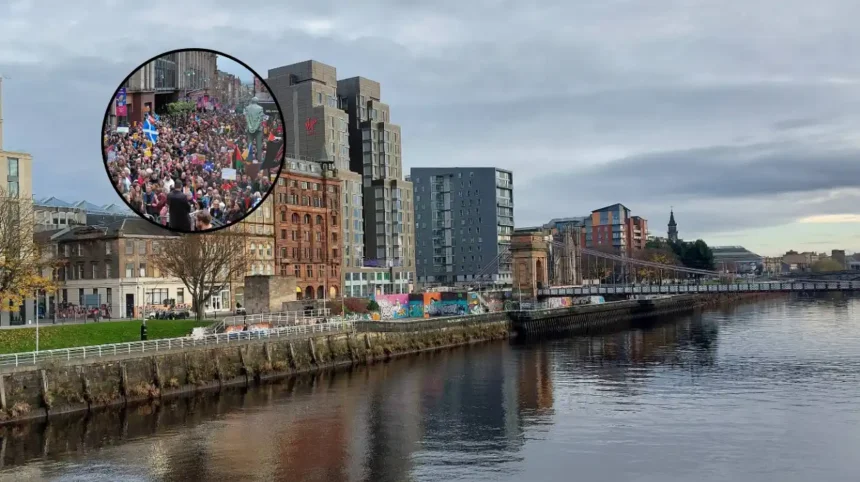
Glasgow (Glasgow Express) July 25, 2026 — Anti-racism campaigners, trade unionists, and civil society groups have gathered at McLennan Arch at Glasgow Green today, Saturday, July 25, to hold a mass counter-demonstration against a scheduled rally by the far-right group “Unite the Clans Scotland”. The mobilisation comes in direct response to weeks of escalating anti-immigration tensions and sporadic public disorder across Glasgow, with campaign organisers calling for a unified public stance against discrimination, anti-migrant rhetoric, and far-right intimidation.
- Key Points
- Why Are Anti-Racism Campaigners Mobilising in Glasgow Today?
- What Are the Key Concerns Surrounding ‘Unite the Clans’ and Far-Right Groups?
- How Are Local Trade Unions and Civic Groups Responding to the Tension?
- What Is The Background Of This Particular Development?
- How Could This Development Affect Local Communities And Public Order?
Why Are Anti-Racism Campaigners Mobilising in Glasgow Today?
As reported by media officer Jamie Richardson of the Scottish Trades Union Congress (STUC) media desk, trade union leaders stated that
“The fascist group ‘Unite the Clans Scotland’ have been building across our communities for their demonstration in Glasgow on 25th July and invited the likes of Britain First to join them”.
Organisers from Stand Up to Racism Scotland emphasised that the counter-rally was convened to demonstrate broad public rejection of extreme right-wing ideology and to stand in solidarity with refugee communities and ethnic minority residents across the city.
As detailed by anti-racism representative Sarah Collins for Stand Up to Racism, campaign spokespersons declared that
“Refugees and migrants are not to blame for the problems in society. The narrative that refugees are to blame lets off the hook the government policies that have caused the crisis in public services, health, housing or jobs”.
Campaigners have encouraged attendees to bring banners and trade union flags to present a visible alternative to the far-right assembly.
What Are the Key Concerns Surrounding ‘Unite the Clans’ and Far-Right Groups?
As reported by home affairs correspondent Mark McLaughlin of The Guardian, recent weeks have witnessed heightened friction between anti-immigration activists and counter-protesters, with tension mounting near public landmarks such as Buchanan Street and the Donald Dewar statue.
Local authorities and community leaders have voiced concerns that the involvement of figures associated with national far-right organisations, including Britain First, risks escalating verbal confrontation into physical disorder.
As stated by police division commanders for Police Scotland ahead of the weekend events, police authorities confirmed that
“Appropriate policing plans are in place to ensure public safety, manage public order, and facilitate peaceful protest while minimising disruption to the wider community.”
Officers have established designated assembly zones and protective barriers to maintain physical separation between opposing groups.
How Are Local Trade Unions and Civic Groups Responding to the Tension?
As reported by labor reporter David Ross of the Socialist Worker, nine major trade unions, alongside faith groups, community organisations, and refugee rights associations, officially endorsed the call for today’s counter-demonstration. Representatives from these bodies contend that collective public action is vital to prevent far-right movements from establishing a foothold in Scottish working-class communities.
As noted by regional organiser Mark Ferguson of UNISON Scotland, trade union delegates stated that
“There is no place for racists or fascists in Glasgow’s multi-racial, multi-cultural, and multi-religious community”.
Community leaders highlighted that Glasgow’s history of civic activism and integration remains central to its identity, urging residents to counter divisive political narratives through peaceful public assembly.
Explore More Local Glasgow News
Glasgow family lose everything after sewage floods home, Toryglen 2026
Five Glasgow Streets Close for Street Play Weekend | Glasgow 2026
What Is The Background Of This Particular Development?
The standoff in Glasgow reflects a broader pattern of civil unrest and political friction regarding immigration policies across the United Kingdom.
Over recent years, various nationalist and far-right coalitions—operating under umbrella labels such as “Unite the Clans” or “Pro-UK” rallies—have sought to organise demonstrations outside accommodation centres housing asylum seekers, civic square statues, and transport hubs.
In response, anti-racism networks such as Stand Up to Racism, backed by the STUC, have systematically organised counter-protests.
Similar opposing demonstrations took place in Edinburgh and London, where competing rallies frequently required heavy police presence to prevent direct physical clashes between marchers.
Local councils and law enforcement agencies in Scotland have consistently reiterated calls for calm, maintaining that while the right to peaceful assembly is protected under law, violent behavior and hate speech will be met with enforcement action.
How Could This Development Affect Local Communities And Public Order?
The ongoing series of demonstrations and counter-protests carries significant implications for local residents, city-centre businesses, and civic relations across Glasgow.
For local businesses and transport operators, major public gatherings at central sites like Glasgow Green, George Square, and Buchanan Street often necessitate street closures, altered public transit routes, and heightened security measures.
For refugee populations and ethnic minority communities, the visible presence of anti-immigration groups can increase concerns over personal safety and public harassment. Conversely, large counter-demonstrations organised by trade unions and community groups are intended to reassure vulnerable groups of public support.
Over the longer term, the interaction between these opposing movements will test the capacity of local authorities and police forces to balance freedom of expression with community cohesion and public safety.
Coverage of previous community responses and public gatherings during anti-racism demonstrations in the city can be viewed in this Glasgow Anti-Racist Demonstration Coverage video.
This video provides important context on how Glasgow residents and police authorities handled public safety and anti-racism rallies during past periods of heightened civic tension.