Key Points
- A 71-year-old man was arrested in connection with the theft of the historic Sir Thomas Lipton Trophy from the Riverside Museum in Glasgow.
- Police Scotland confirmed that the suspect was subsequently released without charge, with active enquiries into the break-in remaining ongoing.
- The high-profile incident occurred on Thursday, 23 October 2025, when the trophy was stolen from a display case inside the Pointhouse Place venue.
- Law enforcement officials continue to appeal to members of the public for any information that could assist in identifying the perpetrators or recovering the artifact.
Glasgow (Glasgow Express) November 6, 2026 – Police Scotland have confirmed that a 71-year-old man arrested in connection with the high-profile theft of the historic Lipton Cup from Glasgow’s Riverside Museum has been released without charge. The arrest followed a police investigation into a housebreaking report lodged on Thursday, 23 October 2025, after museum staff discovered that a display case at the Pointhouse Place facility had been breached and the rare silver artifact taken. Police authorities confirmed that despite the suspect’s release, active enquiries remain ongoing and law enforcement officers are urging anyone with potential information or eyewitness accounts to come forward immediately.
What Are the Key Findings in the Investigation into the Riverside Museum Theft?
The investigation commenced immediately after museum staff and security personnel identified the breach within the Riverside Museum premises on 23 October 2025. Officers responding to the incident confirmed that a housebreaking had taken place, specifically targeting the secure display housing the Sir Thomas Lipton Trophy. The area surrounding the display was cordoned off as forensic specialists conducted preliminary examinations to gather trace evidence.
Following preliminary field enquiries, Police Scotland executed an operational intervention resulting in the detention of the 71-year-old individual. However, after extensive questioning and formal procedural assessments, investigators determined that there was insufficient evidence to bring formal charges against the individual at this stage. The man was subsequently released from custody without charge, and officers have resumed tracking alternative leads to establish the precise chain of events leading up to the security compromise.
How Have Police Scotland and Public Officials Responded to the Ongoing Case?
As reported by law enforcement correspondents covering the incident, Police Scotland representatives issued an explicit appeal for public assistance in tracing the missing artifact and identifying those responsible for the break-in.
Spokespersons for Police Scotland emphasized that the investigation is actively progressing and underlined the significance of public cooperation in resolving historical property thefts. Investigating officers noted that anyone who observed suspicious behavior around Pointhouse Place or the immediate perimeter of the Riverside Museum around the time of the incident should report their observations to police authorities.
Museum management and regional cultural custodians have expressed deep concern over the loss of the exhibit, noting that internal security protocols are undergoing comprehensive review alongside the police investigation.
Background of the Particular Development
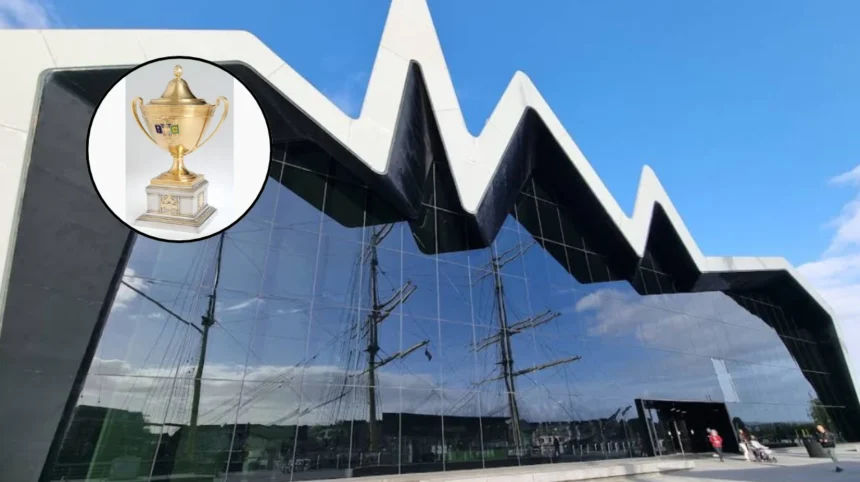
The Lipton Cup, formally recognized as the Sir Thomas Lipton Trophy, holds considerable historical significance within international sporting heritage and Scottish socio-industrial history. Commissioned by the Glasgow-born grocery magnate and passion-driven yachtsman Sir Thomas Lipton in the early 20th century, the trophy represents a crucial chapter in the history of international competitive sailing and early attempts to establish global sporting championships.
Sir Thomas Lipton, renowned for establishing the Lipton tea brand, made five persistent attempts between 1899 and 1930 to win the prestigious America’s Cup representing the Royal Ulster Yacht Club. Although he never succeeded in capturing the America’s Cup itself, his sportsmanship earned him worldwide acclaim and a specially created trophy for “the best loser.” Beyond his America’s Cup endeavors, Lipton commissioned and donated multiple silver trophies—commonly referred to as Lipton Cups—to foster football and sailing competitions globally, including pioneering international football tournaments in Italy in 1909 and 1911.
The specific Lipton Cup housed at the Riverside Museum served as a centerpiece within Glasgow’s extensive transport and travel heritage collections. The Riverside Museum, designed by Zaha Hadid Architects and opened on the banks of the River Clyde in 2011, displays thousands of historic objects illustrating Glasgow’s maritime, industrial, and transport legacies. The theft of the trophy represents a notable breach of security at one of Scotland’s premier cultural institutions, raising questions about museum infrastructure protection for irreplaceable municipal artifacts.
How Can This Development Affect Museum Visitors and Cultural Heritage Sector Stakeholders?
This development directly impacts multiple distinct audiences, ranging from local museum patrons and cultural historians to municipal security authorities and international insurance underwriters.
Impact on Museum Visitors and the Local Community
For daily visitors, educational groups, and regional residents, the theft of the Lipton Cup results in the immediate loss of access to a key piece of public heritage. Visitors to the Riverside Museum will experience heightened security measures, potential closures of specific display areas during ongoing forensic evaluations, and a visible increase in security personnel. The loss of high-value historical artifacts also diminishes the educational scope of public exhibits, depriving community members of direct engagement with local industrial history.
Impact on Cultural Heritage Institutions and Security Protocols
For administrators, curators, and security directors across Scottish and broader UK cultural institutions, this event acts as a critical signal to reassess facility vulnerabilities. Museums housing high-value metallic or historical artifacts are likely to undertake immediate audits of perimeter security, motion detection systems, and display glass specifications. The fact that a housebreaking occurred at a major facility could prompt institutions to implement stricter access controls, increase overnight security staffing, and upgrade surveillance coverage.
Impact on the Art, Antiques, and Insurance Sectors
For art loss registries, heritage crime investigators, and insurance brokers, the release of the suspect without charge indicates that the stolen artifact remains unaccounted for in the illicit market. Specialized law enforcement units will focus on monitoring private auction networks, online trade platforms, and antique dealerships to prevent the trophy from being illicitly sold or melted down for precious metal value. Insurance underwriters covering public collections may re-evaluate risk profiles and premium structures for high-profile displays, potentially leading to increased operational costs for public museums.