

Key Points
- Glasgow City Council Proposal: The council has officially informed the Scottish Government of its preference to demolish the Woodside Viaducts on the M8.
- Three Primary Options: Transport Scotland is currently consulting on whether to repair, replace, or remove the aging structures.
- Rising Maintenance Costs: Temporary propping and ongoing maintenance at the viaducts are currently estimated to cost up to £150 million.
- Regeneration Potential: City transport chief Councillor Angus Millar argues that removal presents a “major” opportunity to reconnect the city centre with north Glasgow.
- Transport Scotland Consultation: The national agency is weighing the long-term structural integrity of the motorway against the city’s net-zero and urban design goals.
Glasgow City Council (Glasgow Express) May 14, 2026 — Glasgow City Council has formally backed the demolition of a significant section of the M8 motorway, arguing that removing the Woodside Viaducts offers a “major” opportunity for urban regeneration. In a formal submission to the Scottish Government, city officials expressed a clear preference for the “removal” option among three potential futures for the elevated motorway, which has been plagued by structural issues and spiralling maintenance costs. This stance places the local authority at the forefront of a national debate regarding the future of 1960s-era infrastructure and its role in a modern, climate-conscious city.
- Key Points
- Will Demolishing the M8 Viaducts Transform Glasgow’s City Centre?
- What Are the Three Options Proposed by Transport Scotland?
- Why Does Glasgow City Council Prefer Removal Over Repair?
- How Much Will the Different M8 Solutions Cost?
- What Role Does the Woodside Viaduct Play in Scotland’s Infrastructure?
- Background of the M8 Woodside Viaducts Development
- Prediction: How This Development Could Affect Glasgow Residents and Commuters
Will Demolishing the M8 Viaducts Transform Glasgow’s City Centre?
As reported by Catriona Stewart of The Herald, Glasgow’s transport convener, Councillor Angus Millar, has asserted that the removal of the Woodside Viaducts represents a transformative moment for the city. According to Stewart’s reporting, Millar believes the project could “unlock significant land for development” and repair the “severed” connections between the uk/local/city-centre/">city centre and the communities of the north, such as Sighthill and Port Dundas.
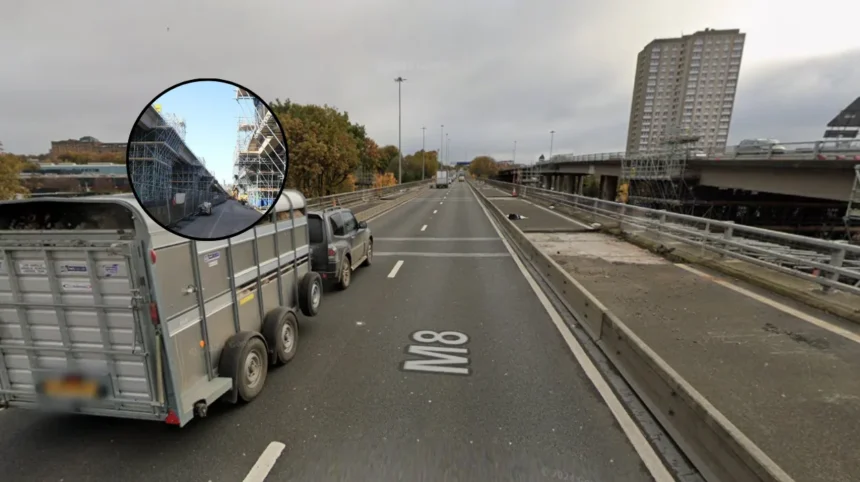
The Woodside Viaducts, which carry the M8 through the Charing Cross and Woodside areas, have been under intensive monitoring and temporary repair for several years.
Writing for Glasgow Live, journalist Sarah Campbell noted that the temporary works currently in place are costing taxpayers approximately £150 million. This high price tag for a “stop-gap” solution has intensified pressure on Transport Scotland to reach a permanent decision.
What Are the Three Options Proposed by Transport Scotland?
The national transport agency, Transport Scotland, is currently leading a consultation process to determine the fate of the infrastructure. As detailed by Douglas Fraser, Business and Economy Editor for BBC Scotland, the three core options on the table are:
- Repair: Extending the life of the existing 1970s structures through comprehensive refurbishment.
- Replacement: Demolishing the current viaducts and building new, modern elevated roadways in their place.
- Removal: Permanently dismantling the viaducts and rerouting traffic, potentially replacing the motorway section with a surface-level boulevard or alternative transport corridors.
In the Daily Record, reporter John Ferguson highlighted that while “Repair” might seem the most immediate fix, the Council’s preference for “Removal” aligns with Glasgow’s broader “City Centre Strategy,” which aims to reduce car dominance and increase green space.
Why Does Glasgow City Council Prefer Removal Over Repair?
The rationale behind the Council’s bold stance is rooted in both economics and urban aesthetics. As reported by Fiona Stalker of BBC News, Councillor Millar stated that “the current configuration of the M8 acts as a physical and psychological barrier.” Millar argued that the viaducts have historically stifled growth in the north of the city.
According to documents reviewed by The Scotsman’s transport correspondent Alastair Dalton, the Council’s submission to the Scottish Government suggests that the removal of the viaducts would
“significantly contribute to the city’s net-zero targets.”
By removing the elevated motorway, the city hopes to encourage a shift toward public transport and active travel, such as cycling and walking.
However, the proposal is not without its critics. As noted by David Bol in The National, some business groups have expressed concern that removing a primary arterial route could lead to “gridlock” on surrounding streets.
In response to these concerns, a spokesperson for Glasgow City Council told The National that any removal would be “accompanied by a comprehensive redesigned transport network to ensure the city remains accessible.”
How Much Will the Different M8 Solutions Cost?
The financial implications of the project are vast. Vivienne Nicoll of the Glasgow Times reported that the £150 million already earmarked for temporary propping is just the beginning.
According to Nicoll, industry experts suggest that a full “Replacement” could cost upwards of £500 million, whereas “Removal” and the subsequent regeneration of the surface land could involve a multi-billion pound investment over several decades.
As reported by Kieran Andrews, Scottish Political Editor for The Times, the Scottish Government has yet to commit to a specific budget for the permanent solution.
Andrews noted that Cabinet Secretary for Transport, Fiona Hyslop, has stated that “all options are being considered with a focus on safety, value for money, and the environment.”
What Role Does the Woodside Viaduct Play in Scotland’s Infrastructure?
The Woodside Viaducts are a critical link in the M8, which is Scotland’s busiest motorway. According to data cited by Noor Mir in STV News, tens of thousands of vehicles cross these structures daily.
Consequently, any decision to remove them would require a massive shift in how freight and commuters move across the Central Belt.
As reported by Graeme Murray of Reach Scotland, Transport Scotland officials are wary of the impact on the national economy. Murray wrote that “the M8 is a vital artery for Scottish commerce,” and any disruption—or permanent closure—must be weighed against the potential for regional delays.
Background of the M8 Woodside Viaducts Development
The Woodside Viaducts were constructed in the late 1960s and early 1970s as part of the Glasgow Inner Ring Road project. This era of urban planning prioritised high-speed motorways directly through city centres, a trend that saw thousands of homes demolished in areas like Charing Cross and Anderston.
In recent decades, the concrete structures have shown signs of significant “alkali-silica reaction” (often referred to as ‘concrete cancer’) and reinforcement corrosion. In 2021, the situation became critical, leading to the installation of massive steel propping systems beneath the roadway to ensure it remained safe for use. These temporary supports have encroached on surface-level streets and car parks, creating an unsightly and restrictive environment in the Woodside and St George’s Cross areas. The current debate is the culmination of years of escalating maintenance costs and a shifting political landscape that now prioritises “place-making” over “car-carrying capacity.”
Prediction: How This Development Could Affect Glasgow Residents and Commuters
The decision regarding the M8 Woodside Viaducts will likely define Glasgow’s urban landscape for the next half-century.
For Local Residents: If the removal option is selected, residents in North Glasgow and the city centre can expect a decade of significant construction noise and disruption. However, the long-term result would likely be a dramatic increase in property values, improved air quality, and the creation of new parks and “active travel” routes.
The removal of the “concrete canopy” would likely stimulate local retail and hospitality as the area becomes more pedestrian-friendly.
For Commuters and Logistics Firms: The removal of this section of the M8 would necessitate a radical change in travel habits. Commuters who currently rely on the M8 to cross the city would likely face longer journey times on diverted routes or be forced to transition to the rail network.
For logistics and freight companies, the loss of this high-capacity link could increase operational costs, potentially leading to higher prices for goods delivered within the city. If “Repair” or “Replacement” is chosen instead, the status quo for drivers would be maintained, but the city would likely remain bifurcated, missing out on the “once-in-a-generation” chance to reclaim the land beneath the motorway.