
Key Points
- Glasgow City Council has officially “welcomed” plans by Boston Mayor Michelle Wu to formalise an international partnership between Glasgow and Boston as sister cities
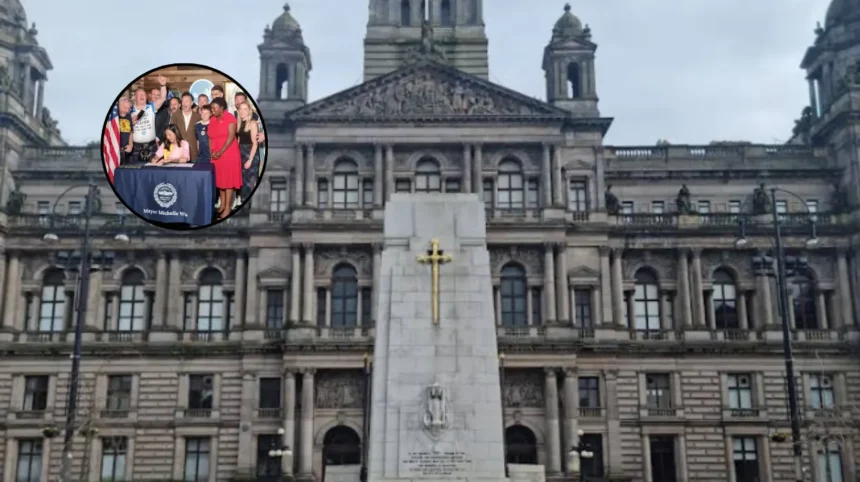
- Mayor Wu signed a letter of intent on Thursday at The Haven, Boston’s only dedicated Scottish bar, which served as the unofficial Tartan Army headquarters during the World Cup
- The Tartan Army has dominated Boston during Scotland’s first two World Cup 2026 group stage matches, capturing locals’ hearts
- A formal sister cities agreement will follow next April during Tartan Week, with Mayor Wu describing it as “an enduring partnership from there on out”
- Glasgow City Council stated the partnership reflects shared values and offers opportunities in innovation, education, sustainability, tourism, and economic development
- The announcement came amid World Cup romance between the two cities as Scottish fans flooded Boston
- Mayor Wu made the official move to twin the cities during the tournament’s group stage phase
Glasgow Council (Glasgow Express) June 19, 2026 – Glasgow City Council has said it “welcomes” plans by the Mayor of Boston, Michelle Wu, to formalise an international partnership between the two cities as sister cities, marking a significant diplomatic development triggered by the Tartan Army’s World Cup 2026 presence in Massachusetts.
- Key Points
- Why Did Glasgow City Council Choose to ‘Welcome’ This Partnership Instead of Simply Announcing It?
- How Does The Haven Bar’s Role as Tartan Army Headquarters Connect to the Sister Cities Announcement?
- What Specific Areas Will Glasgow and Boston Collaborate On Under the Sister Cities Agreement?
- When Will the Formal Sister Cities Agreement Be Signed and What Happens During Tartan Week?
- Who Are the Key Figures Driving This Boston-Glasgow Partnership and What Are Their Statements?
- What Does ‘Sister Cities’ Actually Mean in International Diplomacy and Why Is It Important?
- How Will the Tartan Army’s World Cup Performance Directly Lead to Permanent Civic Relations?
- Background: The History and Development of Boston-Glasgow Relations Leading to Sister Cities Status
- Prediction: How This Sister Cities Development Will affect Glasgow Residents, Businesses, and Cultural Institutions
As reported by the Glasgow Times, the council confirmed on Friday that Mayor Wu moved to officially make Boston and Glasgow sister cities by signing a letter of intent on Thursday at The Haven, Boston’s only dedicated Scottish bar.
The Haven has served as the unofficial Tartan Army headquarters throughout the World Cup tournament, making it a symbolic location for the announcement.
The Tartan Army has taken over Boston and captured the hearts of locals in the process during Scotland’s first two World Cup 2026 group stage matches.
Amid this World Cup romance between the cities, Mayor Wu formalised the relationship through the letter of intent, with a formal agreement scheduled to follow next April during Tartan Week.
Why Did Glasgow City Council Choose to ‘Welcome’ This Partnership Instead of Simply Announcing It?
On Friday, Glasgow City Council issued a statement saying the proposed partnership “reflects shared values between Glasgow and Boston, with opportunities to work more closely across key areas including innovation, education, sustainability, tourism, and economic development,” as reported by the Glasgow Times.
The council’s careful phrasing of “welcomes” rather than claiming full ownership of the initiative reflects that Mayor Wu initiated the movement.
As reported by Herald Scotland, Mayor Wu said the sister city agreement is “an enduring partnership from there on out,” emphasising the long-term nature of the relationship beyond the temporary World Cup connection.
The timing of the announcement during the World Cup group stage phase is significant. The Tartan Army’s presence in Boston created unexpected cultural diplomacy, with Scottish fans’ behaviour and enthusiasm resonating with Boston locals. This organic connection provided the foundation for Mayor Wu’s decision to pursue formalised relations.
How Does The Haven Bar’s Role as Tartan Army Headquarters Connect to the Sister Cities Announcement?
The Haven’s selection as the signing location demonstrates the bar’s central role in the Tartan Army’s World Cup experience. As Boston’s only dedicated Scottish bar,
The Haven became the natural gathering point for Scottish fans and the unofficial headquarters for the Tartan Army throughout the tournament.
Mayor Wu’s decision to sign the letter of intent at this location rather than at a formal government building shows recognition of the grassroots connection that developed between the cities.
The Haven served as where Boston locals and Scottish fans interacted, creating the personal relationships that underpinned the broader civic partnership.
The symbolic choice reinforces that this partnership emerged from fan culture and community interaction rather than purely diplomatic channels.
It acknowledges that the Tartan Army’s impact on Boston communities created the foundation for official civic relations.
What Specific Areas Will Glasgow and Boston Collaborate On Under the Sister Cities Agreement?
According to Glasgow City Council’s Friday statement, the partnership will focus on five key areas: innovation, education, sustainability, tourism, and economic development. These areas represent practical opportunities for both cities to benefit from the relationship.
Innovation collaboration could involve technology sectors, with both cities having strong startup ecosystems. Education partnerships might include university exchanges between Glasgow’s institutions and Boston’s world-renowned academic centres. Sustainability work could address climate challenges common to both port cities.
Tourism collaboration is particularly logical given the World Cup connection, with both cities able to promote each other to visitors.
Economic development opportunities could include business connections, investment pathways, and trade relationships between Scottish and American companies.
The council’s emphasis on “shared values” suggests these collaborations will be built on common approaches to governance, community development, and international engagement rather than purely transactional relationships.
When Will the Formal Sister Cities Agreement Be Signed and What Happens During Tartan Week?
As reported by Herald Scotland, a formal agreement will follow next April during Tartan Week. This timing provides approximately ten months between the letter of intent signed in June 2026 and the formal ceremony in April 2027.
Tartan Week is an annual celebration of Scottish culture that typically takes place in Boston, featuring events, parades, and cultural activities.
The choice to hold the formal signing during this existing celebration demonstrates how the partnership integrates with established Scottish-American cultural connections rather than creating something entirely new.
Mayor Wu’s statement that the agreement represents “an enduring partnership from there on out” suggests the formal signing will establish long-term institutional frameworks rather than a temporary arrangement. The letter of intent signed in June serves as the preliminary commitment, with the April 2027 formalisation creating binding agreements.
Who Are the Key Figures Driving This Boston-Glasgow Partnership and What Are Their Statements?
Boston Mayor Michelle Wu is the primary figure driving this initiative. As reported by Herald Scotland, she moved to officially make the cities sister cities and signed the letter of intent. Her statement that the agreement is
“an enduring partnership from there on out”
indicates her commitment to long-term relations.
Glasgow City Council representatives issued the welcoming statement on Friday, though specific individual names were not mentioned in the available coverage.
The council’s collective statement emphasised shared values and practical collaboration opportunities across five key sectors.
The Tartan Army themselves, though not individual figures, function as key stakeholders in this development.
Their behaviour and interactions with Boston locals created the foundation for Mayor Wu’s decision. The fans’ impact transformed from temporary World Cup presence to lasting civic relationship.
What Does ‘Sister Cities’ Actually Mean in International Diplomacy and Why Is It Important?
Sister cities, also known as twin cities, represent formalised partnerships between communities in different countries. These relationships typically involve cultural exchanges, economic cooperation, educational partnerships, and sometimes disaster relief cooperation.
The designation creates institutional frameworks for ongoing collaboration rather than one-off events. Cities with sister city relationships often establish joint committees, exchange programmes, and regular diplomatic visits. The relationship becomes part of each city’s international engagement strategy.
For Glasgow, adding Boston as a sister city expands its network of American partnerships. Boston represents a significant economic and cultural centre with strong historical connections to Scotland through immigration patterns. The partnership acknowledges these historical ties while creating new practical opportunities.
For Boston, the relationship with Glasgow connects the city to Scotland’s innovation economy, educational institutions, and cultural exports.
It also formally recognises the existing Scottish-American cultural connection that Tartan Week celebrates annually.
How Will the Tartan Army’s World Cup Performance Directly Lead to Permanent Civic Relations?
The Tartan Army’s World Cup 2026 performance in Boston created unexpected diplomatic outcomes. During Scotland’s first two group stage matches, Scottish fans flooded Boston, bringing their culture, enthusiasm, and distinctive behaviour patterns.
According to Glasgow Times coverage, the Tartan Army “captured the hearts of locals in the process.” This organic positive reception between fans and Boston residents created the人际关系 (personal relationships) that Mayor Wu recognised as worth formalising through official civic channels.
The transformation from temporary fan presence to permanent civic partnership demonstrates how sporting events can generate lasting diplomatic outcomes.
The World Cup served as an unintentional but effective public diplomacy tool, creating people-to-people connections that officials then formalised.
This pattern suggests future World Cups and sporting events could generate similar unexpected diplomatic outcomes, with fan behaviour influencing official international relations beyond traditional diplomatic channels.
Explore More Glasgow Council News
Old Glasgow Library Sold to Housing Association 2026 East End
Community Meetings to Save Queen’s Park Glasshouse Closure Glasgow 2026
Background: The History and Development of Boston-Glasgow Relations Leading to Sister Cities Status
The Boston-Glasgow partnership emerged from historical Scottish immigration patterns combined with contemporary sporting culture.
Boston has deep historical connections to Scotland through centuries of Scottish immigration, with Tartan Week already established as an annual celebration of this heritage.
The immediate catalyst was World Cup 2026, where Scotland’s first two group stage matches were hosted in Boston.
The Tartan Army’s presence during these matches created unprecedented interaction between Scottish fans and Boston locals. According to media coverage, this interaction was overwhelmingly positive, with fans “capturing the hearts of locals.”
Mayor Michelle Wu’s decision to sign the letter of intent at The Haven bar—Boston’s only Scottish bar and the unofficial Tartan Army headquarters—demonstrated recognition of grassroots connections.
The timing during the tournament’s group stage phase meant the partnership announcement occurred while the Tartan Army was still actively present in Boston.
Glasgow City Council’s response on Friday was carefully measured, using “welcomes” rather than claiming equal initiation. This reflects the reality that Mayor Wu initiated the movement, with Glasgow responding positively to her proposal.
The council’s emphasis on “shared values” and five collaboration areas indicates they see practical benefits beyond symbolic recognition.
The scheduled formal agreement in April 2027 during Tartan Week connects the new partnership to existing cultural celebrations, ensuring institutional continuity rather than creating entirely new frameworks.
Prediction: How This Sister Cities Development Will affect Glasgow Residents, Businesses, and Cultural Institutions
Glasgow residents will likely see increased opportunities for educational exchanges, tourism partnerships, and cultural programmes with Boston.
University students may gain access to exchange programmes with Boston’s prestigious academic institutions, while artists and cultural workers could benefit from partnership programmes.
Glasgow businesses, particularly in innovation and technology sectors, will gain formal access to Boston’s startup ecosystem and investment networks.
The economic development focus of the partnership suggests potential for business connections, trade relationships, and investment pathways between Scottish and American companies.
Tourism operators in Glasgow will benefit from formalised promotion with Boston, potentially increasing American visitor numbers.
The partnership acknowledges the existing tourism connection demonstrated by Tartan Army fans, now formalising it for broader tourism markets.
Cultural institutions including museums, galleries, and music organisations will gain partnership opportunities for exhibitions, performances, and collaborative programmes. The education focus suggests potential for academic exchanges and joint research programmes.
Sustainability initiatives may see collaboration on climate challenges common to both port cities, potentially bringing Boston’s environmental expertise to Glasgow’s sustainability programmes.
The partnership’s long-term nature, described as “enduring,” suggests these benefits will accumulate over years rather than appearing immediately.
Glasgow residents and businesses should expect gradual development of practical programmes rather than immediate changes.
The existing Scottish-American cultural connection through Tartan Week provides established infrastructure for the partnership, reducing implementation barriers and ensuring institutional support from both cities’ cultural organisations.