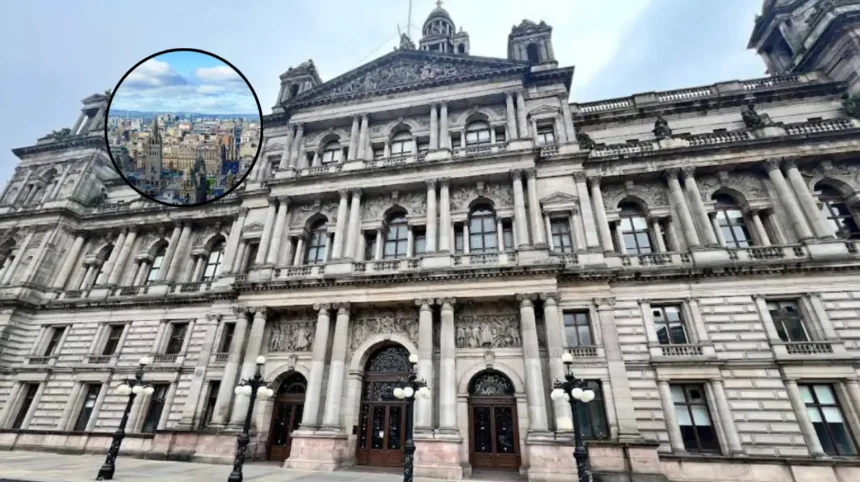
Key Points
- 30,000 New Homes: The new 10-year City Development Plan proposes opening up land for the construction of more than 30,000 homes across Glasgow.
- Economic Development: The strategy designates special economic development zones to generate jobs, drive local investment, and foster regional business growth.
- Environmental & Heritage Protection: Measures include safeguarding Glasgow’s architectural heritage, preserving green spaces, and protecting the natural environment.
- Active Travel & Infrastructure: The plan prioritises public transport expansion, active travel routes (cycling and walking), and the creation of a dedicated river park along the River Clyde.
- 12-Week Consultation: While city councillors have approved the blueprint, a 12-week public consultation phase will begin in late August for community feedback.
Glasgow Council (Glasgow Express) June 29, 2026 – Glasgow City Council has formally approved an ambitious 10-year development blueprint designed to completely reshape the city’s housing, economic landscape, and environmental infrastructure over the next decade. The strategy, which serves as the foundational planning framework for local authorities, aims to address the ongoing housing shortage by unlocking strategic land for tens of thousands of residential properties. Alongside residential expansions, the approved framework introduces targeted economic zones to facilitate job creation and accelerate the post-industrial regeneration of the metropolitan area.
As reported by STV News, the City Development Plan introduces a multi-faceted approach to urban growth, balancing rapid infrastructure development with rigorous conservation policies. Beyond commercial and residential construction, the council has committed to heightened protection for Glasgow’s historical and architectural heritage.
The blueprint outlines a comprehensive strategy to preserve public open spaces, expand green corridors, and enhance urban biodiversity, while simultaneously modernising public transport links to support a growing metropolitan population.
The local administration has emphasised that public collaboration will remain a critical element before the final legal execution of the plan.
Although elected members of the Glasgow City Council have officially voted to back the blueprint, the local government has scheduled a mandatory 12-week public consultation period.
Starting in late August, community groups, independent businesses, non-governmental organisations, and local residents will have the opportunity to submit formal feedback, propose amendments, and voice structural concerns regarding the long-term regional strategy.
What Are the Main Goals of the 10-Year Glasgow Blueprint?
The strategic core of the newly approved City Development Plan rests on four primary pillars: housing delivery, economic revitalization, sustainable transport, and environmental stewardship. By designating specific zones for targeted growth, the municipal authority hopes to establish a structured approach to urban expansion that avoids haphazard development.
According to official council documents released alongside the approval, a central objective is the development of a continuous river park along the River Clyde.
This project aims to transform the city’s historic waterfront into a accessible green corridor, integrating public walkways with natural flood management systems.
Additionally, the plan introduces stricter planning controls to protect listed buildings and conservation areas from disruptive commercial developments.
Active travel infrastructure is also heavily prioritised within the document. The council intends to allocate land and resources to create interconnected cycling networks and pedestrian-friendly pathways.
These pathways will directly link outlying residential neighbourhoods with central economic hubs, reducing reliance on private internal combustion vehicles and aligning municipal policy with broader national net-zero targets.
How Will the Plan Address Glasgow’s Housing and Employment Needs?
To counter long-standing housing pressures, the blueprint formally proposes opening up vast tracts of land for the construction of more than 30,000 new homes.
This housing target is intended to accommodate projected population growth and diversify the city’s available residential stock, spanning affordable housing, social renting options, and private developments.
On the economic front, the plan sets out specific guidelines for the creation of dedicated economic development areas.
These zones are strategically positioned to attract domestic and international investment, particularly in sectors such as digital technology, green energy, and advanced manufacturing.
By establishing these hubs, the council intends to stimulate sustainable job creation in sectors less vulnerable to macroeconomic volatility.
As documented by the STV News editorial team, Councillor Ruairi Kelly, the Convener for Development, Heritage, Housing and Land Use at Glasgow City Council, highlighted the integrated nature of the strategy. Commenting on the legislative approval, Councillor Ruairi Kelly stated:
“The new city development plan is the blueprint for Glasgow’s future, not only enabling the building of tens of thousands of new homes and new jobs, but creating better and more sustainable places throughout the city.”
Councillor Ruairi Kelly further noted the anticipated long-term financial impacts of the framework, adding:
“This work will make Glasgow a better place to live and attract the type of investment which will drive the city’s future economic growth.”
Background of the Glasgow City Development Framework
The formulation of a 10-year City Development Plan is a statutory requirement for Scottish local authorities under national planning legislation. It dictates how land can be used, which areas are protected from industrialisation, and where public infrastructure spending will be directed.
Glasgow’s previous planning iterations focused heavily on recovering from the decline of heavy manufacturing and shipbuilding industries along the Clyde, gradually transitioning the local economy toward service, tourism, and higher education sectors.
Over the past decade, Glasgow has faced compounding challenges, including an acute shortage of affordable urban housing, shifting post-pandemic retail trends in the city centre, and strict statutory obligations to reduce carbon emissions.
The newly approved blueprint represents an evolution of prior schemes, moving away from isolated zone planning toward an integrated “20-minute neighbourhood” model, where residents can access essential services, employment, and recreation without extensive travel.
Explore More Glasgow Council News
Glasgow council apology over Family C abuse case | Glasgow 2026
Glasgow Council Approves Budget, Police Officers and Fire Grant 2026
Prediction: How This Development Can Affect Local Residents and Businesses
The implementation of the 10-year blueprint is expected to significantly alter the socio-economic environment for Glasgow’s residents, property developers, and local businesses.
For residents, the influx of 30,000 new homes could help stabilise escalating rental costs and property values by increasing the aggregate supply of housing, making urban living more accessible to first-time buyers and working-class families.
The emphasis on active travel and public transport infrastructure will likely lower commuting costs and reduce traffic congestion in central districts, improving air quality and public health outcomes.
However, the multi-year construction phases required to build these networks may cause temporary disruptions, detours, and localized noise pollution in expanding neighbourhoods.
For the business community, the creation of designated economic development areas offers clear geographical targets for commercial expansion, potentially lowering barriers to entry through streamlined planning permissions in those zones.
Local retail and hospitality businesses stand to benefit from increased foot traffic generated by the Clyde river park and regenerated urban centres. Conversely, stricter architectural heritage protections may increase compliance costs for developers looking to modify existing historical structures, forcing a shift toward brownfield site regeneration.