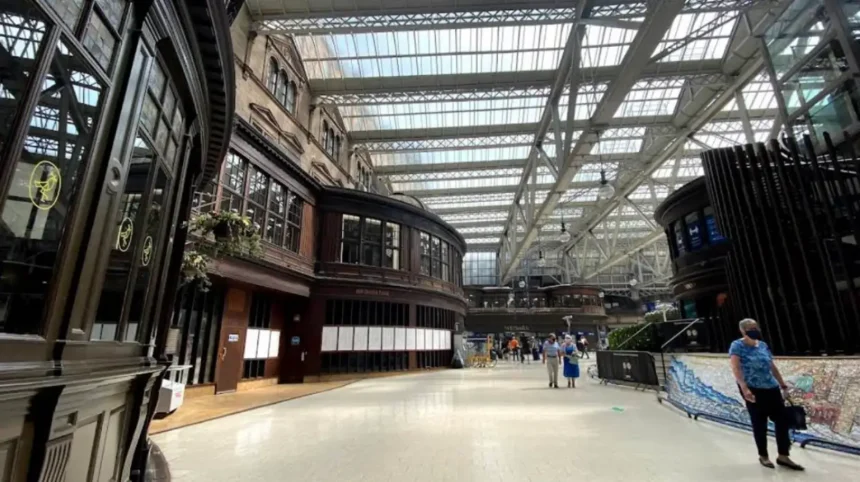
Glasgow Central Station is becoming more popular because it combines very high passenger demand, major station upgrades, stronger retail and customer facilities, and renewed public attention through media coverage. It remains Scotland’s busiest station and one of Britain’s busiest rail hubs, which keeps it central to travel, commuting, and city-centre activity.
- Why are more people using Glasgow Central Station?
- What changed at Glasgow Central recently?
- Why does location matter so much?
- How do station upgrades increase popularity?
- What role does media attention play?
- How important is Glasgow Central to the city?
- What numbers show its scale?
- Why does it matter now?
- What will keep it popular?
Why are more people using Glasgow Central Station?
Glasgow Central Station is popular because it serves a huge volume of daily rail users, sits at the heart of Glasgow’s transport network, and has recently received investment that improves comfort, access, and passenger flow. Its scale, location, and connectivity make it the city’s main rail gateway.
Glasgow Central opened in 1879 and has grown into the principal rail station for the city. Network Rail describes it as Scotland’s busiest station and the 11th busiest in Britain, which shows that its importance is structural rather than temporary. A station that handles this level of use naturally attracts more attention from passengers, businesses, and media.
The station also benefits from a central urban location. It connects Glasgow city centre with regional and long-distance routes, so it serves commuters, shoppers, tourists, and business travellers in the same space. That broad demand keeps it relevant across different travel patterns, not just peak-hour commuter traffic.
Recent improvements have also raised the station’s profile. A £5 million upgrade has been underway to improve retail space, accessibility, station reception, and passenger amenities. When a major transport hub gets visible investment, public interest rises because the experience becomes easier to use and more attractive to spend time in.

What changed at Glasgow Central recently?
Recent change at Glasgow Central centres on physical upgrades, better customer facilities, and a refreshed station environment. These improvements include a new ticket office and first-class lounge, altered retail layout, a multi-faith room, and stronger accessibility links across the station.
Network Rail’s upgrade programme at Glasgow Central includes more than just cosmetic changes. It reconfigures retail units, expands commercial choice, improves access to Caledonian Chambers, and creates a new step-free station reception. These changes matter because passengers value speed, clarity, and comfort in a busy station environment.
The new Avanti West Coast ticket office and first-class lounge are part of the same wider improvement push. The revised space adds welcome desks, ticket machines, and information screens, which improves the station’s function as a service point rather than a pure transit corridor. That kind of upgrade changes how people experience the station and how often they return to it.
There is also a social and accessibility dimension. The creation of a multi-faith room and step-free reception improves inclusion and usability for a wider range of travellers. In a city-centre station with heavy footfall, such features strengthen the station’s appeal beyond basic transport use.
Why does location matter so much?
Location matters because Glasgow Central sits directly in the city centre, near shops, workplaces, hotels, and tourist routes. That position makes it useful for everyday travel and for visitors who want fast access to the main commercial core of Glasgow.
A central station gains demand when it sits inside a dense activity zone. Glasgow Central does exactly that. People use it to reach offices, retail districts, event venues, and connections to the wider rail network. The station is not isolated on the edge of the city; it is embedded in the city’s busiest pedestrian and commercial area.
The station’s historic layout also contributes to its visibility. Caledonian Chambers and the main concourse give the station a strong architectural identity, which makes it stand out among modern transport buildings. In practical terms, this creates a landmark effect. People remember it, meet there, and treat it as a fixed reference point in the city.
Central stations also gather more footfall because they sit at the junction of multiple travel purposes. A single passenger may use Glasgow Central for commuting, shopping, a day trip, or onward travel. That mix keeps demand stable and broad.
How do station upgrades increase popularity?
Station upgrades increase popularity by reducing friction. Better signage, easier access, improved retail, modern ticketing, and clearer customer support make the station faster and more comfortable to use.
Travel behaviour responds strongly to convenience. When passengers can find information quickly, buy tickets easily, and move through a station without confusion, the station becomes a more attractive option. Glasgow Central’s upgrade programme focuses directly on those features. That creates a better experience for regular users and first-time visitors alike.
Retail changes also matter. The station’s refreshed layout increases the commercial offering and rebalances shop space. In a major station, retail is not a side issue. Food, drink, and convenience shopping shape dwell time and overall passenger satisfaction. A station that feels active and well-served often becomes a place people choose more readily.
Accessibility improvements add another layer. Step-free reception and better linkage with adjacent spaces create a station that serves more passengers more efficiently. For older travellers, passengers with luggage, and people with mobility needs, these changes are decisive.
What role does media attention play?
Media attention amplifies popularity by turning an already important station into a public talking point. Glasgow Central has gained extra visibility through television coverage and reporting on its size, history, and upgrade work.
Network Rail notes that Glasgow Central has been the focus of the television series Inside Central Station, which follows staff inside Scotland’s busiest station. That kind of exposure shifts the station from a transport asset into a familiar public subject. When people see the station on screen, they notice it more in daily life.
Media coverage also reinforces the station’s reputation for scale and activity. Reports that describe it as one of the UK’s busiest stations strengthen the perception that it is a major national transport site. Public perception matters because popular stations often attract more curiosity, more visits, and more repeat use.
Coverage of upgrades has the same effect. When a station receives a visible investment, it becomes a story about urban improvement, not just rail operations. That raises awareness among local audiences who may not follow transport news closely.
How important is Glasgow Central to the city?
Glasgow Central is one of the city’s most important transport assets because it links Glasgow to the rest of Scotland and to the wider UK rail network. Its scale, passenger numbers, and central position make it a core part of the city’s economy and movement patterns.
Large stations influence cities in several ways. They support commuting, tourism, retail activity, and access to jobs. Glasgow Central performs all of those roles at once. That is why changes at the station have city-wide effects, not just transport effects.
The station’s status as Scotland’s busiest is especially significant. High passenger volume supports shops, food outlets, service jobs, and related urban activity nearby. It also makes the surrounding area more valuable because people pass through it every day.
The station’s importance is also historical. Since opening in 1879, it has remained central to Glasgow’s growth and connection to other parts of the country. Long-lived infrastructure often becomes more popular over time because it becomes embedded in the routines of generations of users.
What numbers show its scale?
The clearest scale indicators are its position as Scotland’s busiest station and the 11th busiest in Britain, plus reports of passenger volumes reaching around 38 million in some public references. These figures show sustained, mass-market relevance.
Network Rail’s ranking is the most dependable source here. Being Scotland’s busiest station and the 11th busiest in Britain places Glasgow Central in a top tier of rail hubs. That means it is not just locally important; it is nationally significant.
Public reporting has also cited passenger numbers around 38 million. Even where figures come from media reporting rather than official statistical releases, the message is consistent: Glasgow Central processes very large numbers of travellers every year. Such scale supports constant demand for services, staff, retail, and upgrades.
Large usage numbers also explain why investment keeps returning to the station. Infrastructure that handles this much traffic must be maintained and improved. The popularity is therefore partly a result of volume and partly a cause of further investment.

Why does it matter now?
It matters now because Glasgow Central sits at the intersection of travel demand, city-centre growth, and station modernisation. The combination of heritage, utility, and visible investment makes it more relevant to today’s passengers than a static historic station would be.
Evergreen popularity comes from usefulness. Glasgow Central remains useful because it connects people to places they need every day. It remains visible because it is large, historic, and central. It remains newsworthy because upgrades continue to improve how it works.
The station also fits current travel expectations. People want clearer information, better accessibility, and a smoother journey through busy public spaces. The recent station works directly address those expectations. That is a major reason the station feels more popular right now.
The long-term implication is simple. Glasgow Central is not gaining popularity from a single trend. It is gaining popularity because several strong factors are aligned at the same time: heavy demand, central location, heritage significance, media attention, and ongoing investment.
What will keep it popular?
Glasgow Central will stay popular as long as it remains the main rail gateway for the city and continues to improve passenger experience. Its future relevance depends on accessibility, service quality, station management, and its role in the wider transport network.
The station’s future is tied to its ability to handle large numbers of people efficiently. Continued investment in customer information, accessibility, and retail will keep it competitive as travel patterns change. In a busy city centre, passengers respond quickly to practical improvements.
Its historical identity also supports long-term appeal. Few stations combine scale, architecture, and civic importance in the same way. Glasgow Central does, and that gives it a durable place in the city’s identity. A station with that profile keeps drawing attention even when broader travel habits shift.
Why Is Glasgow Central Station Becoming More Popular?
Glasgow Central Station is becoming more popular because it combines heavy passenger demand, central location, major station upgrades, improved accessibility, and strong media visibility.