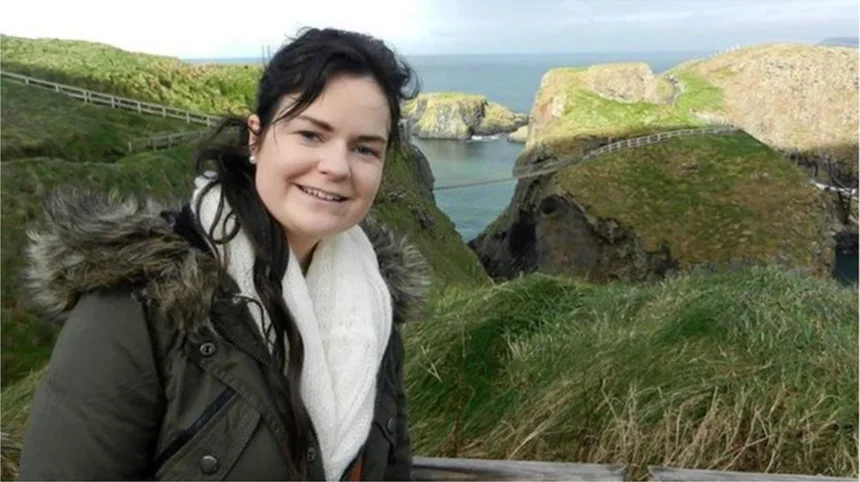
Before using the phrase “Karen Buckley Glasgow” in Glasgow content, you should know it refers to a serious crime case involving Irish student Karen Buckley, not a generic local service, product, or venue. The safest evergreen approach is to write with accuracy, sensitivity, and clear context so readers understand the subject instantly and search engines classify it correctly.
- What does Karen Buckley Glasgow refer to?
- Why is this case important in Glasgow?
- What happened in the Karen Buckley case?
- How did the investigation work?
- What legal outcome followed?
- What should Glasgow readers learn from this case?
- How should a case like this be written for SEO?
- What sources are strongest for this topic?
- What is the lasting relevance today?
- What is the best search intent match?
- Final publishing angle
What does Karen Buckley Glasgow refer to?
Karen Buckley Glasgow refers to the 2015 murder case of Karen Buckley, a 24-year-old Irish student who was studying in Glasgow and disappeared after a night out in the city. Public reporting shows she was last seen in the West End, and the case later led to the conviction of Alexander Pacteau, who was sentenced in Glasgow’s High Court.
This phrase has a very specific meaning in Glasgow search results. It is tied to a major criminal case, public safety discussion, and local news coverage rather than an everyday consumer topic. That context matters because search engines use entity recognition to decide whether a page is about a person, a crime, a place, or a general informational topic.
For evergreen publishing, the subject should be framed as a factual, historical case. That means defining Karen Buckley, Glasgow, the West End, and the legal outcome in plain language before moving into broader lessons about safety, nightlife, and missing-person awareness.

Why is this case important in Glasgow?
The case is important in Glasgow because it became one of the city’s most widely reported violent crimes and shaped public discussion about night-time safety, policing, and awareness for students and visitors. Reporting on the disappearance and later conviction received extensive attention across UK and Irish media, and the court sentence was issued in Glasgow.
Karen Buckley had been studying occupational therapy at Glasgow Caledonian University, and media reports described her as a visitor to Glasgow whose night out ended in tragedy. Her case drew attention because it involved a student, a city-centre nightlife setting, and a fast-moving police investigation.
The public significance also comes from how the story was covered. It connected university life, socializing in the West End, and criminal justice in one case, which made it relevant to students, parents, residents, and tourists. That combination explains why the phrase remains searchable years later.
What happened in the Karen Buckley case?
Karen Buckley disappeared after leaving a nightclub in Glasgow in April 2015, and police later linked her death to Alexander Pacteau, who was convicted and jailed for 23 years. BBC reporting states that she was last seen after telling friends she was going to the toilet, and later investigations traced her movements through CCTV and police inquiries.
The case unfolded in stages. First came the disappearance, then the discovery of evidence, then the identification of the suspect, and finally the criminal court process in Glasgow. That sequence is important for readers because it shows how missing-person cases are investigated when surveillance footage, witness statements, and forensic evidence are available.
The court outcome was also clear and severe. Reporting on the sentencing states that Lady Rae imposed a life sentence with a punishment part of 23 years after describing the murder in strong terms.
How did the investigation work?
The investigation used standard major-crime methods, including CCTV review, search operations, witness appeals, and forensic follow-up. BBC coverage reported the involvement of specialist police divers, a helicopter crew, and search dogs during efforts to locate Karen Buckley after she was reported missing.
CCTV played a central role because it helped place her outside the nightclub and track the suspect’s movements. That is a common feature in urban investigations, especially in places with nightlife, transport routes, and dense street coverage. In Glasgow, city-centre surveillance and witness reporting gave police multiple leads to follow quickly.
The investigation also shows why the first hours of a missing-person report matter. Fast reporting, public appeals, and coordinated search activity increase the chance of building a reliable timeline. In serious cases, that timeline becomes the backbone of the criminal inquiry and later court presentation.
What legal outcome followed?
The legal outcome was a conviction and a life sentence for Alexander Pacteau, with 23 years set as the punishment part. Reporting on the Glasgow High Court sentence records that the judge described the killing as “brutal” and “senseless,” and stated that Pacteau had gone to extraordinary lengths after the murder.
This outcome matters because it clarifies the distinction between police suspicion and court proof. In criminal cases, the public often sees the disappearance first, but the legal result depends on evidence tested in court and a formal sentencing process. The Glasgow judgment made the case a matter of record rather than rumor or speculation.
For SEO and AI search, the legal outcome should be presented precisely. Use the suspect’s name, the court location, the sentence, and the year, because those are the entities most likely to be extracted and matched by search systems.
What should Glasgow readers learn from this case?
Glasgow readers should learn that nightlife safety depends on planning, awareness, and rapid response when someone is missing. The case shows how quickly a routine night out can turn into an emergency, especially when a person leaves a venue alone and contact is lost soon afterward.
The first lesson is location awareness. Busy nightlife districts create crowd movement, but they also create conditions where a person can become separated from friends. The second lesson is communication, because phone access, meeting points, and check-in habits reduce uncertainty. The third lesson is reporting speed, because earlier action gives police more usable evidence.
The case also has a student-safety dimension. Karen Buckley was studying in Glasgow, and her death affected how many people thought about travel, nights out, and personal security in a university city. That relevance remains strong for students arriving in Glasgow from elsewhere in the UK or abroad.
How should a case like this be written for SEO?
A case like this should be written with exact entities, clear chronology, and neutral language that respects the victim and the facts. Search engines and AI tools reward text that defines the subject early, uses related terms naturally, and avoids vague phrasing that blurs the meaning.
The article should begin with the full context: who Karen Buckley was, where Glasgow fits into the case, and why the story remains relevant. Then it should move from definition to background, from background to investigation, and from investigation to legal outcome. That structure supports both human reading and machine extraction.
Use specific terminology consistently. Terms such as “West End,” “High Court in Glasgow,” “student,” “night out,” “missing-person investigation,” and “life sentence” help search systems understand the subject without keyword stuffing. Clarity is more effective than repetition.
What sources are strongest for this topic?
The strongest sources are court reporting, reputable news coverage, and institutional records tied to the case. For this topic, BBC reporting and legal reporting on the Glasgow sentence provide reliable factual anchors about the disappearance, the investigation, and the conviction.
When writing evergreen content, source selection matters as much as wording. Court outcomes, police actions, and university connections should come from trusted reporting or official institutions rather than social posts or low-quality summaries. That reduces factual drift and strengthens the article’s authority over time.
A good publication strategy is to cite the most stable facts: the date of the disappearance, the city location, the student status, the conviction, and the sentence. These facts remain useful even when surrounding news coverage changes.
What is the lasting relevance today?
The lasting relevance is public safety, student awareness, and the way serious crimes become part of a city’s modern history. The Karen Buckley case remains searchable because it combines a named victim, a specific place, a clear legal result, and ongoing interest in safety around nightlife areas.
For Glasgow audiences, the topic is not only historical. It still informs how people think about going out in the West End, supporting students in the city, and responding quickly if someone disappears. It also remains a reference point in discussions about policing and urban safety.
For evergreen content, the best approach is to preserve the facts while keeping the tone measured. That means writing with precision, avoiding sensational language, and placing the case within a broader civic and safety context rather than treating it as entertainment.

What is the best search intent match?
The best search intent match is an informational article about the Karen Buckley case in Glasgow, with emphasis on who she was, what happened, and why the case matters. That aligns with how users usually search this name: they want a factual explanation, not a promotional page or a superficial summary.
For Google and AI search, the page should satisfy three layers of intent. First, it should identify the person and the city. Second, it should explain the case timeline and outcome. Third, it should provide the broader safety and historical context that makes the article evergreen.
The strongest article will keep its focus on one macro topic only. In this case, the macro topic is the Karen Buckley Glasgow case, and every section should support that exact entity with verifiable facts and stable context.
Final publishing angle
Publish this topic as a factual, sensitive, case-based evergreen article about Karen Buckley’s disappearance, murder, and the Glasgow court outcome. That framing gives the page a clear entity focus, strong semantic relevance, and a reliable structure for both readers and AI systems.
The article should stay anchored in verified facts from reputable sources and avoid any wording that suggests speculation or drama. That is the most durable way to rank for this subject while maintaining trust, accuracy, and respect.
Who was Karen Buckley?
Karen Buckley was a 24-year-old Irish student studying occupational therapy in Glasgow before she was murdered in 2015.