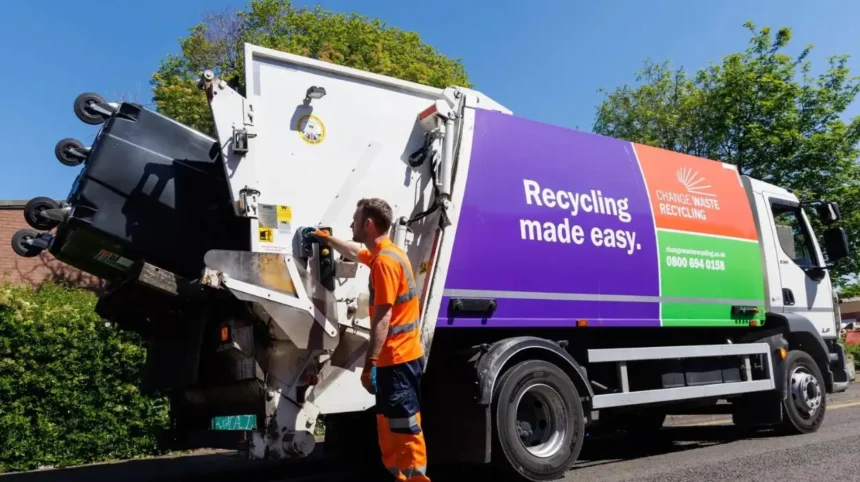
Glasgow bin collection is managed by Glasgow City Council, which provides household waste collection, recycling services, food waste disposal and arrangements for bulky household items. Residents across Glasgow use designated waste containers to separate general rubbish from recyclable materials and organic waste.
- What Is Glasgow’s Bin Collection Service?
- How Can Residents Check Glasgow Bin Collection Days?
- How to Find Your Bin Collection Day Online
- Why Do Bin Collection Dates Differ Between Glasgow Properties?
- Should Residents Follow Third-Party Bin Collection Websites?
- What Goes in Each Glasgow Bin?
- General Waste
- Paper and Cardboard Recycling
- Plastics, Metals and Cartons
- Glass Bottles and Jars
- Food Waste
- Garden and Organic Waste
- How Often Are Bins Collected in Glasgow?
- Does Every Glasgow Household Have the Same Collection Frequency?
- How Can Residents Prepare for Their Collection Day?
- How Does Glasgow Bin Collection Work for Flats and Tenements?
- How Do Tenement Communal Bins Work?
- How Does Bin Collection Work in Multi-Storey Buildings?
- What Should Residents Do When Communal Bins Are Full?
- What Should Residents Do About a Missed Bin Collection?
- How to Report a Missed Bin in Glasgow
- What Happens After Reporting a Missed Collection?
- Can Contaminated Bins Be Collected Again?
- How Can Residents Arrange a Bulky Waste Collection in Glasgow?
- What Items Qualify as Bulky Waste?
- How Can Residents Request a Bulky Uplift?
- What Should Tenement Residents Do With Bulky Items?
- Where Can Glasgow Residents Take Household Waste for Recycling?
- What Is Assisted Bin Collection in Glasgow?
- What Is the Glasgow Brown Bin Permit System?
- What Happens to Glasgow Bin Collections During Public Holidays?
- How Can Residents Check Christmas Bin Collection Arrangements?
- How Can Residents Prepare for Holiday Waste?
- What Are the Main Waste Management Challenges in Glasgow?
- What Is Glasgow’s Household Recycling Performance?
- How Does Recycling Contamination Affect Glasgow?
- Why Is Fly-Tipping a Waste Management Problem?
- How Can Glasgow Residents Improve Household Waste Recycling?
- What Should New Glasgow Residents Know About Bin Collection?
- What Is the Future of Glasgow’s Bin Collection Service?
Understanding Glasgow’s bin collection system helps households follow collection schedules, avoid missed collections, reduce contamination and dispose of household waste responsibly. Collection arrangements vary according to property type, street, communal bin facilities and the services assigned to individual addresses.
The council provides an online refuse and recycling calendar that allows residents to check their collection dates using their property details. This is the most reliable way to confirm which bins need to be presented and when collections are scheduled.
What Is Glasgow’s Bin Collection Service?
Glasgow’s bin collection service is a local authority waste management system operated by Glasgow City Council. It collects household rubbish, recyclable materials, food waste and selected garden waste through scheduled collections and designated containers.
Glasgow City Council is responsible for managing household waste services across the Glasgow City local authority area. The service covers residential properties, including detached houses, terraced homes, tenements, purpose-built flats and multi-storey developments.
The system separates waste into different categories so that recyclable materials can be recovered instead of being sent for disposal. Residents use designated bins and communal facilities according to the arrangements provided for their properties.
The main objectives of Glasgow’s household waste collection service are to:
- Collect non-recyclable household rubbish.
- Increase the amount of household material recycled.
- Separate food and garden waste from general rubbish.
- Provide appropriate waste facilities for flats and houses.
- Reduce littering, overflowing bins and illegal dumping.
- Support Scotland’s wider waste reduction and circular economy objectives.
How Is Household Waste Collection Managed in Glasgow?
Glasgow City Council’s waste collection operations involve collection crews, refuse vehicles, recycling infrastructure and scheduled service routes.
Collection schedules are assigned to individual properties or communal waste facilities. Residents must follow their property’s specific calendar rather than assuming that every household on the same street has identical collection dates.
The council’s online calendar provides address-specific information. It also allows residents to view and print collection schedules.
Why Does Glasgow Separate Household Waste?
Waste separation allows different materials to enter suitable recycling or treatment processes.
Paper and cardboard are recovered as recyclable fibre. Glass bottles and jars enter glass recycling streams. Food waste is collected separately for organic waste treatment.
Separating these materials reduces contamination and improves the quality of recyclable resources.
How Can Residents Check Glasgow Bin Collection Days?
Residents can check Glasgow bin collection days through Glasgow City Council’s official refuse and recycling calendar. They enter their property details to view scheduled collection dates for the bins assigned to their address.
The collection calendar is the main reference for checking household waste collection arrangements in Glasgow.
Different properties have different collection schedules. A house in one neighbourhood can have different collection dates from a nearby tenement or communal bin facility.
Residents should use the official calendar before putting bins outside, particularly after moving house or following a change to their collection arrangements.
How to Find Your Bin Collection Day Online
The process involves checking the property’s registered collection information.
- Open the Glasgow City Council refuse and recycling calendar.
- Search for the relevant property using the available address lookup.
- Select the correct property.
- Review the listed collection dates.
- Identify which bins are scheduled for collection.
- Save or print the calendar for future reference.
The official service is available through the council’s online refuse and recycling calendar.
Why Do Bin Collection Dates Differ Between Glasgow Properties?
Collection schedules depend on operational arrangements, property layout and the waste facilities assigned to each address.
Detached houses generally have individual household bins. Tenements often use shared backcourt facilities. Multi-storey buildings use communal waste storage areas or designated disposal systems.
These differences affect how collection crews access and empty containers.
Should Residents Follow Third-Party Bin Collection Websites?
Residents should prioritise Glasgow City Council’s calendar over unofficial bin collection websites.
Third-party services sometimes display estimated dates or general collection patterns. These do not replace the address-specific information provided by the council.
The official calendar is particularly important when a collection date changes or a property has communal bins.
What Goes in Each Glasgow Bin?
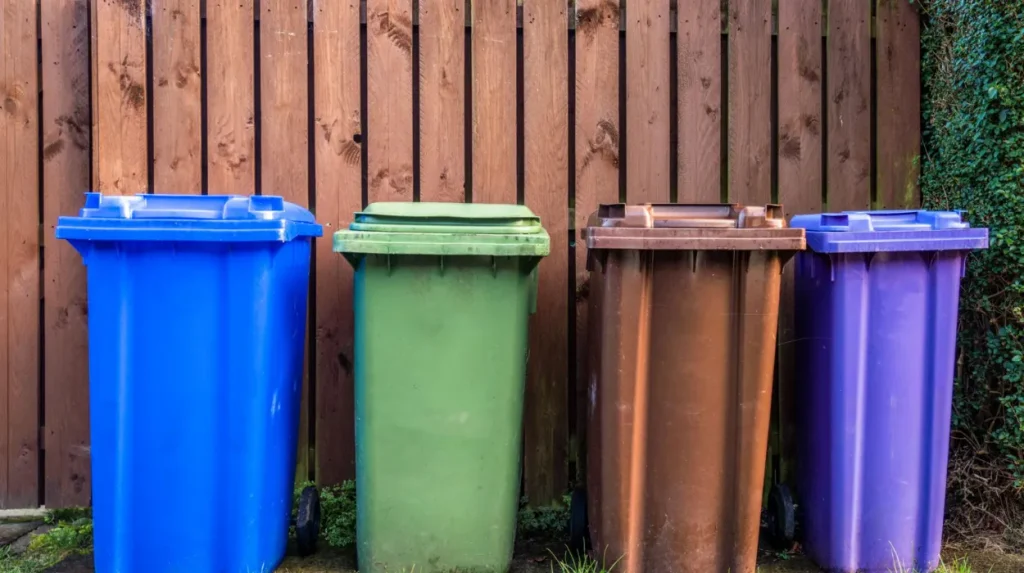
Glasgow households use separate waste containers for general rubbish, paper and cardboard, plastics and metals, glass, and organic waste. The exact container arrangement depends on the property and council service, so residents should follow bin labels.
Correct waste separation is an important part of Glasgow’s recycling system. Each container is intended for particular materials, and placing unsuitable items inside recycling bins creates contamination.
Glasgow City Council’s waste management documentation identifies separate recycling streams for paper and cardboard, mixed recyclable materials, glass, food waste and general rubbish.
General Waste
General waste includes household materials that cannot be recycled through the property’s available collection services.
Examples include:
- Used nappies and sanitary products.
- Vacuum cleaner dust.
- Polystyrene packaging.
- Broken crockery and ceramics.
- Contaminated packaging that cannot be recycled.
- Used tissues and certain household cleaning waste.
Residents should keep recyclable materials and food waste out of general waste containers whenever separate facilities are available.
Paper and Cardboard Recycling
Paper and cardboard are collected separately through the appropriate recycling container.
Accepted materials include newspapers, magazines, envelopes, catalogues, office paper, cardboard boxes and toilet roll tubes.
Cardboard boxes should be flattened before disposal. This creates additional space inside recycling containers and makes collection more efficient.
Food-contaminated cardboard, including greasy pizza box bases, should not enter the paper recycling stream.
Glasgow City Council’s published recycling guidance identifies paper and cardboard as a separate recyclable material category.
Plastics, Metals and Cartons
The plastics and metals recycling stream accepts suitable household packaging.
Examples include:
- Plastic food and drink bottles.
- Plastic cleaning product bottles.
- Empty drinks cans.
- Food tins.
- Empty aerosol cans.
- Plastic packaging accepted under the council’s current recycling guidance.
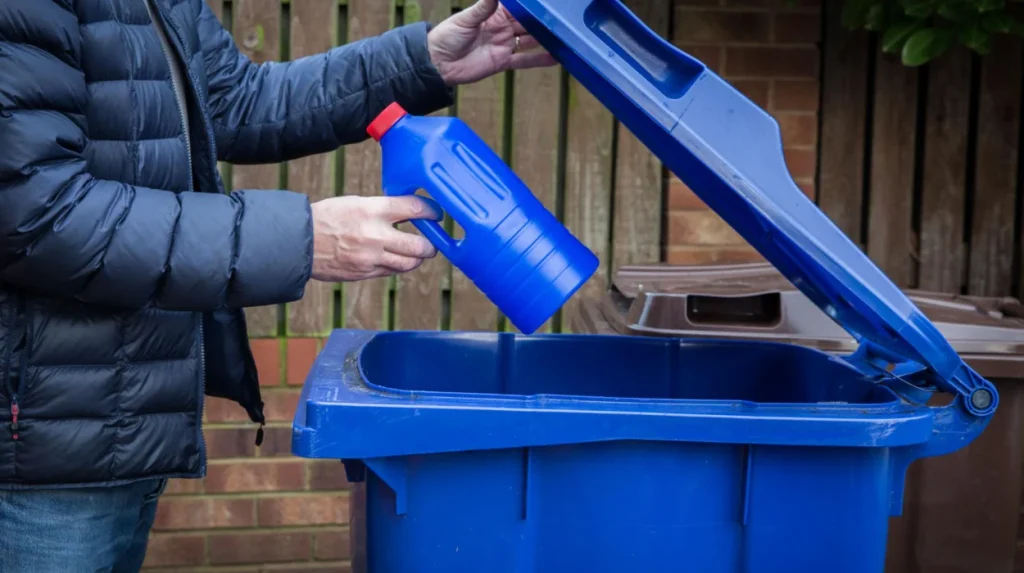
Residents should empty containers before recycling them. Food residue and liquids contaminate recyclable materials.
Not every plastic product belongs in household recycling. Plastic toys, unsuitable packaging and other hard plastics require separate disposal arrangements.
Glass Bottles and Jars
Glass recycling covers suitable glass bottles and jars.
Examples include empty jam jars, sauce bottles and glass drink bottles.
Drinking glasses, mirrors, window glass and ceramic objects are different materials. They should not be placed in a container intended for glass bottles and jars.
Residents should check their property’s designated glass collection arrangements before disposal.
Food Waste
Food waste collection keeps biodegradable household materials separate from general rubbish.
Examples include:
- Fruit and vegetable peelings.
- Meat and fish leftovers.
- Bones.
- Dairy products.
- Bread and pastries.
- Cooked rice and pasta.
- Tea bags and coffee grounds.
Food waste should go into the designated food waste container or kitchen caddy. Residents should follow the council’s instructions about acceptable liners.
Garden and Organic Waste
Garden waste includes biodegradable materials produced through routine gardening.
Examples include grass cuttings, leaves, flowers, hedge trimmings and small branches.
Garden waste collection arrangements are separate from ordinary household rubbish collection. Residents should check whether their property has an eligible service and whether an annual permit is required.
Soil, stones, rubble and treated construction materials do not belong in ordinary garden waste containers.
How Often Are Bins Collected in Glasgow?
Glasgow bin collection frequencies vary according to the waste category, property and collection route. The council’s address-specific calendar identifies the next collection date and frequency for each container assigned to a household.
There is no single collection timetable that applies to every Glasgow property.
For example, an official Glasgow collection calendar for a property at Jordanhill Drive displayed a 14-day brown-bin schedule, a 21-day green-bin schedule, a 14-day blue-bin schedule and a 56-day purple-bin schedule in November 2026.
These dates illustrate why residents must check their own collection calendars instead of relying on general schedules.
Does Every Glasgow Household Have the Same Collection Frequency?
No. Collection arrangements differ between properties.
A detached house with individual wheeled bins has different waste storage requirements from a tenement with shared backcourt facilities.
Communal facilities also affect how collection crews access and empty containers. The council can organise collection rounds according to local operational requirements.
How Can Residents Prepare for Their Collection Day?
Households should prepare containers before the scheduled collection.
Glasgow City Council’s published household waste guidance states that bins must be presented at the kerbside or agreed collection location by 7:00 am on collection day. The lid should remain closed, and the container must not obstruct pedestrians or road users. 1,280 litre blue wheeled bins.
Residents should check the following:
- The correct bin is presented.
- Waste is placed in the appropriate container.
- The lid closes properly.
- The bin is accessible to collection crews.
- The container does not block pavements or roads.
These measures help collection teams complete scheduled routes safely.
How Does Glasgow Bin Collection Work for Flats and Tenements?
Glasgow flats and tenements use communal or shared waste facilities according to building design and council arrangements. These facilities include shared wheeled bins, larger containers, designated bin storage areas and waste disposal systems.
Flats represent an important part of Glasgow’s housing structure. Traditional tenements, modern apartment buildings and multi-storey developments require different waste collection arrangements.
Glasgow City Council’s household waste provision documentation describes separate facilities for general rubbish, recycling and food waste in flatted properties.
How Do Tenement Communal Bins Work?
Traditional tenements generally use shared backcourt or designated bin storage areas.
The council’s published service documentation describes a standard arrangement for eight flats that includes six 240-litre general waste bins, four 240-litre recycling bins and one 240-litre food waste bin.
Larger communal containers are also used where the building layout and collection arrangements require additional capacity.
Residents share responsibility for using these facilities correctly.
They should separate recyclable materials, avoid leaving rubbish beside full bins and keep access routes clear.
How Does Bin Collection Work in Multi-Storey Buildings?
Multi-storey buildings use waste facilities suited to their internal design.
Some developments have waste disposal chutes on individual floors. Others provide dedicated bin storage rooms or communal collection points.
Residents should follow building management instructions and use the correct waste facilities.
Large household items should not be forced into disposal chutes because they can cause blockages and operational problems.
What Should Residents Do When Communal Bins Are Full?
Residents should avoid leaving rubbish on the pavement or beside communal containers.
Overflowing waste creates problems for neighbouring households and attracts pests.
Residents should report persistent overflowing bins or collection problems to Glasgow City Council or the relevant property management organisation.
Where a housing association manages the communal facilities, residents should also notify its estate management team.
What Should Residents Do About a Missed Bin Collection?
Residents who experience a missed Glasgow bin collection should report the problem through Glasgow City Council’s online reporting service or MyGlasgow app. They should check the scheduled date and allow the collection round to finish first.
A missed collection occurs when a scheduled bin is not emptied on the expected collection day.
Collection delays can result from vehicle breakdowns, access restrictions, operational disruption or other service problems.
Glasgow City Council’s published customer service information explains that collection crews can continue working until 8:00 pm on the scheduled day. Missed collection reports can be submitted from the following day.
How to Report a Missed Bin in Glasgow
Residents can use the council’s digital reporting channels.
The reporting process generally involves:
- Open the Glasgow City Council website or MyGlasgow app.
- Select the missed bin collection reporting option.
- Provide the property address.
- Identify the affected bin.
- Submit the report with relevant information.
- Keep the reference number for future enquiries.
The MyGlasgow app also supports reports about issues such as illegal dumping and other environmental problems.
What Happens After Reporting a Missed Collection?
The council receives the report and assesses the collection problem.
Residents should follow any instructions provided by the council. They should avoid assuming that a missed collection automatically creates an immediate return visit.
If the bin remains uncollected, the report reference helps residents follow up with the relevant service.
Can Contaminated Bins Be Collected Again?
Incorrect materials inside recycling containers can prevent successful collection.
Glasgow City Council’s published waste policy states that contaminated bins do not receive a return collection. They are emptied on the next scheduled collection once the household has removed the unsuitable materials. onlineservices.glasgow.gov.uk
This makes correct waste separation important for maintaining reliable collection services.
How Can Residents Arrange a Bulky Waste Collection in Glasgow?
A bulky waste collection is a special disposal arrangement for household items that are too large for ordinary bins. Residents should check Glasgow City Council’s current bulky uplift service, eligibility rules, charges and booking arrangements before leaving items outside.
Bulky household waste includes large objects that cannot fit safely inside standard household containers.
Examples include sofas, mattresses, wardrobes, tables, washing machines and other large domestic items.
These materials require different handling from ordinary household rubbish because of their size, weight and recycling requirements.
What Items Qualify as Bulky Waste?
Common examples include:
- Sofas and armchairs.
- Beds and mattresses.
- Wardrobes and cupboards.
- Tables and large chairs.
- Washing machines.
- Domestic electrical appliances.
Not every bulky item qualifies for the same collection arrangement. Some materials require specialist handling or separate disposal.
How Can Residents Request a Bulky Uplift?
Residents should use the council’s official bulky uplift information and booking service.
They should confirm:
- Whether the item qualifies.
- Whether a collection charge applies.
- The available collection date.
- The approved collection location.
- Any preparation or safety requirements.
Glasgow’s published service documentation describes household bulky waste collection and arrangements for residents in different property types. However, older policy documents should not be treated as confirmation of current prices or availability.
What Should Tenement Residents Do With Bulky Items?
Tenement residents should check arrangements with their housing association, property factor or building management organisation.
Communal uplift arrangements sometimes involve coordinated collection from shared backcourts.
Residents should never leave unwanted furniture on pavements without an agreed collection arrangement. Unauthorised disposal can create obstruction and fly-tipping problems.
Where Can Glasgow Residents Take Household Waste for Recycling?
Glasgow residents can use designated Household Waste Recycling Centres to dispose of suitable household materials that are unsuitable for ordinary kerbside bins. These centres provide facilities for separating recyclable materials and managing larger household clearances.
Household Waste Recycling Centres, commonly called recycling centres or tips, provide an additional disposal route for residential waste.
They are particularly useful when households dispose of large quantities of cardboard, electrical equipment, furniture, scrap materials or other items requiring separate treatment.
The Scottish Government also directs residents to their local council for information about recycling centre locations and accepted materials.
What Materials Can Residents Take to Recycling Centres?
Suitable materials depend on the facilities available at each location.
Examples include:
- Cardboard and paper.
- Glass bottles and jars.
- Household electrical equipment.
- Metal cans and scrap metal.
- Suitable garden waste.
- Household batteries.
- Reusable materials and other accepted recyclable items.
Residents should check current site rules before travelling because restrictions apply to particular materials, vehicles and waste types.
Why Are Recycling Centres Important?
Recycling centres provide an alternative to ordinary household collection.
They help residents dispose of materials that do not fit into standard bins. They also support the recovery of recyclable materials that would otherwise require separate disposal arrangements.
Using authorised facilities reduces the risk of illegal dumping and inappropriate waste disposal.
What Is Assisted Bin Collection in Glasgow?
Assisted bin collection is a service for eligible residents who cannot move their household bins to the collection point because of age or physical limitations and have no available household support. Glasgow City Council assesses applications before arranging assistance.
Some residents experience difficulty moving heavy bins from their property to the collection point.
This affects people with mobility limitations and residents who cannot safely manage household containers without assistance.
Glasgow City Council’s published waste policy describes an assisted collection arrangement for qualifying households.
Who Qualifies for Assisted Collection?
Eligibility depends on the household’s circumstances.
The council’s published policy identifies situations involving age or a physical or medical condition where no other household member can present or retrieve the bins.
Applicants must provide supporting evidence. A council officer can also assess the property and associated manual handling risks.
How Does Assisted Collection Work?
Approved households receive an agreed collection arrangement.
The collection team retrieves the relevant bins from an agreed location within the property boundary and returns them according to the service arrangements.
The published policy also explains that assisted collections are not provided to residents in flatted properties where collection crews already collect and return bins from communal storage areas. onlineservices.
What Is the Glasgow Brown Bin Permit System?
Glasgow’s brown bin service covers organic waste arrangements, including food waste and eligible garden waste. Garden waste collection is subject to council permit arrangements, while food waste collection follows the service provided to the property.
Organic waste consists of biodegradable material produced by households.
Examples include food leftovers, grass cuttings, flowers, leaves and small garden trimmings.
Separating organic waste from general rubbish supports more appropriate waste treatment.
Is a Permit Required for Garden Waste?
Glasgow City Council introduced a garden waste permit scheme on 1 October 2023 following a decision associated with its 2023/24 budget.
A council response published in its committee records explained that residents could continue using their brown bins for food waste without purchasing a garden waste permit. Asked by: Councillor Cecilia
The garden waste permit and food waste collection are therefore separate considerations.
Residents should check the current council application information for the latest annual fee, permit period and eligibility conditions before arranging garden waste collection.
What Happens Without a Garden Waste Permit?
Residents who do not subscribe to an eligible garden waste service should not assume that their garden cuttings will be collected through ordinary brown-bin arrangements.
Alternative disposal methods include:
- Home composting.
- Taking suitable garden materials to an authorised recycling centre.
- Using an approved garden waste disposal service.
Soil, rubble and stones should not be mixed with ordinary organic waste.
What Happens to Glasgow Bin Collections During Public Holidays?
Glasgow bin collection arrangements depend on the council’s operational calendar and any announced service changes. Residents should check their address-specific collection calendar and official council notices when public holidays affect normal collection arrangements.
Public holidays can affect waste collection schedules because council services operate according to planned collection rounds.
Residents should not assume that every public holiday automatically results in a postponed collection.
The most reliable approach is to check the council’s official calendar and announcements before presenting containers.
How Can Residents Check Christmas Bin Collection Arrangements?
Christmas and New Year can involve changes to normal collection schedules.
Households should check council announcements for revised dates covering:
- General household rubbish.
- Paper and cardboard recycling.
- Glass recycling.
- Food waste.
- Garden waste.
Residents should also avoid leaving excess household rubbish beside communal bins during busy holiday periods.
How Can Residents Prepare for Holiday Waste?
Households can reduce waste collection problems by separating packaging, flattening cardboard boxes and using available recycling facilities.
Food waste should remain separate from general rubbish.
Residents should also check their next scheduled collection date before storing additional household waste.
What Are the Main Waste Management Challenges in Glasgow?
Glasgow’s household waste management faces challenges involving recycling performance, contaminated bins, overflowing communal facilities and illegal dumping. Effective waste separation, reliable collections and responsible disposal help the council improve environmental outcomes.
Waste management is an important local authority responsibility because household rubbish affects public health, neighbourhood cleanliness and environmental quality.
Glasgow’s high proportion of tenements and shared residential buildings also creates additional operational requirements.
What Is Glasgow’s Household Recycling Performance?
Glasgow’s recycling performance remains an important issue in local environmental policy.
A Glasgow City Council committee paper published in 2025 recorded a household recycling rate of 27.2%, based on figures reported to the Operational Scrutiny Committee on 4 June 2025.
The same council document compared this figure with a Scottish national average of 43.5% and discussed the national recycling target of 70% for 2025. Meetings
These figures demonstrate the importance of improving household recycling participation and reducing contamination.
How Does Recycling Contamination Affect Glasgow?
Recycling contamination occurs when unsuitable materials enter designated recycling containers.
Examples include food-contaminated cardboard, batteries in ordinary recycling bins and plastic products that are not accepted through the relevant collection service.
Contamination creates additional sorting and processing requirements. It also reduces the quality of recovered materials.
Glasgow City Council has a published contamination policy explaining how unsuitable materials affect recycling operations and how contaminated containers are managed. onlineservices.glasgow.gov.uk
Why Is Fly-Tipping a Waste Management Problem?
Fly-tipping means illegally abandoning waste on land or in water.
Examples include discarded furniture, household rubbish bags, mattresses and construction materials left in unauthorised locations.
Fly-tipping creates environmental and public safety problems. It also increases the cleaning responsibilities of local authorities.
Residents should report illegal dumping through the relevant Glasgow City Council reporting service rather than attempting to dispose of the materials themselves.
How Can Glasgow Residents Improve Household Waste Recycling?
Glasgow residents can improve household recycling by separating materials correctly, using designated containers, checking council guidance and avoiding contamination. Consistent household recycling practices help reduce general waste and improve the quality of recyclable materials.
Household participation is essential to an effective recycling system.
Residents should understand the difference between recyclable packaging, general rubbish, food waste and garden waste.
Which Household Habits Support Better Recycling?
Simple waste management habits improve household recycling.
Examples include:
- Flattening cardboard packaging.
- Emptying recyclable bottles and containers.
- Separating glass from other recycling where required.
- Using food waste caddies correctly.
- Keeping batteries and electrical equipment out of ordinary bins.
- Checking packaging against the council’s accepted materials list.
These practices reduce contamination and improve the efficiency of collection services.
How Can Households Reduce General Waste?
Waste prevention begins before materials enter household bins.
Residents can reduce unnecessary rubbish by reusing suitable containers, donating unwanted furniture and choosing products with less packaging.
Food planning also helps reduce avoidable food waste.
Reusable shopping bags, refillable bottles and durable household products reduce the volume of disposable materials entering the waste system.
Explore More Area Guide
Glasgow Council Tax Single Person Discount: Eligibility and Savings
Council Tax Reduction in Glasgow: Who Can Apply?
What Should New Glasgow Residents Know About Bin Collection?
New Glasgow residents should identify their property’s waste facilities, check the official collection calendar and understand local recycling rules. People moving into flats should also locate communal bin stores and follow their building’s waste disposal arrangements.
Moving into a new property often involves learning a different waste collection schedule.
A household moving from a detached house to a tenement can encounter shared bins and different recycling arrangements.
What Should Residents Check After Moving House?
New residents should identify:
- Their property’s collection calendar.
- The location of household bins.
- The accepted materials for each container.
- The arrangements for food waste.
- The garden waste permit requirements, where applicable.
- The procedure for reporting missed collections.
Checking these details early prevents incorrect disposal and unnecessary collection problems.
Who Is Responsible for Communal Waste Facilities?
Responsibility depends on the property and its management arrangements.
Glasgow City Council provides the relevant household collection service, while housing associations, property factors and building management organisations can manage particular communal facilities.
Residents should identify the appropriate organisation when reporting damaged storage areas, persistent overflowing bins or access problems.
What Is the Future of Glasgow’s Bin Collection Service?
The future of Glasgow bin collection depends on improving recycling performance, reducing contamination, expanding responsible waste separation and maintaining effective collection infrastructure. Household participation remains essential to achieving Scotland’s wider resource efficiency and environmental objectives.
Waste collection is increasingly connected with environmental sustainability and the circular economy.
The circular economy is an economic system that prioritises keeping products and materials in use through reuse, repair and recycling.
Glasgow’s waste services contribute to these objectives by collecting separate material streams and providing appropriate disposal facilities.
How Can Glasgow Improve Recycling Participation?
Improving recycling requires clear instructions and accessible collection facilities.
Residents need to understand which materials belong in each container. Collection services must also provide reliable access to recycling facilities across different property types.
Better communication about contamination, collection schedules and waste prevention supports these objectives.
Why Will Household Waste Separation Remain Important?
Household waste separation helps recover materials that can be processed and reused.
Paper, cardboard, metals, glass and suitable plastics provide recyclable resources. Food waste also has a separate organic waste treatment route.
As Glasgow continues to address recycling performance and environmental targets, correct household waste separation will remain an important part of local waste management.
Glasgow bin collection is an essential household service managed by Glasgow City Council. It covers general rubbish, recycling, food waste, garden waste and arrangements for larger household items.
Residents should use the official refuse and recycling calendar to check their collection dates rather than relying on general schedules. Correct waste separation, appropriate bin presentation and timely reporting of missed collections help maintain an effective service.
Understanding the arrangements for houses, tenements and communal properties also helps prevent overflowing bins and incorrect waste disposal.
For the most accurate information, residents should consult Glasgow City Council’s official waste and recycling services before making collection or disposal arrangements.
How do I find my Glasgow bin collection day?
Residents can check their collection dates through Glasgow City Council’s official refuse and recycling calendar. Enter the property details to see the scheduled dates for general waste, recycling, food waste and other assigned bins.