

Key Points
- Confirmed Ebola infections in the Democratic Republic of the Congo have reached 12,021, with 5,904 deaths, according to government data.
- Fighting between the army and rebels is disrupting surveillance, treatment and access to affected communities in Ituri province.
- Some response workers have been evacuated, while displaced people are moving towards Bunia, a major Ebola-response hub.
- Health officials warn that insecurity could delay containment measures and increase transmission risks among vulnerable communities.
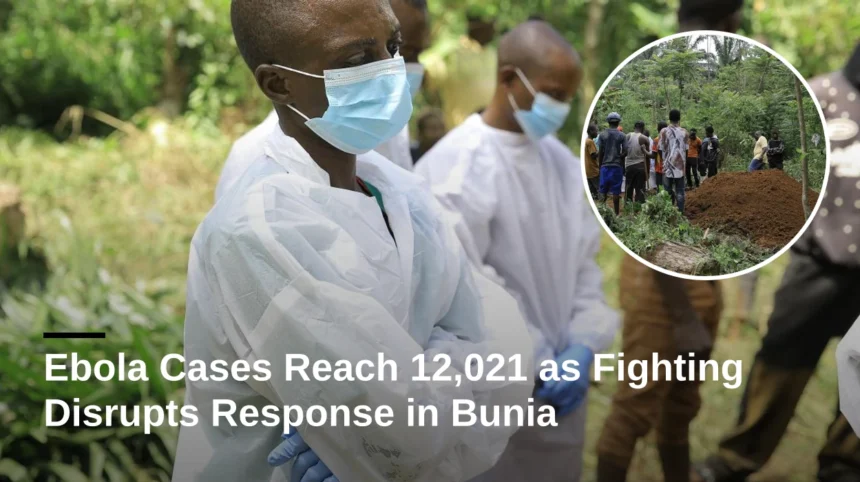
Bunia (Glasgow Express) November 26, 2026 – The Ebola outbreak in the eastern Democratic Republic of the Congo has reached 12,021 confirmed cases and 5,904 deaths, government data reported on Thursday, as renewed fighting prevents response teams from reaching some communities. The outbreak is affecting Ituri province, where conflict between the army and the Convention for the Popular Revolution has disrupted disease monitoring, reduced staffing at some treatment centres and forced some responders to evacuate. Bunia, the provincial capital, remains a major centre for the Ebola response as displaced people move towards the city.
How has fighting affected the Ebola response in Ituri?
According to the Associated Press report, fighting resumed in Iga-Barrière, a mining town about 15 miles north of Bunia, sending new waves of displaced people towards the city. The violence has prevented health teams from reaching some communities and disrupted the monitoring of people exposed to Ebola.
The Associated Press attributed the assessment to Dr Catherine Smallwood, the World Health Organisation’s Ebola incident manager. Dr Smallwood said insecurity had also left some treatment centres with fewer staff, limiting the capacity of responders to identify cases, isolate patients and follow contacts.
Reuters reported that government figures showed the confirmed case total had exceeded 12,000, making the outbreak the second-largest Ebola outbreak on record. Al Jazeera reported the same total and recorded 5,904 deaths.
What do the latest figures show?
The Ministry of Health data cited by the Associated Press recorded 12,021 confirmed infections and 5,904 deaths. The reported fatality figure is close to half of all confirmed cases.
The Associated Press described the outbreak as the fastest-growing Ebola outbreak in history. The scale of the outbreak, combined with conflict-related restrictions, has increased pressure on health workers and local authorities to maintain treatment, surveillance and community engagement.
What could happen next for communities affected by Ebola?
Continued fighting could restrict access to patients, interrupt contact tracing and delay the movement of medical teams and supplies. Displacement towards Bunia may increase pressure on health facilities and make it harder to identify people who have been exposed to the virus.
For people living in affected communities, the immediate consequences may include reduced access to testing, treatment and information about preventing transmission. The outbreak’s trajectory will depend on whether response workers can safely return to inaccessible areas, maintain surveillance and provide timely care to patients.
What is the background to the outbreak?
The current outbreak is occurring in eastern Democratic Republic of the Congo, where armed conflict has repeatedly complicated public-health operations. Ituri province has experienced fighting and population displacement, while Bunia serves as a logistical and medical centre for the response. Government data cited in reports placed confirmed infections at 12,021 and deaths at 5,904 on November 26, 2026. The outbreak is being described by the Associated Press and Reuters as one of the largest Ebola emergencies on record.
How could the situation affect Ebola control in the Democratic Republic of the Congo?
If insecurity continues, Ebola-control teams may be unable to reach exposed people quickly enough to complete contact tracing and isolation. Displacement could carry infections into areas with limited health services, while understaffed treatment centres may face greater pressure. Safe access for responders, sustained government action and continued support for affected communities will therefore be central to limiting further spread.