
Key Points
- Mattel research says 69% of people surveyed regard Scrabble as part of their Christmas Day traditions.
- Words including “rizz”, “delulu”, “sus”, “bruh” and “boujee” could prompt disputes over family house rules.
- Illustrative scores range from three points for “sus” to 15 points for “boujee”; the figures do not confirm official playability.
- Gyles Brandreth and Mattel executive Mona Priester urged families to treat language differences as part of the game.
- Research says 86% of players have had a word challenged, while 12% plan to agree house rules before playing.
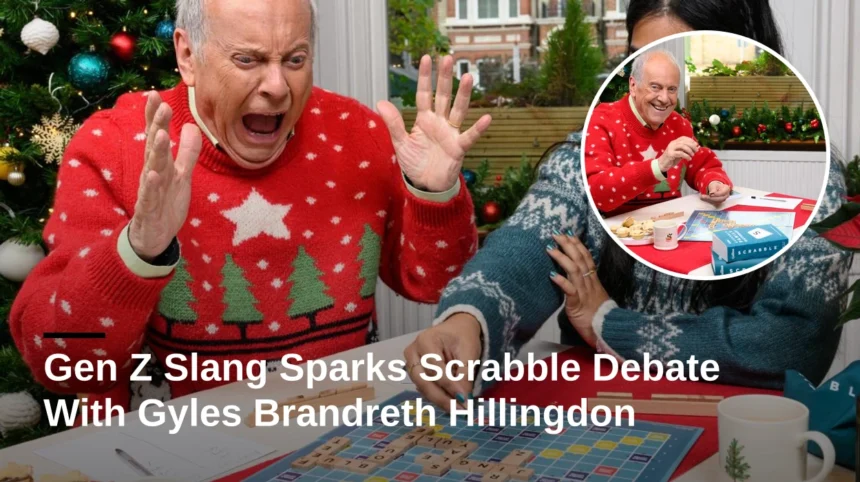
Hillingdon (Glasgow Express) November 25, 2026 – Gen Z expressions including “rizz” and “delulu” are set to spark debate around family Scrabble boards this Christmas, after Mattel highlighted their growing use and potential illustrative tile scores. The development concerns whether newer slang should be accepted under household rules, rather than confirming that the terms are valid in official Scrabble play.
Could Gen Z slang change family Scrabble games?
As reported by the Hillingdon Times, Mattel’s research found that 69% of respondents consider Scrabble part of their Christmas Day traditions. The report said 86% of players have had a word questioned, while 84% admitted trying to pass off a made-up word as genuine.
Disputes were most often resolved through a dictionary or online search, at 40%, or by a vote, at 17%. The report said 11% of players had got away with a disputed word, while 9% said an argument resulted in someone walking away.
The highlighted terms include “rizz”, meaning charm or charisma; “delulu”, a shortened form of delusional; “sus”, meaning suspicious; “bruh”, derived from bro or brother; “ghosted”, describing an abrupt end to communication; and “boujee”, meaning fancy or luxurious. Other examples were “fricy”, “yeet”, “bixie” and “stan”.
The suggested scores were illustrative calculations based on standard letter values if families chose to allow the words. They were not confirmation that the terms appear in the Official Scrabble Dictionary.
What did Gyles Brandreth and Mattel say?
Gyles Brandreth, a television personality, founder of the National Scrabble Championships and supporter of Gen Z slang, said the words could produce “raised eyebrows” and lively family debates. He said changing expressions could bring generations together and encourage players to learn new vocabulary.
“Rizz” and “delulu” might sound completely made up to some players, but newer expressions can become part of an evolving language, according to Gyles Brandreth.
Mona Priester, Head of Marketing Activation Games EMEA at Mattel, said Scrabble remained a popular Christmas tradition. She said unexpected word choices and family debates could create laughter, memories and opportunities for different generations to discover new vocabulary.
How are families expected to settle challenges?
The report said 18% of respondents search online for new words and 14% keep phones nearby to check vocabulary during a game. Seven per cent said they planned to try a made-up word at Christmas, while 12% intended to agree house rules before the first tile was played.
London recorded the highest reported support for the tradition, at 79%, followed by Manchester at 76%. The report also said one in five British players wait until 5pm on Christmas Day before bringing out their first board game.
What is the background to the Scrabble slang debate?
Mattel’s initiative follows the inclusion of several newer expressions in the Collins English Dictionary, according to the Hillingdon Times report. The report said some family players use a dictionary as a reference, creating uncertainty when a word is recognised in Collins but not listed in the Official Scrabble Dictionary.
“Rizz” refers to social or romantic charm, while “delulu” is commonly used humorously for unrealistic beliefs or expectations. Both terms have also featured in wider reporting about changing internet language.
The debate reflects the difference between dictionary recognition and the rules governing a particular edition or house game. Families can decide whether to follow an official word list or permit additional vocabulary by agreement.
Mattel presented the terms as conversation starters rather than announcing a formal change to Scrabble’s accepted vocabulary.
How could “Can I Play Rizz, Or Am I Delulu?” affect Scrabble players?
“Can I Play Rizz, Or Am I Delulu?” could become a useful shorthand for the disagreement between younger players familiar with online slang and older players relying on established word lists. The development is likely to encourage discussion about whether Scrabble should reflect fast-changing language while preserving a consistent rulebook.
For Scrabble’s particular audience, the issue may make house rules more important during family games. Allowing the terms could broaden the vocabulary used at the table, while rejecting them could keep play aligned with the official reference chosen by the players.


