Key Points
- Housing Minister Matthew Pennycook said the Government cannot compel Google to remove the Russell Brand video.
- The Ministry of Justice asked YouTube to remove the video because it said the content could distress victims.
- Google reportedly rejected the request after finding no breach of its platform rules.
- An investigation is examining whether Russell Brand breached prison rules by sending the message through his wife.
- Conservative leader Kemi Badenoch said Government intervention in private platforms should not begin without establishing a legal breach.
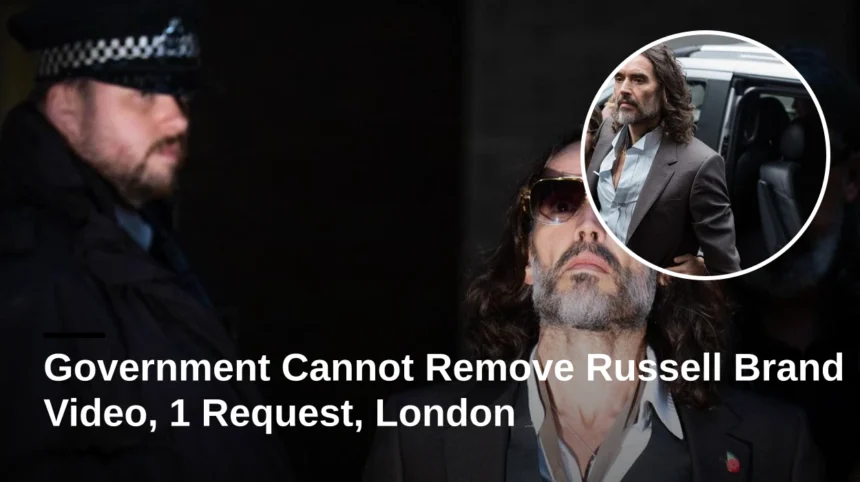
London (Glasgow Express) November 19, 2026 – The Government has no legal power to force Google to remove a YouTube video in which convicted sex offender Russell Brand claims he is innocent, Housing Minister Matthew Pennycook said. The Ministry of Justice requested the video’s removal after Brand’s wife, Laura Gallacher, read a message from him on a YouTube programme. Google reportedly rejected the request, saying the video did not breach its platform rules. The Government remains in dialogue with the technology company while an investigation considers whether Brand breached prison regulations.
- Key Points
- Why can the Government not force Google to remove the Russell Brand video?
- What did the Ministry of Justice ask Google to do?
- What is being investigated about Russell Brand’s message?
- What have Google and Kemi Badenoch said?
- What is the background to the dispute?
- How could the decision affect audiences?
Why can the Government not force Google to remove the Russell Brand video?
As reported by the BBC, Google declined the Ministry of Justice request after determining that its rules had not been broken. The BBC reported that Mr Pennycook told its Breakfast programme that the Government had no power to mandate removal because the decision rested on Google’s terms and conditions.
“We don’t have any power to mandate a removal of content. That is up to Google. It’s based on their terms and conditions,” Mr Pennycook said, as reported by the BBC.
Mr Pennycook said the Government had made the request because it believed victims should not have to see the material. He also described the video as abhorrent in comments reported by the BBC and said the Ministry of Justice remained in dialogue with Google.
What did the Ministry of Justice ask Google to do?
The Ministry of Justice said it was right to ask for content that could distress victims to be removed. The department said it strongly believed YouTube should take down the video, while acknowledging that removal ultimately depended on the platform’s own terms.
A spokesperson for the Ministry of Justice said the request was submitted through an established process between the prison service and technology companies. BBC reporting clarified that no minister had met Google about the matter.
What is being investigated about Russell Brand’s message?
Russell Brand’s wife, Laura Gallacher, read a message attributed to him in a video uploaded to their YouTube channel. The message said he was not guilty of the offences for which he had been convicted and imprisoned.
Downing Street said an urgent investigation was under way into whether Brand had breached prison rules. The Government said prisoners are prohibited from making statements that cause distress to victims and cannot avoid those restrictions by having another person publish their comments.
Prison guidance generally restricts correspondence intended for publication or internet posting when it concerns an inmate’s own offending. The guidance includes an exception for serious representations about a conviction or sentence, or serious comment on crime, justice processes or the penal system.
What have Google and Kemi Badenoch said?
Google said its teams were aware of the new content and were investigating. The company said it suspended Russell Brand from the YouTube Partner Programme in September 2023, meaning his channel could no longer monetise through YouTube.
Conservative leader Kemi Badenoch said Brand had been convicted and that the rule of law applied to everyone. She expressed concern about prisoners communicating through other people but said YouTube was a private platform and that demanding removal should not be the starting point without first establishing whether a law had been broken.
What is the background to the dispute?
Russell Brand was convicted of rape and sexual assault offences and is serving a prison sentence. His wife later read his message on a YouTube programme, prompting scrutiny of whether the communication complied with prison rules. The Ministry of Justice then submitted a request to Google seeking removal of the video because of its potential impact on victims. Google reportedly concluded that the content did not violate its platform rules, while the Government continued discussions with the company. Meta previously disabled Brand’s Instagram and Facebook accounts after his conviction.
How could the decision affect audiences?
The dispute is likely to keep the video visible to audiences who follow Russell Brand and his wife unless YouTube later changes its assessment under its own policies. Victims and people affected by the case may continue to encounter the message despite the Ministry of Justice’s concerns. Brand’s supporters may treat the continued availability as evidence that the platform has not found a rule violation, while other viewers may focus on the prison investigation and the legal limits on Government requests. Any confirmed prison-rule breach could lead to further restrictions on Brand’s communications, but the current information does not establish what action, if any, will follow.