Key Points
- Stephen Flynn said weakening the United Kingdom’s zero-emission vehicle mandate would be “wholly unacceptable”.
- The current rules require 80% of new cars and 80% of new vans sold to be zero-emission by 2030, rising to 100% of new car and van sales by 2035.
- The Climate Change Committee has warned that reducing the 2030 target could put the United Kingdom’s climate goals at risk.
- The United Kingdom Government says it remains committed to ending sales of new petrol and diesel cars by 2030 and achieving zero-emission new car and van sales by 2035.
- The consultation on possible changes closed on October 23, 2026, with ministers expected to publish a response by the end of 2026.
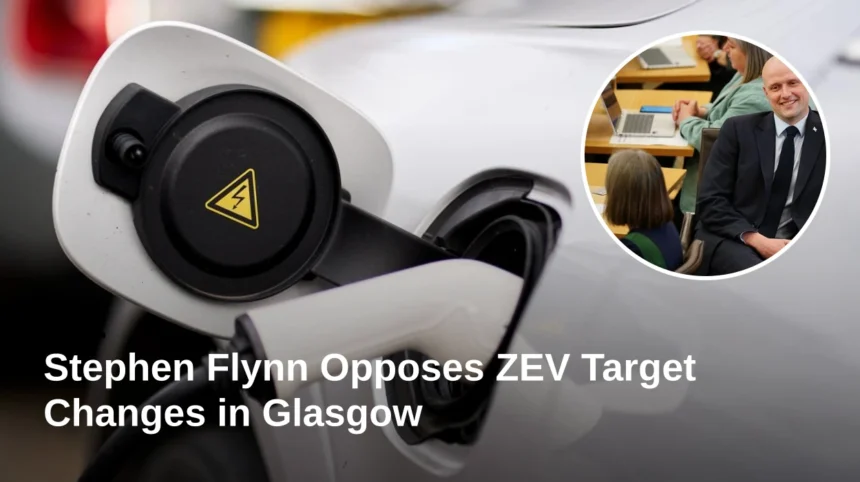
Glasgow (Glasgow Express) November 18, 2026 – Stephen Flynn, Scotland’s Transport Secretary, has said weakening the United Kingdom’s zero-emission vehicle mandate would be “wholly unacceptable”, as ministers consider changes to the rules governing electric vehicle sales. Mr Flynn said the policy should not be altered without the agreement of the governments and parliaments of all four nations. The dispute follows warnings from the Climate Change Committee that reducing the mandate’s trajectory could make the United Kingdom’s climate targets harder to meet.
Why has Stephen Flynn opposed changes to the electric vehicle mandate?
As reported by The Standard, Stephen Flynn said weakening the mandate could restrict the ability of devolved nations to reduce vehicle emissions. He said the policy depended on devolved legislation and could be changed only with the express agreement of the governments and parliaments of England, Scotland, Wales and Northern Ireland.
“It is wholly unacceptable that the United Kingdom Government is signalling a willingness to weaken ambition in relation to electric vehicles,” Stephen Flynn said.
Mr Flynn also said Scottish ministers opposed proposals that could roll back existing ambitions, arguing that they could increase costs for consumers during the cost-of-living crisis and weaken efforts to reduce emissions. He called on the United Kingdom Government to work with devolved administrations to strengthen climate action.
What changes are being considered under the mandate consultation?
Reports from POLITICO and other outlets said ministers were consulting on the annual sales trajectory before making a decision. The current rules require 80% of new cars and 80% of new vans to be zero-emission by 2030, with the proportion rising to 100% for new cars and vans by 2035.
The consultation considered whether the 2030 car target should be reduced to 50%, 60% or 70%, while other options included retaining the 80% target and changing compliance flexibilities. The consultation closed on October 23, 2026. The Department for Transport said on November 9 that no policy decision had been taken, and changes, if approved, could apply from the 2027 compliance year.
What has the United Kingdom Government said?
A United Kingdom Government spokesperson said the administration remained committed to phasing out all new petrol and diesel cars by 2030, ensuring that all new car and van sales are zero-emission by 2035, and meeting legally binding net-zero targets.
The spokesperson said the consultation would not change those commitments and was intended to support a “pragmatic and balanced approach” to the transition to zero-emission vehicles.
What did the Climate Change Committee warn?
The Climate Change Committee advised ministers to maintain the existing trajectory, according to reporting by the BBC and POLITICO. The committee said the mandate was working effectively and warned that weakening it could place the United Kingdom’s climate objectives at risk.
The current trajectory rises through annual requirements before reaching 80% of new car sales by 2030 and an indicative 100% by 2035. Hybrid vehicles can continue to be sold until 2035 under the existing framework.
What could the dispute mean for Stephen Flynn’s audience?
If the mandate is weakened, Scottish ministers and supporters of devolved control are likely to face continued pressure to protect the existing emissions-reduction pathway. The immediate effect will depend on the United Kingdom Government’s response to the consultation and whether any changes receive agreement from the devolved administrations.
Maintaining the current targets would preserve the existing timetable for electric vehicle uptake, while lowering them could give manufacturers greater short-term flexibility but reduce the pace of required zero-emission sales. No final change to the mandate had been confirmed as of November 18, 2026.