Key Points
- A learner driver has been reported to prosecutors after being stopped by Police Scotland on Glasgow Road in Clydebank on Tuesday, 12 May.
- Officers from Dumbarton Road Policing initially stopped a Vauxhall on Glasgow Road because it had a defective brake light.
- The driver was found to hold only a provisional licence and was not being supervised, and the vehicle was not displaying L plates.
- Because the driver was unsupervised and not displaying L plates, his insurance company invalidated his policy and police seized the vehicle.
- Police Scotland used the incident to reiterate rules for learner drivers and for drivers from countries outside the EU or European Economic Area, who have a maximum of 12 months from the date they become UK residents to drive on their foreign licence.
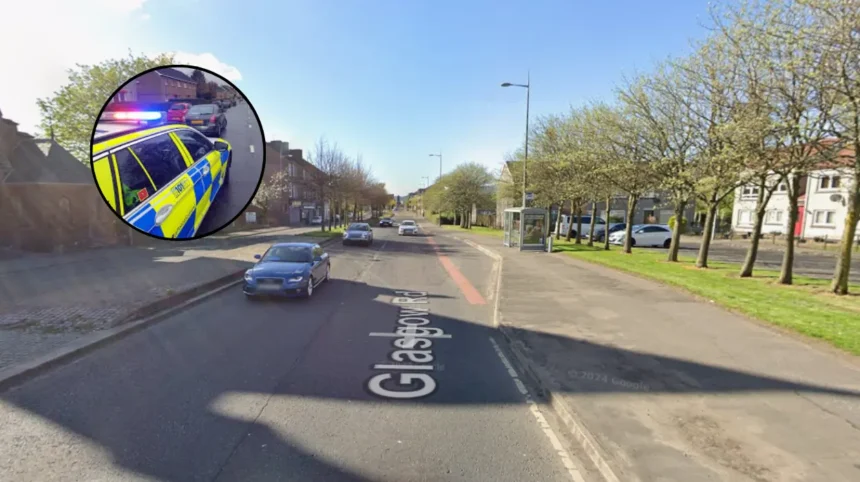
Clydebank (Glasgow Express) May 13, 2026– Clydebank, Dumbarton Road – Police Scotland has reported a learner driver after allegedly catching him driving unsupervised on Glasgow Road in Clydebank, West Dunbartonshire. Officers from Dumbarton Road Policing stopped a Vauxhall on Tuesday, 12 May, following concerns about a defective brake light, but soon discovered additional breaches of driving‑licence rules.
- Key Points
- Why was the driver stopped initially?
- What are the legal rules for learner drivers in Scotland?
- Why was the driver’s insurance invalidated?
- What extra advice did police issue about foreign drivers?
- How does this incident fit into wider road‑safety messaging?
- Background to the development
- What rules apply to non‑EU and non‑EEA drivers in the UK?
- How might this incident affect learner drivers and their families?
- How might it affect older provisional‑licence holders and new residents?
Why was the driver stopped initially?
Officers from Dumbarton Road Policing had initially stopped the Vauxhall on Glasgow Road because the vehicle’s brake light was defective, according to information relayed by local policing sources. There was no indication at the outset that the driver would be a learner.
Once the vehicle was pulled over, officers checked the driver’s licence and discovered that he held only a provisional licence.
The driver was not accompanied by a qualified supervisor, and the Vauxhall was not displaying L plates, which are a legal requirement for provisional‑licence holders in the UK.
What are the legal rules for learner drivers in Scotland?
Under UK law, a provisional licence grants the holder permission to drive only under close supervision. As outlined by UK driving‑licence guidance, a learner must be accompanied by someone who is at least 21 years old and has held a full car licence for at least three years.
The learner’s vehicle must show clearly visible L plates on both the front and rear of the car, and the driver must also have valid insurance.
In this incident, the driver was operating without a supervisor and without L plates, which meant he was driving outside the conditions of his provisional licence.
Why was the driver’s insurance invalidated?
Because the driver was unsupervised and not displaying L plates, the conditions of his insurance policy were breached.
Insurance providers typically require that provisional‑licence drivers display L plates and are supervised by an eligible adult, and any deviation from these terms can invalidate the cover.
Police Scotland therefore seized the vehicle, as driving without valid insurance is a criminal offence. The driver is now reported in connection with the alleged offences, which may include driving otherwise than in accordance with a licence and driving without insurance.
What extra advice did police issue about foreign drivers?
Police Scotland used the Clydebank incident as an opportunity to remind motorists from countries outside the European Union or the European Economic Area about UK driving‑licence rules.
As explained by local police guidance, drivers from non‑EU or non‑EEA countries may drive in the UK for up to 12 months from the date they become residents, using their foreign licence.
After that 12‑month period, they are generally expected to obtain a UK driving licence if they wish to continue driving.
Officers stressed that these rules apply equally in Scotland and across the rest of the UK, and that anyone unsure of their entitlement to drive should seek advice from the Driver and Vehicle Licensing Agency (DVLA) or their local licensing authority.
Explore More Clydebank News
Kevin Bridges and John McGinn BBC Documentary in Clydebank 2026
Missing Gerald Cuthbertson Glasgow 2026
How does this incident fit into wider road‑safety messaging?
Local road‑safety campaigns in West Dunbartonshire have repeatedly emphasised that learner drivers must follow the rules because unfamiliar drivers are statistically more likely to be involved in collisions.
Police Scotland’s statement after the Clydebank stop reflects this concern: provisional‑licence holders are still learning the norms of UK traffic, and supervised practice with L plates allows other road users to adjust their behaviour and anticipate the learner’s actions.
By removing the supervision requirement, the driver in this case exposed himself and other road users to a higher risk than would be acceptable under normal learner‑driving conditions.
Background to the development
UK law requires that anyone holding a provisional licence must be supervised while driving on public roads. The supervisor must be at least 21 years old and have held a full UK driving licence for at least three years.
The learner’s vehicle must display L plates on both front and rear, and the driver must have valid insurance that is consistent with provisional‑licence conditions. Motor insurance policies can be voided if these conditions are breached, which can lead to seizure of the vehicle and prosecution.
Failure to comply can result in fines, penalty points, and in more serious cases, prosecution for driving without insurance or driving contrary to the conditions of the licence.
What rules apply to non‑EU and non‑EEA drivers in the UK?
Drivers who move to the UK from countries outside the EU or the EEA may drive on their existing foreign licence for up to 12 months from the time they become UK residents.
After that period, they are normally expected to obtain a UK driving licence if they wish to continue driving.
This 12‑month rule is intended to give new residents time to familiarise themselves with UK roads while they prepare for the theory and practical tests.
Authorities in Scotland and the rest of the UK have reiterated that foreign‑licence holders who exceed the 12‑month window without applying for a UK licence may face enforcement action if stopped.
How might this incident affect learner drivers and their families?
For learner drivers and their families, this Clydebank case serves as a reminder that provisional‑licence rules are not optional: they are conditions that must be followed if a driver is to stay within the law.
Learners who attempt to drive without a qualified supervisor or without L plates risk having their insurance stripped away, which can lead to vehicle seizure and prosecution.
Parents and car‑owning families may therefore need to review their understanding of learner‑licence conditions and ensure that any practice sessions are conducted with the correct supervision and visible plates.
How might it affect older provisional‑licence holders and new residents?
Older provisional‑licence holders who may have been learning intermittently over several years are also at risk of misunderstanding the precise conditions attached to their cover. Some may assume that simply having a provisional licence is enough, not realising that the presence of a supervisor and L plates is compulsory.
For people who have recently moved to the UK from non‑EU or non‑EEA countries, the 12‑month rule can be easy to overlook, especially if they are also adjusting to new work and housing arrangements. The Clydebank incident may prompt local authorities and police in areas such as West Dunbartonshire to increase their signposting of these rules, particularly in areas with high levels of international migration or transient populations.