Key Points
- Professor Peter Hindmarsh was barred from treating patients by University College London Hospitals in March 2023, while Lucy Letby’s trial was continuing.
- The hospital cited concerns about the safety of his advice to children and young people, including advice involving insulin.
- The jury was not told about the restriction, and Letby’s defence was reportedly not informed of the later tribunal ruling.
- A medical tribunal declined to suspend Hindmarsh’s registration in April 2023 but required direct supervision for clinical work.
- Letby’s lawyer Mark McDonald has applied to the Criminal Cases Review Commission, while Letby continues to deny the convictions.
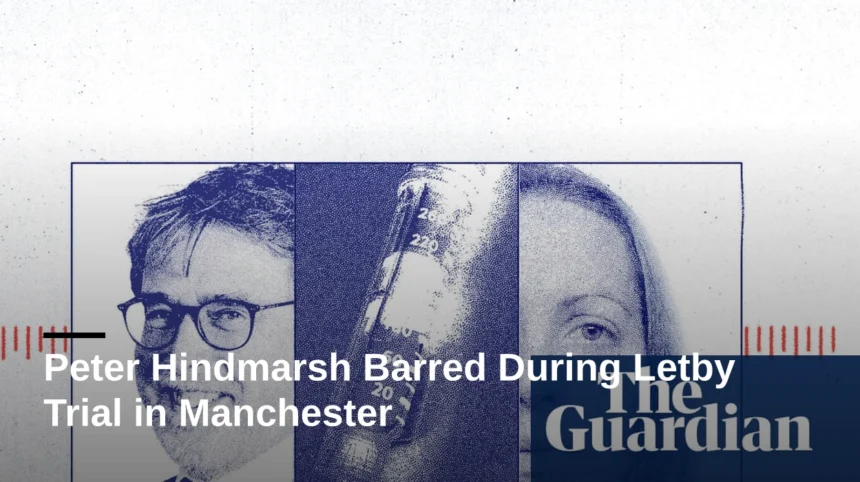
Manchester (Glasgow Express) November 18, 2026 – Professor Peter Hindmarsh, the paediatric endocrinologist whose evidence supported the prosecution case against Lucy Letby, was barred from treating patients during her trial after University College London Hospitals raised concerns about risks to children and young people. The Guardian reported that the restriction began in March 2023, months before the trial ended, but was not disclosed to the jury. Hindmarsh had told the court that two babies were probably poisoned with insulin through intravenous fluid bags, evidence prosecutors presented as central to the case.
Why was Professor Peter Hindmarsh barred from clinical practice?
As reported by The Guardian, UCLH medical director Dr Tim Hodgson told the General Medical Council that Hindmarsh had given independent advice involving three child patients despite an existing supervision order. Two cases concerned insulin and diabetes. In one case, Hindmarsh allegedly advised a family to stop giving insulin at home, after which the child experienced diabetic ketoacidosis, although Hodgson said it was unclear whether the episode coincided with the advice.
Hodgson also reported that colleagues believed Hindmarsh had focused excessively on rare causes of low blood sugar and diabetes, while failing to address more common explanations or appropriately treat high glucose levels. He wrote that UCLH could not accept the level of risk Hindmarsh appeared to pose to children, even with close supervision.
What did the medical tribunal decide?
The General Medical Council, which was already investigating Hindmarsh’s fitness to practise, applied to suspend his registration. In April 2023, a three-person medical practitioners tribunal declined to suspend him, finding that suspension would be disproportionate. Instead, it required direct supervision for any clinical work and allowed him to continue non-clinical work, including expert-witness activity.
The tribunal said it could not determine whether Hindmarsh had technically breached an earlier supervision order, but concluded that the three cases identified by UCLH raised patient-safety concerns. The decision had limited practical effect because UCLH had already excluded Hindmarsh from treating patients.
What was the impact on Lucy Letby’s trial?
The Guardian reported that Letby’s defence team knew Hindmarsh was subject to a General Medical Council investigation, but was not told that UCLH had later barred him from clinical practice or that the tribunal had imposed further restrictions. The defence could have used the information to challenge his credibility, seek disclosure to the jury or apply for his evidence to be excluded.
Hindmarsh’s testimony concerned two babies whom the prosecution alleged had been poisoned with insulin. Letby was convicted of murdering seven babies and attempting to murder seven others and received 15 whole-life sentences. The Court of Appeal rejected her applications for permission to appeal. Letby maintains her innocence, and Mark McDonald has applied to the Criminal Cases Review Commission.
What is the wider background to the development?
Hindmarsh was a consultant paediatric endocrinologist at UCLH and a professor at University College London. Prosecutor Nick Johnson KC described him to jurors as a pre-eminent expert on insulin. The General Medical Council opened its investigation in November 2022 after concerns were raised by Great Ormond Street Hospital and UCLH about Hindmarsh’s diagnosis and treatment of patients. Medical experts supporting Letby’s review application have disputed his interpretation of insulin tests and argued that natural causes and poor medical care could explain the babies’ collapses.
How could the disclosure affect the review of Lucy Letby’s conviction?
The disclosure may give Letby’s legal team additional material with which to argue that information capable of undermining an expert witness was not fully disclosed during the trial. Criminal procedure rules require expert witnesses to reveal disciplinary proceedings or other matters that could affect their credibility or impartiality. The Criminal Cases Review Commission will determine whether the new information, alongside the wider expert evidence submitted by Letby’s lawyers, justifies referring the convictions back to the Court of Appeal. The disclosure does not itself overturn the convictions, and no court has ruled that Hindmarsh’s evidence was inadmissible.